Operations | Monitoring | ITSM | DevOps | Cloud

The latest News and Information on IT Service Management, Service Desk and related technologies.

What Is the MITRE ATT&CK Framework? A Guide for IT Ops Teams

Most IT operations teams cannot say how much of the MITRE ATT&CK framework they already cover. The framework gets explained in the language of threat hunting and red teams. The parts that belong to infrastructure work are easy to miss. And then, coverage questions get answered with a guess. The mismatch costs time on both sides. Security asks for a coverage answer that ops has no clean way to produce. Yet the controls that stop a large share of those techniques already sit with your team.

The Margin Leak Business Services Firms Can't Bill Away

Business services firms are built on people’s time, judgment, and credibility. When a consultant loses half an hour before a client workshop, a legal team is stuck waiting for a document system, or a service delivery group has to move conversations elsewhere because collaboration tools are unreliable, it may not register as a major IT event. It still changes the economics of the work, because skilled time is being spent compensating for the environment instead of serving the client.

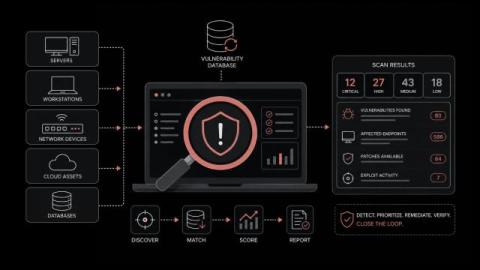
What Is a Vulnerability Scan? How It Works and What the Results Mean

How many machines in your environment are running software with a publicly documented security flaw right now? That figure comes from an asset inventory, and asset records age quickly once they are written. The gap is rarely about tooling budgets. Software inventory across a few hundred endpoints shifts every week, while the published catalogue of flaws in that software grows every single day. Manual inspection loses that race inside the first month.

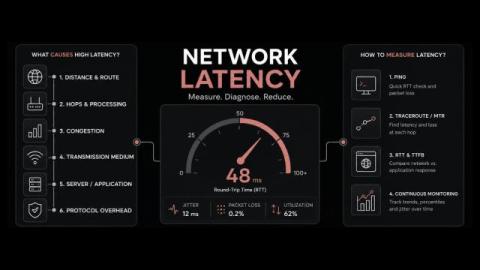
What Is Network Latency? Causes, How to Measure It, and Ways to Reduce It

Slow application complaints are among the hardest tickets in IT to close. The network gets blamed first; the dashboard shows nothing wrong, and the ticket bounces between teams for a week. Network latency sits at the centre of that argument more often than any other metric. Most dashboards report latency as a single average, and that average hides the slow requests people actually notice. A path can average 30 ms and still drop a call every ten minutes.

DEX Data Is Too Valuable to Limit to IT

For many organizations, digital employee experience (DEX) is still viewed as an IT project. It measures endpoint health, identifies performance issues, and helps service desks resolve incidents faster. While that’s useful, it’s also far too small a vision. In order to get the greatest return from DEX, organizations have to stop treating it as exclusively an engineering capability and started treating it as an equally powerful intelligence capability.

How to Enhance Your IT Asset Management Strategy With AI

--- Most IT teams have more asset data than they know what to do with: devices, software, contracts, lifecycles, dependencies. The problem was never visibility. It's knowing what to act on. In this video, Matt Beran walks through four AI features inside InvGate Asset Management that are live right now and change how IT teams work with their IT inventory. You'll see how to: Together, these features turn Asset Lifecycle Management and hardware refresh planning from manual lookups into something the system surfaces on its own.

Unified Endpoint Management: Capabilities, Rollout, and Metrics

How much of your device inventory could you verify today without opening more than one console? Most IT teams can report what they purchased. Far fewer can say which of those machines are patched, encrypted, running approved software, and still checking in, because that answer spans several systems. Unified endpoint management consolidates those systems into one. Most IT teams inherit that split one platform at a time.

How SD-WAN Works and What to Monitor at Every Branch

Why does one branch report unusable voice and video every afternoon while the WAN dashboard at head office shows every site green? Most network teams have fielded that escalation. The device responds, the tunnel status reads up, and application performance is still unacceptable. SD-WAN was built for the distance between a connection that responds and an application that performs.

What Is Attack Surface Management and How Does Patching Reduce It?

Your exposure list grows faster than your team can clear it. Security adds new findings every week, and your IT team gets to a fraction of them. Everything left over is a backlog an attacker can walk straight through, and buying another scanner will not shrink it. Most attack surface management programs live inside that gap. Finding exposures got easy. Closing them did not, and a queue nobody has time to work is where the risk quietly builds.