Operations | Monitoring | ITSM | DevOps | Cloud

The latest News and Information on Observabilty for complex systems and related technologies.

Instant Kubernetes Observability with Proxymock #speedscale #kubernetes #ebpf #devops #cloudnative

Learn how to get instant observability into your Kubernetes cluster by installing the Speedscale operator and proxymock tool. In this step-by-step tutorial, we walk you through setting up the operator to capture live network traffic (including encrypted traffic, API calls, and database calls) without complex instrumentation or manual configuration.

Let's break autovacuum in Postgres: reproducing failures to make it observable

Autovacuum is one of those Postgres background jobs that quietly keeps your database healthy. It cleans up the dead row versions that every UPDATE and DELETE leaves behind, and it keeps the database away from a hard transaction-ID limit that would take it offline. Most of the time you don't think about it, because it just works.

Adding Routing Intelligence To Your Observability Stack

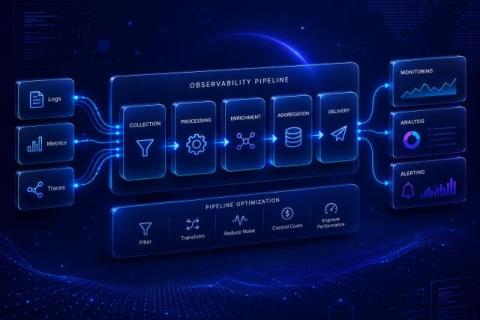
Observability has a blind spot, and for most teams it sits at the network layer. You instrument your services, scrape metrics into Prometheus, ship logs somewhere searchable, and build dashboards that tell you when something is wrong inside your infrastructure. But the routing that carries traffic to and from that infrastructure often lives entirely outside the stack, watched through separate tools that do not talk to your alerting. This piece looks at why routing belongs in your observability pipeline and what it takes to get it there.

Beyond performance monitoring: Understand the user experience with Grafana Cloud Frontend Observability

You've optimized your Largest Contentful Paint. Your Time to First Byte is under 200ms. Your Lighthouse scores are green. And yet, your checkout conversion rate is quietly dropping. A segment of users in Southeast Asia is churning. Your support team is fielding tickets about a form that "just doesn't work" and you have no idea which one. Traditional frontend performance monitoring tells you whether your application is fast. It doesn't tell you whether people are actually succeeding when using it.

What Is LLM Observability? A Complete Guide

If you run LLM features in production, your most dangerous failures are the ones your monitoring never flags. Your LLM feature passed every test, and the demo went great. Three weeks after launch, a support ticket lands: the chatbot quoted a refund policy that does not exist. The dashboards are all green, and the same prompt answers correctly when you retry it. This is the blind spot LLM observability exists to close. Your existing tools saw the request come back fast with a clean status code.

Best PR Review Tools for AI-Generated Code (2026)

Most PR review tools answer one question: does this code look correct? They scan the diff, flag known patterns, catch security violations, and post inline comments before merge, which is useful, but only half the review. The other half is behavioral: does the code actually behave correctly once it’s running against your live system?

Why partners love working with Cribl

Hear directly from Cribl partners—including AWS—about what it’s really like to work together. This short is for technology and cloud partners, consulting firms, and customers who want a quick, human view of Cribl’s partner ecosystem and the value it delivers. In under two minutes, partners highlight Cribl’s partner program, the people they work with, and the outcomes they’re delivering for joint customers. You’ll hear about the FedRAMP opportunity, why “it’s all about the data” for AWS, and how Cribl helps get data where it needs to be for shared customers.

30 to 70 PRs a Day: How We Managed to Not Wreck Our Systems

In this two-part blog series, I give a detailed report-out on how our Honeycomb engineering team 2.5x-ed our throughput using AI without breaking everything or lowering our standards for quality. Part 1 explains how we did it and shows data about how that ramp-up happened. Part 2 shares what we learned.