Operations | Monitoring | ITSM | DevOps | Cloud

Observability 2025 Decoded: What the DZone Report Means for SLO-Driven Ops

DZone’s 2025 Intelligent Observability Trend Report captures a real inflection point: teams are shifting from “more data” to outcome-driven practices that improve resilience and accountability. The survey was gathered between August 28 and September 25, 2025, from a global pool of developers, architects, and IT professionals.

From Logs to Insights: Observability with ClickHouse

Watch this session to learn why ClickHouse is a natural fit for observability pipelines and log analytics platforms. Includes a demo of Aiven for ClickHouse service. Relevant for DevOps and Platform Engineers, SREs and Observability/Monitoring Leads AIVEN DATA PLATFORM The Aiven Platform is more than a collection of open source services for streaming, storing and analyzing data. The platform ensures that all services run reliably and securely in the clouds of your choice, are observable, and can easily be integrated with each other and with external 3rd party tools.

Top 4 Inefficiencies For Dev Teams Resolving Issues

Every hour developers spend troubleshooting is an hour they’re not building features, innovating, or delivering value to customers. Yet in most organizations, issue management and debugging remains one of the biggest drains on productivity and release velocity. That frustration is exactly what led our founders, themselves developers, to create Lightrun.

5 Best Practices for Incorporating AI Into Your Team

Honeycomb’s Jessica Kerr and Fred Hebert recently hosted a webinar with Courtney Nash of The VOID where they dug into one of the biggest questions in tech right now: How do we build systems (and teams) that actually learn with AI, not just use it? The conversation was surprisingly optimistic about what happens when we stop treating AI as a productivity tool and start seeing it as a teammate. You can watch the full webinar here, or read on below for a quick recap.
Redefining Frontend Observability with Datadog RUM

Discover how Datadog is redefining frontend observability with Real User Monitoring (RUM). In this demo, see how RUM helps teams detect, investigate, and resolve frontend issues that directly impact user experience and business outcomes. With RUM Without Limits, you get full visibility into every user session, giving you an accurate and comprehensive view of your users’ experiences. Monitor performance, track errors, and understand how your application behaves in real time.

Observability Masterclass | AI-Driven Observability for Enhanced System Performance

Tuesday, October 28, 10:00 - 11:00am CDT In today’s relentless digital world, achieving peak system performance isn’t just a goal—it’s mission-critical. Join SolarWinds and GigaOm for an electrifying webcast featuring renowned Observability authority Jon Collins, VP of Engagement and Field CTO at GigaOm.

Why Your APM Needs Observability - Metrics, Logs, and Traces Explained

Modern software applications are increasingly complex. Microservices, cloud infrastructure, and distributed architectures make it challenging for developers, DevOps engineers, and SREs to maintain high performance and a seamless user experience. Traditional Application Performance Monitoring (APM) provides critical insights into how applications perform, but alone, it often leaves blind spots when it comes to diagnosing issues or understanding the full system behavior.

DevOps & Observability for Digital Catalogs: faster releases, fewer outages

Digital catalogs have become a core sales engine, not just a glossy PDF on a server. They power discovery, merchandising, and conversion across web and mobile experiences. When a catalog powers real revenue, the way you build and run it starts to look a lot like modern software delivery. That's where DevOps and observability enter the picture: practices that shorten release cycles, reduce risk, and keep customer experiences fast and available even on your biggest traffic days.

How to Replace Synthetics with the httpcheck Receiver

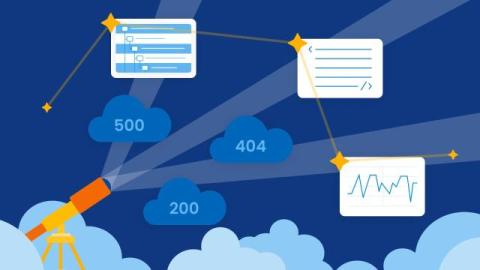
A 200 OK doesn't always mean everything is okay. You've probably seen it: your health check endpoint returns success, but your users are staring at an error page. Maybe the database connection pool is exhausted, or a critical downstream service is timing out, but your API dutifully returns 200 because technically it responded. This is the reality of monitoring HTTP endpoints in production—status codes alone don't tell the whole story.

What's New in Network Observability for Fall 2025

As your partner in network observability, we’ve worked together to help you manage an increasingly complex digital landscape. You’ve built a powerful monitoring foundation, but the pace of change doesn’t slow down. Your network continues to expand across hybrid clouds and multi-vendor SD-WAN, and the demands on your team grow with it.

Making logs work smarter: Evolving your observability strategy

When you start building an observability stack, it’s natural to reach for logs first. They’re familiar, easy to generate, and often already part of a developer’s workflow. And sending logs to a centralized system feels like a quick win, too. Simply add a log shipper, and voila, your application is observable.

Software Maintenance in 2025: How AI & Automation Are Redefining Support

Software maintenance is no longer a reactive patching procedure in 2025. Rather, it is a predictive discipline that involves continuous enhancement and supports automation and AI. It helps in lowering toil and hardening release velocity without decreasing reliability. When you continue to consider maintenance as 'turning the lights on,' you are losing uptime, money and developer attention.

Powering Mexico's Digital Future: Expanded Internet Observability with Catchpoint

As of 2025, more than 110 million Mexicans are online, putting digital‐access penetration at roughly 83% of the population. Mexico is already one of Latin America’s anchor markets, leading the region in startup momentum, cloud adoption, and cross-border digital trade. A few days ago, CloudHQ announced a $4.6B investment in Mexico to open multiple datacenters. Yet even with this scale, service quality still varies dramatically across cities, states, and ISPs.

From pillars to rings: How interconnected observability in Grafana Cloud optimizes performance and reduces telemetry waste

In observability, we’ve traditionally been taught to think in terms of pillars, namely logs, metrics, and traces (and more recently, profiles). But pillars are rigid and disconnected. They don’t reflect how modern systems actually work or how we troubleshoot in real time. So let’s change that.

CriblCon 25 Keynote Livestream

IT and security data professionals stand at a crossroads. The practices and technologies that have served you for the last ten years are at their breaking point, facing an onslaught of data growth and complexity that will only accelerate as AI goes mainstream. You have a choice. Stay earthbound or take your telemetry to the stratosphere and beyond.

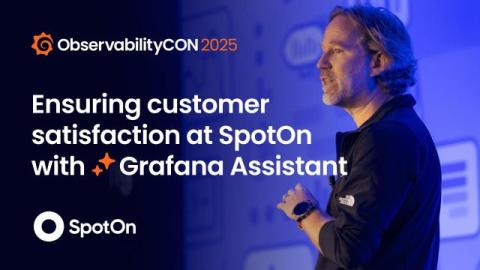
Baking in site reliability with observability and AI: How SpotOn uses Grafana Assistant to keep restaurants running

When you operate a restaurant, the last thing you want to do is shut your doors and turn away guests and staff because of some technology failure. And if you’re the one providing that tech, it’s your job to make sure that doesn’t happen. “For us, observability is about a lot more than just dashboards and alerts.

APM vs Observability: Both-and, not either-or

I'll start this, the third and final entry in my series on APM and Observability, which was originally inspired by my contribution to an APMdigest article, by once again pointing out that APM tools can be built with observability in mind. Many are, in fact. And the ones that aren’t don’t turn into a different type of tool. In my experience, it's more that there's a difference of mindset.

Introducing Cribl Notebooks: Investigate, Visualize, and Share - All in One Tab

Run every part of an investigation in one workspace with Cribl Search’s new Notebooks feature. Bring queries, visualizations, and annotations together to make sharing and collaboration easier. Speed up investigations and turn complex workflows into narratives anyone can follow.

Observability in Fraud Detection: How Transaction Monitoring Tools Can Help Spot Money Laundering

In today's increasingly digital financial landscape, transaction monitoring has become a critical component of global fraud detection strategies. As financial crimes evolve in complexity, institutions must strengthen their ability to detect anomalies and uncover suspicious activity before it causes damage. Observability, a concept long used in IT and data operations is now emerging as a powerful approach for improving visibility into complex financial transactions.

How We Saved 70% of CPU and 60% of Memory in Refinery's Go Code, No Rust Required

We've just released Refinery 3.0, a performance-focused update which significantly improves Refinery's CPU and memory efficiency. Refinery has a big job: it performs dynamic, consistent tail-based sampling that maintains proportions across key fields, adjusts to changes in throughput, and reports accurate sampling rates.

Application Observability Done Right: Best Practices & Tips

Companies invest millions of dollars in observability platforms, yet they often still struggle to get application monitoring right. This is because most organizations focus on the technology, while neglecting the business. In this article, we’ll show you how to combine business requirements with technological needs. As the CTO of Logz.io, these are based on my experience working with global companies on their application observability needs.

Big Week at Logz.io: Major Product Announcements Signal New Era of AI-First Observability

Four months ago, we announced our vision of AI-first observability. Today, we’re not just talking about the future, we’re shipping it. This week marks a significant milestone with several major product announcements that demonstrate our continued momentum as the industry’s leading AI-first observability platform.

AI-powered observability: Resolve incidents faster, reduce alert fatigue, and expand access

When an incident lands in your lap, you’ll often start with a lot of questions: Why is latency so high? What’s causing this outage? How much money are we losing at this very moment? The uncertainty—and the pressure to quickly find answers—has always been one of the more nerve wracking parts of being an on-call engineer, but it doesn’t have to be that way any more.

Top 9 LLM Observability Tools in 2025

Organizations are adding GenAI to their current and future architectures and product roadmaps, requiring Ops teams to ensure LLMs are accurate, fast, secure and cost-efficient. LLM observability tools directly addresses these needs, helping identify and prevent common LLM errors and issues: LLM observability provides the telemetry data for this analysis. LLM observability tools trace requests end-to-end, evaluate outputs, and correlate quality with latency, cost, prompts, tools, and data sources.

OpenTelemetry + ignio: The Foundation for Intelligent, Unified Observability

In the previous post, What is OpenTelemetry?, we went over the What, Why, and the How of OpenTelemetry. We also went over the telemetry data lifecycle (data generation à collection à storage à usage) and how telemetry data (MELT) could be put to use to troubleshoot a representative web application scenario.

Real Estate App Development for Ops & Product Teams: From MVP to Scale

In the competitive world of real estate technology, developing an app that can scale from a Minimum Viable Product (MVP) to a fully-fledged solution is crucial. For operations and product teams, this journey involves strategic planning and execution to ensure the app meets evolving market demands and user expectations.

Announcing Honeycomb for Frontend Observability React Native Beta

React Native apps straddle two worlds: JavaScript powering your UI and native modules running underneath. Add in backend services, and when something goes wrong, there are many possible culprits. Was it JS logic, the native bridge, the native API call, or a downstream API call? Most tools give you parts of the picture. A crash tool can tell you where the app failed but not what else happened in a session.

Redis Performance Monitoring: Combine Logs and Metrics for Complete Visibility

Redis earns its place in modern stacks because it’s an in-memory data store with microsecond latency and rich data structures, making it perfect for things like caching, sessions, and rate limiting. Since it often sits on the request path, small issues (connection churn, blocked commands, memory pressure) can quickly ripple into user-visible incidents.

Scaling Datadog observability: 1,000 integrations and counting

Integrations have always been central to the Datadog platform, enabling customers to collect the data they need directly from the technologies they use every day. By unifying signals from infrastructure and applications to security and SaaS applications, teams gain both high-level visibility and the ability to drill into the details that matter the most. With more than 1,000 integrations now available, the Datadog ecosystem continues to expand alongside the platforms our customers rely on.

The observability maturity curve: How IT leaders are shifting from tools to outcomes

Observability has come a long way from its origins in monitoring logs and metrics. Today, it sits on a maturity curve: Organizations move from fragmented tool stacks to unified platforms to proactive engineering practices that tie reliability to business outcomes. To better understand where IT leaders are on this curve, Grafana Labs surveyed 150 decision-makers across industries in advance of ObservabilityCON 2025.

Observability-as-Code: Bring synthetic monitoring into your pipeline

Your team just deployed to production. The infrastructure spun up in 90 seconds, but recreating your monitoring? That’ll take hours. It’s added late in the process, managed through dashboards, and prone to inconsistency. Short-term, this slows delivery and creates visibility gaps that surface only during incidents. Long-term, it leaves a business-critical capability out of your observability pipeline.

Observability vs. Visibility: What's the Difference?

In modern IT systems—distributed services, cloud-native platforms, and dynamic networks—just knowing that something is “up” isn’t enough. Green checkmarks on dashboards don’t tell you why performance shifted, why latency crept in, or why a perfectly healthy-looking service suddenly failed. This is where the conversation around visibility and observability begins. They sound similar, but they solve very different problems.

What the 2025 DORA Report Teaches Us About Observability and Platform Quality

The 2025 DORA State of AI-Assisted Software Development Report delivers a critical insight for technology leaders: AI is fundamentally an amplifier, not a solution. It magnifies the strengths of high-performing organizations with robust observability while exposing the dysfunctions of struggling ones. For organizations that have rushed to adopt AI coding assistants all while expecting immediate productivity gains, this finding demands a strategic pivot.

Honeycomb Observability Day SF - Kesha Mykhailov, Fin.ai: Human-Centric Observability in AI Systems

Empathy is one of the superpowers of modern teams, especially when building tools that interact with humans. This talk by Kesha Mykhailov tells the story of Fin, Intercom's Customer Support agent, and how they transformed their approach to Fin's.

Observability - Not Just Dashboards and Alerts | Why Teams Like Uber & Salesforce Use Grafana Cloud

Grafana Cloud is a fully managed observability platform built on open source and open standards. From Fitbits to power grids, it helps teams monitor systems, cut through noise, and act faster. With 150+ integrations, Grafana Cloud unifies logs, metrics, and traces, giving visibility from backend to frontend. AI-powered guidance accelerates root cause analysis and simplifies on-call, while customers like Citigroup, Salesforce, Uber, and ASOS scale with confidence.

Cloud Microservices Monitoring on AWS and Azure with OpenTelemetry

Your checkout flow starts in an AWS Lambda function, calls a payment service running on EKS, then triggers notifications through Azure Functions. Three different compute platforms, two cloud providers, one distributed trace that you can't see. Cloud providers want you to use their native monitoring tools. AWS pushes X-Ray and CloudWatch. Azure promotes Application Insights and Azure Monitor. These tools work well within their ecosystems but lock you into vendor-specific implementations.

Debugging Microservices in Production with Distributed Tracing

Your production checkout flow just started returning 500 errors. Six microservices handle checkout. Logs show errors in three of them. Which service broke? Which error happened first? What caused the cascade? Traditional debugging doesn't work. You can't attach a debugger to production. Searching logs across six services gives thousands of lines with no obvious connection. By the time you correlate timestamps and trace IDs manually, customers have abandoned their carts.

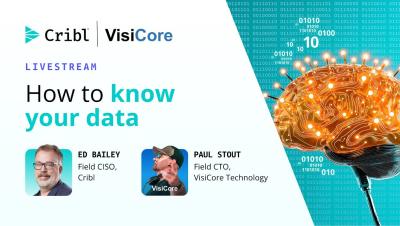
How to know your data with Cribl's Ed Bailey and VisiCore Technology's Paul Stout.

Classifying and tagging data is the key to automating pipelines and improving visibility across the enterprise. We’ll share both the technical and business impact of truly knowing your data, and why Cribl makes it possible. Plus, we’ll talk CriblCon and why we’re excited to see you there.