Operations | Monitoring | ITSM | DevOps | Cloud

Observability and incident response need resilience testing

There’s a reason why observability and incident response practices have become standard across modern software development. Anyone wanting to minimize downtime and deliver reliable, available applications needs to have fully instrumented systems and playbooks so they can respond quickly and effectively to outages or incidents. But there’s another piece to the reliability puzzle: resilience testing.


Understanding Traces and Spans: Span Filtering With ObserveNow and Grafana 10.4

ObserveNow, the leading open source-based observability stack, has recently enhanced its capabilities with the introduction of Span Filtering – a key feature in its latest upgrade to Grafana 10.4. This advancement significantly improves the platform’s ability to dissect and analyze traces, which are crucial for understanding the behavior and performance of distributed systems.

Navigating Software Engineering Complexity With Observability

In the not-too-distant past, building software was relatively straightforward. The simplicity of LAMP stacks, Rails, and other well-defined web frameworks provided a stable foundation. Issues were isolated, systems failed in predictable ways, and engineers had time to innovate on new features for the business. And it was good.

Free the data: Why US federal agencies should standardize on OpenTelemetry

In today's digital age, data is the lifeblood of modern organizations — and the US government is no exception. As agencies grapple with the ever-increasing volume and complexity of data, it is imperative to adopt a standardized approach to monitoring, analyzing, and understanding the behavior of complex IT systems. This is where OpenTelemetry, an open-source observability framework, comes into play.

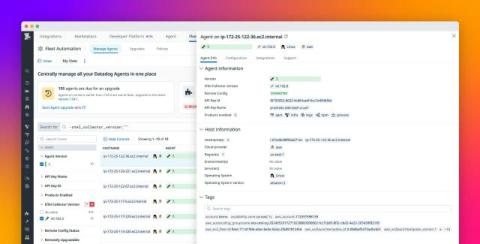
Unify your OpenTelemetry and Datadog experience with the embedded OTel Collector in the Agent

OpenTelemetry (OTel) is an open source, vendor-neutral observability solution that consists of a suite of components—including APIs, SDKs, and the OTel Collector—that allow teams to monitor their applications and services in a standardized format. OTel defines this data via the OpenTelemetry Protocol (OTLP), a standard for the encoding and transfer of telemetry data that organizations can use to collect, process, and export telemetry and route it to observability backends, such as Datadog.

FireHydrant Case Study Video: Implementing Honeycomb to Streamline Their Migration to Kubernetes

#kubernetes helps teams of all sizes optimize their #microservices architecture by enabling seamless automated containerized app deployment, easy scalability, and efficient operations. But Kubernetes also has a reputation for being difficult to learn and complex to manage, and when you’re new to something, it’s hard to know what you don’t know.

Understanding Event Correlation: A Key Component in Modern Observability Tools

Event correlation is a critical aspect of modern IT management, involving the analysis and correlation of events to filter out noise and isolate significant events requiring attention. This process helps quickly identify the root cause of issues, reducing the time it takes to resolve incidents and ensuring smoother operations. Key reasons for event correlation include reducing noise data and identifying root causes efficiently.

Unified Observability: Benefits of Tool Consolidation with Apica

Tool Sprawl is real and unified observability is the key to unlocking this hindrance, along with the many others in your IT monitoring. Some say that the golden era of software development is already gone, and some say that it has just started with the advent of AI. Nevertheless, with the ease of microservices, containerization and open-source adoption, the recent years have certainly become the glory days for SaaS organizations. But innovation almost always brings with it challenges.

14 benefits of using Site24x7 in Kubernetes observability

Launched in June 2014 as an open-source container orchestration software, Kubernetes is now ten years old. Being increasingly adopted by organizations of all sizes, Kubernetes has today become an essential part of the IT landscape. Kubernetes now completes the modern IT picture, along with Linux, the cloud, and containers that form the backbone of how most IT applications are developed and delivered.

How can unifying observability and security strengthen your business?

Bolster your organization’s observability and security capabilities on one platform with AI, anomaly detection, and enhanced attack discovery Organizations in today’s digital landscape are increasingly concerned about service availability and safeguarding their software from malicious tampering and compromise. The traditional security and observability tools often operate in silos, leading to fragmented views and delayed responses to incidents.

Lumigo's Observability and Troubleshooting Platform

Lumigo is an observability and troubleshooting platform that autonomously deploys Observability in under 5 minutes with a single click, automatically capturing and contextualizing all of the metrics, logs, and distributed traces developers need to troubleshoot microservice issues in production. Lumigo is the only observability platform that enriches traces with complete in-context request and response payloads and correlates them to the relevant logs and metrics, enabling developers to resolve issues up to 80% faster.

OpenTelemetry Best Practices #3: Data Prep and Cleansing

Having telemetry is all well and good—amazing, in fact. It’s easy to do: add some OpenTelemetry auto-instrumentation libraries to your stack and they’ll fill your disks with data pretty quickly. However, having good telemetry data—data that’s curated into being useful—is something that is both cost-effective and represents good value.

Coralogix new observability solution now available for enterprises

Coralogix continues to invest in and develop solutions to address modern business challenges. One such example of modern business challenges is the field of observability with data complexity and volume increasing all the time. Observability solutions play a key role in digital transformation and operational excellence, helping companies aggregate a growing amount of data, effectively analyze it, and initiate the needed actions to maintain optimal performance and uptime.

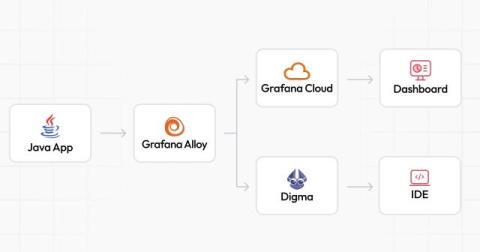
Shorten your feedback loop: Java observability with OpenTelemetry, Grafana Cloud, and Digma.ai

Ron Dover is CTO and co-founder of Digma.ai, an IDE plugin for code runtime AI analysis to help accelerate development in complex code bases. Ron is a big believer in evidence-based development and a proponent of continuous feedback in all aspects of software engineering. Traditionally, software developers have relied on simple logs to understand code execution and troubleshoot issues.

Leading Observability Interview Questions

If you're aiming for a position that demands strong monitoring and observability skills, thorough preparation is essential. In this comprehensive guide, we will provide an extensive list of the most frequently asked interview questions about the three pillars of observability; logs, metrics and tracing. Each question is also accompanied by detailed, well-explained answers to ensure that you fully understand the concepts and can confidently demonstrate your expertise.

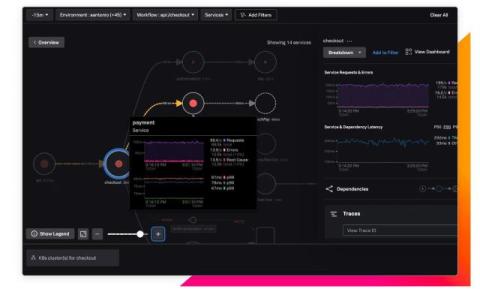
Experience Full Application Observability with Logz.io App 360

Welcome to our comprehensive demonstration of Logz.io App 360, the ultimate observability solution designed for modern microservices and cloud-native environments. In this video, we will showcase how App 360 can revolutionize your approach to application performance monitoring by providing a unified view of logs, metrics, and traces.

Harnessing the Power of Splunk APM Business Workflows in IT Service Intelligence

As an Observability Strategist at Splunk, I have the unique privilege of partnering with a diverse range of Splunk customers across various industries. This partnership offers me a deeper insight into their essential Observability use cases, how they are utilizing Splunk’s Observability solutions, and their specific needs to maximize both value and efficiency in their Observability practices.

Cribl Copilot Accelerates Your Team's Efficiency in Managing IT and Security Data at Scale

Take off on Day 1 of your deployment with Cribl Copilot – your AI wingman – integrating Cribl’s portfolio with your data. AI-powered Cribl Copilot accelerates your productivity, activates the afterburners of your team’s efficiency, eliminates pilot error by closing the skills gap, and gives you a smooth landing of value with your Cribl Stream, Edge, Search, and Lake investment. It’s the fastest and easiest way to make the value of your Cribl data engine soar.

Don't observe. Debug.

The term “observability” is a strange one. We understand its value as a way to describe a sophisticated approach to monitoring complex distributed systems and microservices. But the term is inherently passive (and let’s be honest. It’s a bit of a loaded marketing term). Simply “observing” doesn’t help you solve problems – especially if you are inundated with loads of non-actionable data.

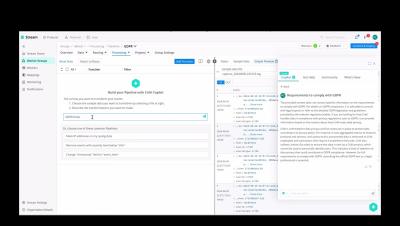
Use Cribl Copilot to Build a GDPR-compliant Data Pipeline

Cribl Copilot accelerates your productivity, activates the afterburners of your team’s efficiency, eliminates pilot error by closing the skills gap, and gives you a smooth landing of value with your Cribl Stream, Edge, Search, and Lake investment. It’s the fastest and easiest way to make the value of your Cribl data engine soar. Cribl’s Observability Professor is back with another Cribl Copilot demo! Instead of manually building a GDPR-compliant data pipeline, let Cribl Copilot act as your AI wingman and do the heavy lifting!​

Using Cribl Copilot and Cribl Search to Find VPC Flow Logs Across All of Your Datasets

AI-powered Cribl Copilot accelerates your productivity, activates the afterburners of your team’s efficiency, eliminates pilot error by closing the skills gap, and gives you a smooth landing of value with your Cribl Stream, Edge, Search, and Lake investment. It’s the fastest and easiest way to make the value of your Cribl data engine soar. In this video, the Observability Professor shows how easy it is to find VPC Flow logs across all of your datasets using Cribl Search and our search-in-place technology.

Modernizing the Data Pipeline with Cribl - Aaron Wilson, iHerb & Jon Rust, Cribl

In the quest to turn our outdated and disorderly SIEM into a modern, streamlined and manageable solution, we turned to Cribl. Together we develop a centrally managed environment that empowered our teams to manage multiple data sources and destinations with improved time-to-value, reducing data flow steps, and increasing sustainability. Join this session to learn how we used Cribl to modernize and streamline our SIEM operations into a single point of management solution.

OpsRamp Extends Observability to AI Infrastructure

Artificial intelligence is a game-changing technology across industries and business processes, designed to make workers more efficient, reduce the steps it takes to complete a task, and gain answers and insights faster. But those powerful capabilities also put new demands on compute infrastructure and this requires a new class of infrastructure observability metrics.

Real World Observability AI: An Interactive Chat with Logz.io IQ Assistant

Deep dive into the different use cases and applications for Logz.io IQ Assistant. See how Logz.io's AI-based observability insights are enabling teams to efficiently and effectively tackle common observability hurdles including rising costs and troubleshooting times.

The Secret to Enterprise Observability: Automation & Configuration Management

Computing environments are more dynamic, distributed, and complex than ever. Observability tools help collect, monitor, and interpret the data they generate — like logs, metrics, and traces — to give IT teams and leaders real-time insights that can help detect issues, troubleshoot solutions, and improve the reliability of their IT systems. But observability tools can’t do their job without a strong infrastructure foundation and the right tools to manage it.

Observability for LLMs

So, your company uses LLMs? You’re not the only ones. A survey by Gartner in October 2023 revealed that 55% of organizations were piloting or releasing generative AI projects, and it’s safe to assume that this number has increased since that survey was published. From personalized recommendations in e-commerce, to automated grading in education and fraud detection in finance, LLMs have helped many organizations level up.

Jaeger vs New Relic - Choosing Your Ideal Tool

If your application is as busy as a highway with multiple lanes, intersections, and exits, imagine trying to track the journey of a single car from start to finish. Sounds tricky, right? Well, that's what happens when you're dealing with modern, complex software systems. Enter distributed tracing, your trusty GPS for navigating the intricate web of microservices and dependencies within your applications.

OpsRamp Brings the Power of Observability to the Network

Autonomous IT operations requires 100 percent visibility of hybrid IT environments. With that in mind, OpsRamp, a Hewlett Packard Enterprise company, today announced a new network observability solution to help enterprise IT organizations, global systems integrators (GSIs) and managed service providers (MSPs) better manage the mission-critical network infrastructure that connects and powers their hybrid cloud systems.

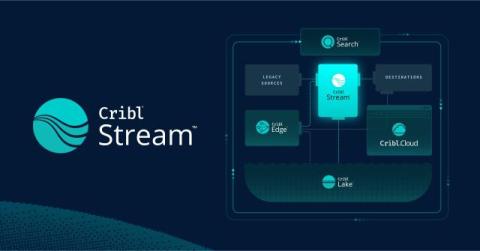
Cribl's products help IT and security teams analyze, collect, process, and route data at any scale.

This video showcases how Cribl products work together to power the Data Engine for IT and Security. Watch to see how IT and security teams can transform data management with Cribl. And the best part? No vendor lock-in, ever.

What Is Full Stack Observability & Why Is It Important?

Full stack observability is not merely about collecting data but about providing actionable insights. It empowers you to see beyond isolated metrics and logs, facilitating a deeper understanding of the interconnected nature of modern software systems. By implementing full stack observability, you can maintain operational integrity, swiftly address performance issues, and ensure a seamless user experience.

How to Transform IT Operations with AI-Infused, Full-Stack Observability

In today's fast-paced digital landscape, maintaining robust and efficient IT operations is more critical than ever. As organizations embrace complex infrastructures, integrating cloud services, microservices, and distributed architectures, the need for comprehensive visibility across the entire stack becomes paramount.

Anomaly detection and root cause analysis with Application Observability | Grafana Cloud

In this video, we walk you through the latest features of Grafana Cloud Application Observability, designed to accelerate anomaly detection and root cause analysis. Application Observability offers an out-of-the-box solution for monitoring applications and minimizing MTTR. It natively supports both OpenTelemetry and Prometheus and allows you to seamlessly unify application and infrastructure insights.

Cisco and Splunk Bring Full-Stack Observability to the Entire Enterprise

We’re excited to announce that soon after the acquisition, Splunk and Cisco started teaming up to deliver engineers and ITOps teams with an improved leading observability experience. With the forces of Splunk and Cisco joined together, observability practitioners will be able to enjoy a new level of troubleshooting and monitoring across their entire stack, regardless of their deployment model.

What is hybrid observability? Transform ITOps with AI insights

In today’s rapidly evolving technological landscape, IT teams grapple with the complexities of managing hybrid environments, where on-premises infrastructure coexists with cloud-based services. A report by 451 Research highlights the prevalence of this challenge, revealing that over 60% of organizations operate in hybrid environments. Yet, many struggle to manage the intricacies of this architecture effectively.

New Splunk Innovations Help Build a Leading Observability Practice for the Whole Enterprise

So much goodness is coming your way! Find out all about the latest and greatest from Splunk Observability that helps you keep your entire stack up and running, no matter where it’s deployed or who’s troubleshooting.
The Importance of Observability for Healthcare Providers

The systems and data that healthcare providers utilize and process are fundamental to its successful operation. Therefore these organizations must invest in appropriate and powerful observability solutions that enable them to effectively monitor their systems and valuable data. These tools and solutions allow healthcare providers to securely manage, deliver, and ensure uptime for their entire IT infrastructure.

Your Guide to Observability Engineering in 2024

It may sound complicated and daunting, but so much of observability is about discovering the unknown unknowns in your critical systems. The capabilities of observability engineering can help you make those discoveries. Most organizations have some form of monitoring, alerting and troubleshooting, which can be adequate to a point but fall short when trying to determine the root cause of unexpected outages.

From "rebooting" to reliable and secure applications: Optimizing the customer experience

Not so long ago in my career, I remember when it was relatively acceptable for infrastructure or development teams to solve a problem by rebooting a server or just “turning things off and on again.” It didn’t matter what caused the problem or how long the reboot would fix things, provided they were fixed for now. Security teams were always held to a different standard.

Ask the Experts: Observability: What Can the Frontend Steal From the Backend?

What is the biggest value of #observability as practiced on the #backend that you are excited to see taken up as more #frontend #developers start practicing observability on their own? Featuring: Winston Hearn, Frontend Observability Expert and Hazel Weakly, Web Developer and #SRE.

Ask the Experts: Distributed Tracing, OpenTelemetry, and Connecting Your Frontend to Your Backend

While baggage isn’t required for distributed tracing, it is required for carrying metadata between services. How will the observability community address that and make it easier over time? Featuring: Winston Hearn, Frontend Observability Expert and Hazel Weakly, Web Developer and SRE.

Why should you care about DNS Observability?

If you look at typical Application interaction with service point it tends to happen in two stages – first we connect to the Service and when we are interfacing through that established connection. In this description though one thing stays invisible – you can’t simply connect to the Service through the hostname – that host name needs to be resolved into an IP address, and if this name resolution process does not work or does not perform, the application suffers.

Exploring Advanced Monitoring with SolarWinds Observability

Watch the full session at: slrwnds.com/TC24 Silos are for Grain, Not IT Cheryl Nomanson and Kevin M. Sparenberg Previously, only managers, directors, and the CTO spoke beyond the traditional team boundaries. Those days are done. End users are more demanding than ever. Your IT infrastructure has expanded to keep up, but have your observability solutions kept pace? Reacting to customer incidents is the responsibility of all members of IT, from the service desk technician to the C-suite. We'll show you how to break down those silos.

What is Observability and Why You Need IT to Manage Your Hybrid Cloud Environment

In today's digital age, where technology plays a pivotal role in every aspect of our lives, ensuring the smooth and uninterrupted functioning of software applications and systems has become critical. This is where Observability shines. Observability is the ability to gain deep insights into the inner workings of a system, enabling organizations to identify and address issues before they turn into major disruptions.

How to Scale Observability with Grafana, Tempo, Loki, and Prometheus | Dojo | Grafana

In this talk, Roberto, a staff engineer at Dojo, outlines the company's journey toward achieving advanced observability, which has been crucial for their reliability efforts over the past three years. Dojo, a payments provider in the UK, has focused on evolving their observability practices, initially starting with basic monitoring and progressing towards comprehensive observability, encompassing metrics, traces, and logs.

What You Need to Know: 2024 Observability and Security Market Map

In today’s interconnected digital landscape, staying on top of market trends is essential for businesses aiming to thrive in the evolving world of observability and security. Recently, Cribl hosted a webinar to shed light on 2024 industry trends, and opportunities and challenges for both end users and vendors.. One of the notable highlights of the webinar is the convergence of observability and security, reflecting the shared data challenges faced by both IT and security teams.

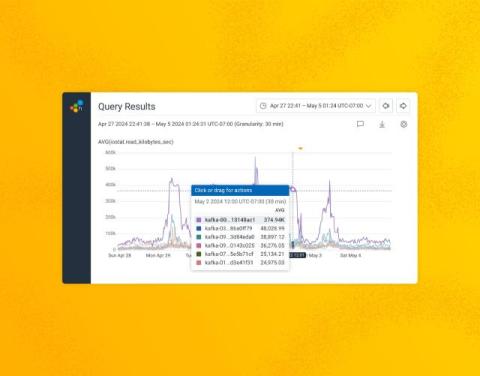
Investigating Mysterious Kafka Broker I/O When Using Confluent Tiered Storage

Earlier this year, we upgraded from Confluent Platform 7.0.10 to 7.6.0. While the upgrade went smoothly, there was one thing that was different from previous upgrades: due to changes in the metadata format for Confluent’s Tiered Storage feature, all of our tiered storage metadata files had to be converted to a newer format.

Grafana Provisioned Alerting for Effective Observability

Implementing a consistent and reliable alerting system across a sprawling organization is a significant challenge for just about any engineering team. For example, diverse infrastructures across different teams and numerous team-specific customizations may not translate well when investigating specific incidents. Inconsistent alerting practices can eventually lead to fatigue, leading to triggering of alerts that may not be relevant or actionable.

Why More Choices Matter With Observability Tools

Observability is a broad topic that provides visibility into the key metrics powering customer-facing applications. These applications range from external facing applications ( e.g., Internet banking/online education/e-commerce/government records ) to internal facing applications ( e.g., Trading systems by brokers, Logistics controllers, Traffic Management, and Hotel Reservations). Observability also incorporates backend systems powering industries that ensure smooth operations of tools and processes.

Application Observability And Its Role In Modern Software Development

Over the last few decades, software systems have grown complex due to the emergence of cloud-native architectures and multi-cloud environments. On the one hand, this makes it difficult to detect issues faster in the deployed application. It also requires intricate coordination between development, DevOps, and SRE teams, as they are also expected to speed up the whole software delivery process.

Devops Best Practices for Observability

Imagine one night you receive a notification from your team member that a critical production problem has caused chaos in your application. There is a sudden drop in sales as customers are unable to access the application and reporting issues relating to the same. Now, when you reach the office to fix the issue, you demand the team to run through all the files.

How to achieve Observability for Microservices-based apps using Distributed Tracing?

Modern digital organizations have rapidly adopted microservices-based architecture for their applications. Microservices-based apps have components designed around business capabilities serving a specific purpose. It enables smaller engineering teams to own specific services that lead to increased productivity. But componentization also leads to complexity. Today’s modern internet-scale businesses have hundreds or thousands of microservices.

Elastic Observability 8.14: New feature for SLO, AI Assistant, and .NET for Universal Profiling

Elastic Observability 8.14 announces the general availability (GA) of key Service Level Objective (SLO) management capabilities, additional enhancements to the Elastic AI Assistant for Observability, alerting improvements, and Universal Profiling for.NET. Enhanced SLO management capabilities: Enhanced AI Assistant capabilities.

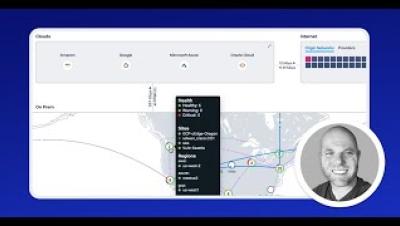
Demo: Kentik Network Observability for Hybrid Clouds

In this video, we demonstrate how Kentik provides comprehensive network observability for hybrid cloud environments, encompassing both on-premises and public cloud resources. We start with the Kentik map, showcasing active on-prem sites and cloud environments, then dive into specific examples of how to view and analyze traffic and connectivity. The demo covers how Kentik collects network telemetry from various sources, including AWS VPC flow logs, Azure NSG flow logs, and SNMP, to provide detailed insights into network performance.

Native and eBPF-based Kubernetes Workload Profiling for Kubernetes Clusters

System observability is an essential part of identifying performance issues within your environment because it provides a comprehensive view of how your systems are operating at a glance. Typically, observability is achieved through the collection and analysis of metrics. These metrics, generated by your applications, are deliberately incorporated by developers into the source code to offer insights into the application’s internal processes.

Bringing ArchiMate Flow Diagrams to Life with End-to-End Observability

Aligning IT infrastructure with business processes is paramount in today's digital landscape. This article explores how organizations can elevate their architectural modeling by integrating ArchiMate's flow diagrams, which are initially manually created, with the dynamic, auto-discovered components from StackState's end-to-end observability.

Logz.io Upgrades App 360, Kubernetes 360 with AI Assistant, New Tracing Quickview

At Logz.io, we believe the future of observability will center on the rapid advancement of automation, innovations around artificial intelligence, and streamlining processes that currently remain far too complex. This is no different than many other areas of technology, but the opportunities in observability are vast, and we see all of these areas connecting and driving improvements to the Logz.io Open 360 platform.

Connecting Self-Hosted Observability and Security with SolarWinds

Watch the full session at: slrwnds.com/TC24 The Integration Equation David Russell, Bryce Mata, and Chrystal Taylor Resolving an incident before end users are impacted is the new standard, but managing separate observability and incident management solutions is tempting fate. You are at risk of an issue slipping through the cracks. It's time to consolidate, streamline, and decomplexify your operations. Hybrid Cloud Observability combined with SolarWinds Observability and SolarWinds Service Desk make all of this much, much easier.

Deep dive into observability of Messaging Queues with OpenTelemetry

Working in the observability and monitoring space for the last few years, we have had multiple users complain about the lack of detailed monitoring for messaging queues and Kafka in particular. Especially with the coming of instrumentation standards like OpenTelemetry, we thought there must a better way to solve this. We dived deeper into the problem and were trying to understand what better can be done here to make understanding and remediating issues in messaging systems much easier.