Operations | Monitoring | ITSM | DevOps | Cloud

Accelerate Your OpenTelemetry Migrations With Honeycomb's Agent Skills

Since releasing our hosted MCP server last year, we've been thrilled to see customers not just adopt it but build Honeycomb deeply into their agentic development and observability workflows. Users have embraced it, leveraging Honeycomb to stay in conversation with their code and understand how it runs in production.
AI Needs Better Inputs: Why Observability Is Becoming the Foundation of Enterprise AI Maturity

Organizations across industries are accelerating their investments in AI for operations, yet the path to meaningful impact is proving far more complex than early expectations suggested. Analysts at Gartner, Forrester, Deloitte, and McKinsey continue to highlight the same structural barrier. AI cannot produce accurate predictions or safe automation when the operational data feeding it is fragmented, incomplete, or inconsistent.

Grafana Cloud Demo in Under 5 minutes | Full Stack Observability and more

Overview & demo of how Cloud provides an end to end Observability Platform that empowers users who have adopted open standards like or to improve their systems reliability using & a shift left approach with performance testing while optimizing their observability costs.

Observability and Security for the AI Era

Datadog has always been driven by a broader vision of helping teams understand and operate complex systems. In this session, you’ll hear from Yrieix Garnier, VP of Product, and Hugo Kaczmarek, Senior Director of Product, as they share the latest updates across the Datadog product suite and discuss how that vision continues to shape the platform’s evolution and support the next generation of AI-driven applications.

The Observability Gap: Why Monitoring Data Should Drive Tests

Most teams already know a lot about production. They have dashboards. They have traces. They have alerts. They have enough telemetry to explain what happened after an incident and enough graphs to argue about it for the rest of the week. Then they go to test a change and start from scratch. The integration tests hit a hand-written mock that returns {"status": "ok"}. The load tests replay a CSV somebody exported months ago. Staging is close enough to production right up until it matters.

Observability Is Now a Boardroom Priority Even If Nobody Wants to Say It Out Loud

Executives rarely state the full truth publicly, but inside boardrooms the conversation has changed. Observability, once viewed as a technical capability deep within operations, has become a strategic requirement for understanding business performance. Leaders may not always use the term itself, yet they focus intensely on the outcomes it promises. Their environments have grown too fast, too fragmented, and too interdependent for traditional visibility approaches to keep pace.

Scary Things Happen in Production. Context Helps You Find Them.

Production is a rowdy place of chaos, especially at scale. When you have millions of requests per second flowing through your system, weird things are always happening. Outliers, unusual request patterns, spikes and pulses of traffic from unknown sources, port scanning…it’s all there. To the naked eye, it looks like noise. If you know what you are looking for…patterns emerge. The night sky: every dot is a request. Without intent, it's an undifferentiated field of light.

Smarter Alerts, Faster Root Cause, & Proactive IT Ops with SolarWinds AI Observability

Discover how AI is transforming IT operations with SolarWinds Observability. In this video, we showcase powerful new AI-driven features designed to help you detect issues faster, reduce alert noise, and stay ahead of performance problems across your entire stack. From applications and databases to networks, cloud infrastructure, and end-user experience SolarWinds AI delivers deep insights where it matters most.

Cribl Search Demo: Security Investigation

In this demo, Nate Zemanek , Staff Solutions Engineer, shows how Cribl Search runs fast investigations. As an open data platform, Cribl Search lets you pull data from multiple sources and query everything from a single pane of glass. You’ll see how to run fast queries with the new lakehouse engine, search historical data with a federated approach, and bring everything together for full context. Then, use Notebooks to collaborate and share findings across teams to understand what happened—faster.

How a Runtime Aware AI SRE Agent Transforms System Reliability

A runtime aware AI SRE extends existing AI SRE approaches by moving beyond telemetry correlation into runtime-validated reliability. While the majority of AI SRE tools accelerate incident triage using logs, metrics, and traces, they cannot confirm execution behavior if critical runtime signals were never captured. By generating on-demand evidence inside running services, AI SRES can eliminate slow redeploy cycles, ensuring your distributed systems remain resilient under real-world traffic conditions.

Top Root Cause Analysis Tools Built for Runtime Context

Root cause analysis tools are designed to help engineering teams understand why failures happen in production and other remote environments. As modern systems become more distributed and input-dependent, many incidents cannot be reproduced outside live environments. The stakes are significant: high-impact IT outages cost organizations a median of $2 million per hour, with annual downtime costs reaching $76 million per organization.

From Observability to Action: How Product Analytics Is Closing the Loop in Modern Operations

Over the past decade, observability has become a cornerstone of modern operations. Metrics, logs, and traces have given teams unprecedented visibility into how systems behave under real-world conditions. Infrastructure can be monitored in real time, incidents can be detected faster, and performance bottlenecks can be diagnosed with increasing precision. But for all its progress, observability still leaves an important question unanswered.

Leveraging Cognitive Diversity to Tackle System Complexity

Most engineering leaders today understand that diversity matters. They've built teams that reflect a range of backgrounds, functions, and experience levels. They run postmortems, retrospectives, and architecture reviews that bring multiple voices to the table. They believe, not unreasonably, that this variety of perspectives leads to better decisions. But there's a problem hiding inside that assumption that can undermine everything: who people are is a surprisingly poor predictor of how they think.

How OpenRouter and Grafana Cloud bring observability to LLM-powered applications

Chris Watts is Head of Enterprise Engineering at OpenRouter, building infrastructure for AI applications. Previously at Amazon and a startup founder. As large language models become core infrastructure for more and more applications, teams are discovering a familiar challenge in a new context: you can't improve what you can't see.

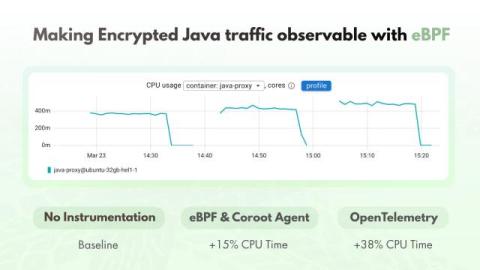
Making encrypted Java traffic observable with eBPF

Coroot's node agent uses eBPF to capture network traffic at the kernel level. It hooks into syscalls like read and write, reads the first bytes of each payload, and detects the protocol: HTTP, MySQL, PostgreSQL, Redis, Kafka, and others. This works for any language and any framework without touching application code. For encrypted traffic, we attach eBPF uprobes to TLS library functions like SSL_write and SSL_read in OpenSSL, crypto/tls in Go, and rustls in Rust.

What is Virtana Application Observability and how is it different?

Application Observability, Built for Hybrid Reality Modern applications don’t live in one place. A single transaction might span: Traditional APM shows you the trace. But hybrid reality doesn’t stop at the service layer. True application observability ties transactions to the infrastructure that actually delivered them across cloud, on-prem, and everything in between. Because in hybrid environments, the root cause rarely lives in just one tier.

Datadog Data Observability, enables you to detect data quality and pipeline issues early.

See our latest Episode of This Month in Datadog, for a spotlight of Datadog Data Observability, which enables you to detect data quality and pipeline issues early, as well as remediate those issues with end-to-end lineage. We also cover: This Month in Datadog brings you the latest updates on our newest product features, announcements, resources, and events.

Claude Code + Lightrun MCP: Your AI Agent Now Has Live Runtime Vision

Claude Code, Anthropic’s coding agent, now integrates with Lightrun through MCP. AI code assistants have been flying blind. Google Dora’ 2025 report found it is causing, an almost 10% increase in code instability. Even with up to 1M tokens of context available in Claude, this powerful agenti cannot see how the code it writes actually behaves inside a live system under real traffic, real dependencies, and under a load of 10,000 requests per second.

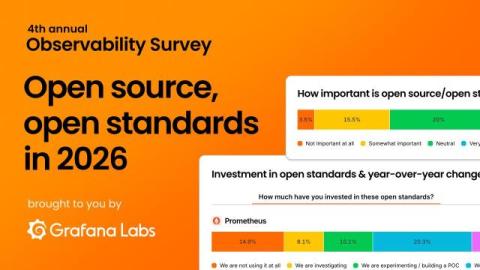
Open standards in 2026: The backbone of modern observability

Open source software and open standards are now an essential part of how organizations maintain their systems. That's not to say they haven't always been important, but the fourth annual Observability Survey, brought to you by Grafana Labs, shows just how deeply the shift to open has taken hold, with 77% of respondents saying open source and open standards are important1 to their observability strategy.

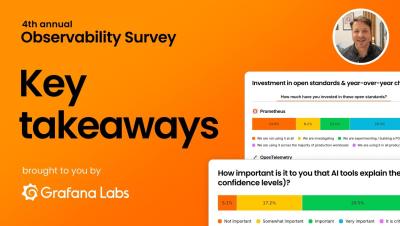
Engineers Want AI in Observability - With One Catch: 4th Annual Observability Survey by Grafana Labs

Actually useful AI is welcome in observability. AI for the sake of AI is not. In this overview of Grafana Labs’ 4th annual Observability Survey, Marc Chipouras shares what 1,300+ respondents from 76 countries told us about the current state of observability — and what comes next. This year’s survey explores four major themes: The results show strong interest in AI for forecasting, root cause analysis, onboarding, and generating dashboards, alerts, and queries. But when it comes to autonomous action, practitioners are more cautious — and 95% say AI needs to show its work to earn trust.

How agentic ITOps overcomes observability tool gaps

As enterprise ITOps teams monitor increasingly complex, cloud-based, containerized systems, traditional observability practices are struggling to keep up. As IT infrastructure complexity increases, the typical response is to layer on more monitoring, logging, and instrumentation.

Production Is Where the Rigor Goes

In early February, Martin Fowler and the good folks at Thoughtworks sponsored a small, invite-only unconference in Deer Valley, Utah—birthplace of the Agile Manifesto—to talk about how software engineering is changing in the AI-native era. They recently published a summary of key insights and themes from the summit, sorted into ten topical buckets.

AI in observability in 2026: Huge potential, lingering concerns

The role of AI in observability is evolving rapidly, but the data from our fourth annual Observability Survey makes one thing abundantly clear: the potential is real, and so are the reservations. Practitioners overwhelmingly see value in using AI to help surface anomalies, forecast and spot trends, assist with root cause analysis, and get new users up to speed quicker.

Shifting Metrics Right

In the shift left era where it feels like we’re pushing everything as far to the start of the SDLC as we can, it may seem counterintuitive to shift anything right. That is, however, exactly what I suggest when it comes to generating metrics. How far you go to the right of the SDLC is a much more nuanced question and is dependent on a lot of factors, and on what metrics you’re talking about.

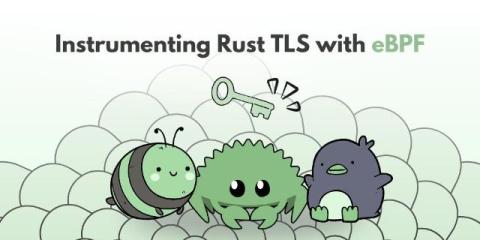
Instrumenting Rust TLS with eBPF

Coroot is an open source observability tool that uses eBPF to collect telemetry directly from applications and infrastructure. One of the things it does is capture L7 traffic from TLS connections without any code changes, by hooking into TLS libraries and syscalls. Works great for OpenSSL. Works for Go. Then rustls enters the picture and everything stops being obvious. With OpenSSL, everything is nicely wrapped: From eBPF’s point of view this is perfect: Everything happens inside one call.

Observability for distributed IoT systems: reducing alert fatigue through modular architecture

Many distributed IoT teams hit the same wall at roughly the same stage. The fleet grows, telemetry coverage improves, dashboards multiply, and on paper the system becomes more visible. In practice, the operating picture often gets harder to read. There are more alerts to review, more exceptions that do not fit existing runbooks, more cases where someone has to cross-check device state against backend logs and integration behavior by hand. What starts to slip is not only response speed, but confidence. The team sees more signals, yet feels less sure which ones matter and which ones can wait.

Golang memory arenas [101 guide]

Go 1.20 introduced an experimental arena package that lets you allocate many objects from a contiguous region of memory and free them all at once — bypassing the garbage collector entirely. The package remains experimental and its future is uncertain, but arenas are a valuable concept for understanding Go memory management and writing high-performance code. The arena package is experimental and on hold indefinitely. The Go team has made no guarantees about compatibility or its continued existence.

Observability vs Monitoring: Why the Difference Still Matters in Complex Systems

In modern infrastructure, the words observability and monitoring are often used as if they mean the same thing. That shortcut sounds harmless, but it creates real confusion inside technical teams and business discussions. The two ideas are connected, yet they solve different problems. In simple systems, the gap may feel small. In complex systems, the gap becomes impossible to ignore because the cost of misunderstanding it usually appears during failure, not during routine operation.

Evaluating Observability Tools for the AI Era

Every observability vendor has an AI story right now. Most have an MCP. Many have a chatbot. All have a demo where the AI finds the root cause of an incident in thirty seconds and everyone in the room nods. In the context of a public demo, these tools look almost identical. Ask the AI a question, the tool returns an answer, and the engineer fixes the bug. Impressive. But if you buy based on the demo, you may end up with an AI layer that looks great on a call and disappoints in production.
How to Reduce MTTR with AI-Powered Runtime Diagnosis

Reducing Mean Time to Resolution (MTTR) in production systems requires understanding failure behavior in real time. While AI code agents significantly accelerated software development and deployment, incident resolution has remained constrained by incomplete pre-captured telemetry. AI SRE tools improve signal correlation, but MTTR reduction requires runtime-verified diagnosis that confirms execution behavior directly in production systems.

How to Solve "Cannot Reproduce" Bugs That Cost Support Teams Hours

Support teams frequently face vague customer reports and incomplete data but need to offer fast resolutions autonomously without escalating to developers. In this article, learn how to equip support engineers with tools to diagnose root causes in minutes, increasing self-sufficient issue resolution. We explore eliminating the ‘Reproduction Tax’ for ‘cannot reproduce’ bugs using runtime context to achieve technical certainty at scale.

Observability Where You Work: Introducing the Honeycomb Slackbot in Beta

Engineers are constantly context switching between tools, adding cognitive overhead on top of already complex work. You're deep in an investigation, you need to analyze some data, pull up a runbook somewhere else, and share findings back in Slack. Context gets lost in the shuffle, correlating across data sources becomes painful, and everything just takes longer. In high-pressure situations like incidents, that friction has a real cost to the business.

Honeycomb Metrics Is Now Generally Available

It’s Black Friday. Checkout latency is spiking. Your on-call engineer pulls up the dashboard and starts working through the list. Is it a regional issue? No, all regions look fine. A payment provider? Stripe, PayPal, Apple Pay all nominal. A bad deployment? Nothing shipped in the last six hours. All your infrastructure dashboards are showing green. But customers are complaining. Checkout is slow, carts are being abandoned and revenue is draining away.

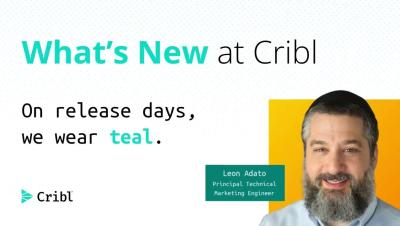
What's New at Cribl 4.17: On release days, we wear teal.

In this episode, Leon runs through all the updates in Cribl release 2603, which includes a massive update to Cribl Search, the ability to detect PII and secrets in the background as part of Cribl Guard, and two cool enhancements to Cribl Packs - monitoring and enhanced routing. Try Cribl Now! Sandboxes let you get hands-on experience with Cribl without the fuss or friction.

What is Cribl Guard background detection?

Security and compliance teams need to know exactly what sensitive data is flowing through their environments and where it’s going. ​​Because surprise PII is no one’s favorite kind of surprise. Meanwhile, upstream teams are shipping new apps, changing schemas, adding fields, and generally moving fast. However, you can only manage and protect the data you currently know of and expect. But sensitive data has a habit of showing up where no one expected it…

Meet the new Cribl Search: Faster investigations with AI

Get a quick look at the new Cribl Search experience—built to help teams investigate faster, onboard data easily, and get answers from their logs without complex query languages. In this quick overview, we show how Cribl Search helps you move from raw data to insights in minutes: The result? Faster investigations, simpler workflows, and powerful AI-assisted analysis across your telemetry. Learn how the new Cribl Search makes exploring and analyzing data easier for everyone—from experienced analysts to teams just getting started.

The best observability platforms for developers

At some point, logs stop being enough. As applications grow more distributed, understanding what's actually happening in production becomes harder. That's what observability platforms are built for. The hard part is figuring out which one is actually right for your application — and your budget. This guide covers some popular options: what they do well, where they fall short, and who they're for.

Olly for SREs: 3 ways I actually use it in production

There’s a moment after an alert where you’re not fixing anything yet. You’re trying to answer a much simpler question: Is it actually down? Sometimes it’s obvious. Sometimes it’s 20 alerts at once with no clear starting point. Sometimes it’s a small upstream degradation that might cascade. Sometimes it’s just a spike that resolves on its own. That first phase is orientation. Is the signal real or transient? Is it isolated or spreading? Root cause or symptom?

Create a Custom Service Health Board With the Honeycomb MCP

Your software is sending data to Honeycomb. Now where is the dashboard you want? The best dashboard is one created just for your application, or your service, or your team. You can get that in minutes with the Honeycomb MCP. Open your coding agent in your IDE, or on the command line in your code repository. Configure the Honeycomb MCP and authenticate with Read and Write permissions. Now tell it what you want. You can be high-level: Make me a service health board for the frontend service.

Approaching your observability migration with the right mindset

This guest blog post is authored by Nick Vecellio, Principal Engineer and Co-founder of NoBS, a Premier Datadog Partner specializing in hands-on Datadog migrations and optimizations. At NoBS, we help enterprises migrate their observability stack to Datadog. Teams often come to us after a migration has technically “worked,” but the new setup requires optimization tweaks to provide the clarity, reliability, or operational benefits they’re looking for.

What is Agentic Observability?

Agentic observability is the instrumentation and correlation needed to explain and control agent behavior across multi-step workflows. Legacy observability focuses on runtime health and service behavior. You monitor metrics like CPU usage, memory, latency, and error rates to confirm that applications and infrastructure are functioning as expected. When a workflow degrades, the proximate cause is often a crash, timeout, permission error, or resource constraint.

Top 12 AI and LLM Observability Tools in 2026 Compared: Open-Source and Paid

Artificial intelligence has moved far beyond experimentation. In 2026, AI systems are embedded into customer support workflows, clinical decision support tools, fraud detection engines, and internal copilots across nearly every industry. Adoption is accelerating quickly. According to McKinsey, 23% of organizations are already scaling agentic AI systems, while another 39% are actively experimenting with them. Yet the path to reliable production AI remains uncertain.

Observability for Azure Virtual Desktop with SquaredUp

Managing Azure Virtual Desktop doesn’t have to mean jumping between portal blades, logs, and metrics trying to piece together what’s happening. In this webinar, you’ll learn how to design and implement a single, operational observability dashboard for Azure Virtual Desktop (AVD) using SquaredUp Cloud — transforming fragmented telemetry into clear, actionable insight. Whether you're responsible for performance, user experience, or operational stability, this session will give you a structured, repeatable framework for monitoring your AVD estate with confidence.

Full-Stack Observability Is Becoming a Business Imperative

As enterprises accelerate digital transformation, technology performance has become inseparable from business performance. Customer experiences, revenue streams, and operational efficiency increasingly depend on the reliability of complex, distributed systems. In this environment, full-stack observability is no longer a technical aspiration — it is a strategic necessity.

Your Questions About AI-Assisted Development Answered

We recently hosted a webinar on AI-assisted development with DORA, and the audience had a lot of questions—far more than we could get to in an hour. I picked out six that get at the stuff people are wrestling with day to day. These aren't the easy questions, and I don't think there are necessarily easy answers, but I've spent the past year building and shipping with AI coding tools and observing (literally) what happens when that code hits production. Here's what I have.

Public Sector Observability: Service Experience and Reliability Are Now Mission-Critical

Reliable digital services aren’t optional for public sector agencies. They’re essential to mission success. Across the U.S. public sector, service experience and reliability have moved from operational concerns to mission requirements. At a federal level, Executive Order 14058 makes improving service delivery and customer experience a federal priority, measured by real outcomes for the public. And for state and local governments, the bar is set by the private sector.

Centralizing Docker Logs for Observability and Security

Most people can remember the old game of telephone, the stream of whispered sentences or phrases across a group of kids. At each transmission, a different piece of information gets lost or misheard, leaving the last person with an incomplete or incomprehensible statement. Managing Docker logs can feel the same way, especially when an error message is lost or an error message lacks context.

5 Essential Capabilities that Make Coralogix an Observability Powerhouse

Sometimes observability can feel like a second job. With many traditional tools, users must become experts in a proprietary language to ask a simple question. In these cases, developers or SRE’s can find themselves spending more time manually sifting through raw text, building complex data pipelines from scratch, and bouncing between fragmented dashboards than actually solving problems.