Operations | Monitoring | ITSM | DevOps | Cloud

Sponsored Post

How to Reduce Continuous Monitoring Costs

Continuous monitoring is a crucial practice in the fields of DevOps, cybersecurity, and compliance. It involves the proactive and ongoing process of observing, assessing, and collecting data from various systems, applications, and infrastructure components in real-time or near real-time. Continuous monitoring is closely related to observability, which goes beyond simple monitoring to provide a deep understanding of complex and dynamic systems.

Observability Without Limits - Uptrace Pricing Explained

Welcome to Uptrace, the modern observability platform. Our pricing is simple: pay only for the data you ingest. Unlimited users, services, and hosts Billed per uncompressed GB for spans & logs Billed by active timeseries for metrics Automatic volume discounts as your usage grows Free trial includes 1 TB of spans & logs and 100,000 timeseries — no credit card required.

Tech Talk - Aligning Observability Costs with Business Value Practical Strategies

Learn how to tackle the challenges of growing telemetry data and optimize your observability model to maximize value while minimizing costs. This session will explore strategies to reduce log ingestion, centralize pipeline management, and gain visibility into metric usage to identify waste.

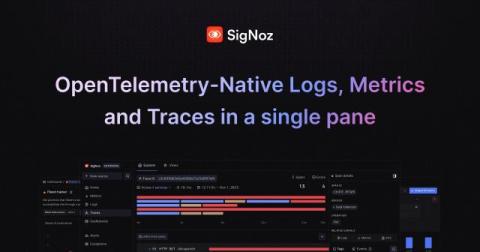
Full-Circle Observability: Using SigNoz to monitor a LangChain agent that queries SigNoz MCP

In Part 1 of this series, we explored how to instrument a LangChain trip planner agent with OpenTelemetry and send telemetry data to SigNoz. By tracing each step of the planning process: LLM reasoning, tool calls for flights, hotels, weather, and activities, and the final itinerary response, we saw how observability turns a black-box agent workflow into a transparent, debuggable system.

LangChain Observability: How to Monitor LLM Apps with OpenTelemetry (With Demo App)

LangChain has become one of the most popular frameworks for building LLM-powered applications, making it easier to create agents that can reason, plan, and take actions. But like any production-grade AI app, LangChain agents can run into performance bottlenecks, hallucinations, or tool call failures. And without proper LangChain observability, it’s hard to know where things break down.

EP #2: Valkey, Vector, Redis, and the History of Databases - The Open Source Observability Podcast

In this episode we learn how Valkey, the lightning-speed open source key-value datastore, can help improve your observability toolstack. Dive in to learn what differentiates a NoSQL data store from a relational database, more about data structures such as HyperLogLog and Bloom Filter, and all about the history of how data is stored.

Evaluate and Improve Your Site's Web Performance With Honeycomb for Frontend Observability

As an engineer on Honeycomb’s frontend platform team, I’m constantly trying to understand and improve our web performance. And I have a whole lot of questions. I tried answering these types of questions without Honeycomb in the past, and it was difficult and time consuming. It used to take me days to identify performance issues and their causes, let alone fix them and confirm that they improved web performance for some subset of users.

Raising the bar in observability and security: Coralogix extensions at scale

In today’s high-velocity digital ecosystem, visibility isn’t enough. SREs and engineering leaders need real-time insights, actionable signals, and automated workflows to operate at scale. As systems grow more distributed and cloud-native, the demand for intelligent observability and security has never been higher. Extensions are solutions to get instant observability with prepackaged parsing rules, alerts,dashboards and more.

How Product Managers Can Benefit From Honeycomb

Observability tools like Honeycomb are built for engineers, not PM teams… but that doesn’t mean there’s no benefit to having your PMs in Honeycomb. Whether it’s debugging a weird customer issue or tracking how a feature is used in the wild, observability gives PMs something traditional product tools can’t: real-time answers with full context, down to a single user.

Proactive Observability - Predictive Analytics Models and Algorithms for IT Systems and Metrics

Predictive Analytics Models and Algorithms are an important component of eG Enterprise’s AIOps engine for proactive observability. eG Enterprise collects and analyses metrics, events, logs and traces and the data including real usage data is used to make intelligent predictions to forecast future system behavior and IT resource metric levels.

Honeycomb Launches Integration With the Anthropic Usage and Cost API

If your organization is anything like ours, then you’ve probably embraced using large language models like Claude. Just last week, we gave all Honeycomb employees access to Claude. Now, developers can generate AI-assisted code, product managers can perform analysis on customer usage trends, marketers can test messaging, sales can do customer discovery and we are shipping AI-powered features to improve user experience.

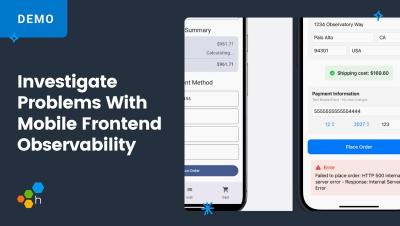
Investigate Problems With Mobile Frontend Observability

You can use your mobile tools to debug errors, but are you really looking at the root cause? With end-to-end observability, powered by Honeycomb's Mobile Android and iOS SDKs, you can see everything! We'll show you how to start from a mobile launchpad, view the errors, select a trace, and find that root cause.

Scale Observability, Streamline Operations with AppNeta Monitoring Policies

In today's sprawling enterprise environments, keeping the network running smoothly isn’t just a technical hurdle—it’s a logistical marathon. Enterprise IT environments are in constant motion. New employees come on board. Contractors rotate in and out. Departments roll out new tools. Corporate offices expand, consolidate, or close. And users demand flawless connectivity from wherever they are.

Simplify XML log collection and processing with Observability Pipelines

In Microsoft-based environments, Windows event logs capture critical security events like user logins, privilege escalations, and system changes. These logs are vital for compliance and investigations. However, they’re natively formatted in XML, a verbose and deeply nested structure that is hard to search without preprocessing and inefficient to store.

AI in observability at Grafana Labs: Making observability easy and accessible for everyone

Did you know that observability has been around for more than six decades? It all goes back to a Hungarian-American inventor named Rudolf Kálmán who thought about how external outputs could measure the internal state of a machine. Kálmán wrote about monitoring single-input single-output systems, but our demands are very different today. We need to observe monoliths, microservices, clusters, pods, regions, and many more.

Inside the Coralogix AI Center: Solving AI's Silent Failure Crisis

Observability has always answered one core question: Is it running? But in the era of LLMs, autonomous agents, and AI-powered workflows, that’s no longer enough. We need to ask a harder, scarier question: Is it right? And right now, most teams can’t answer that. Let’s fix it. In our last post, “The AI Monitoring Crisis No One’s Talking About,” we outlined why prompt injection, hallucinations, and context drift create invisible failures.

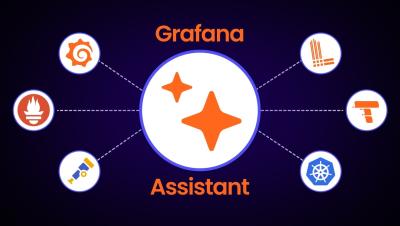
Getting Started with Grafana Cloud's AI Assistant for Observability

The pace of software delivery in 2025 is unprecedented — cloud-native apps, microservices, and AI-generated code are shipping in days, not months. But one challenge never changes: ensuring reliability and visibility when systems fail. In this video, we explore how the new Grafana AI Assistant brings true, context-aware observability to your stack. Watch as we deploy an open-source Python service with Kafka, Postgres, Kubernetes, and Prometheus then use the AI assistant to instantly generate dashboards, alerts, and reduce un-needed telemetry volume.

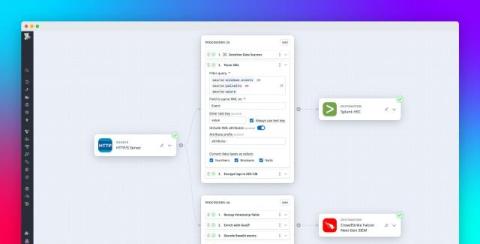
REST easy with REST Packs

The countdown to CriblCon 25 is on and we’re giving you an exclusive first look at the expert insights, innovative solutions, and success stories you’ll see on the big stage. REST collector configuration can be painful, requiring navigating to multiple screens and importing multiple configuration files, but it’s about to get a lot easier. Join Cribl experts to preview how easily you can install and build new packs with new enhancements.

Observability trends in Brazil: insights from our localized survey

Organizations in Brazil are eager to adopt some of the latest observability trends and technologies as they look to keep their software running as smoothly as possible, according to analysis of a micro survey recently conducted by Grafana Labs. Observability is an evolving space, and this is the first time Grafana Labs has run a Brazilian version of our annual Observability Survey.

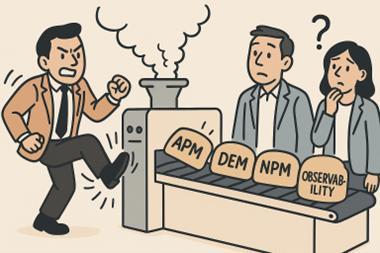
APM vs observability: why your definitions are broken

Recently I was asked to offer my opinions on Application Performance Management (APM) and Observability (o11y) - how they overlap, compete, and conflict. I was just one of several folks who's ideas were solicited, so (understandably) some of my thoughts were left out of the original article. HOWEVER, I'm never one to let good words (or at least a lot of words) go to waste, so I thought I'd pull them together here.

Error Analysis in Honeycomb for Frontend Observability Now in Public Beta

You just shipped your latest frontend release. It passed QA, CI ran, and it looked great in pre-production. But now it’s live and users are hitting an unexpected error: TypeError: undefined is not a function in Chrome. Your error tracking tool flags the exception. You get a stack trace, some breadcrumbs, maybe a session replay.

Introducing Logz.io Open 360 AI: The Next Generation of Observability Is Here

Traditional observability tools can’t keep up with modern complexity. Dashboard and alert-based approaches still rely heavily on manual processes, resulting in longer troubleshooting cycles, slower decisions, and higher MTTR. Engineering teams need something better. Today we’re launching Open 360 AI, the first observability platform designed for both humans and AI agents working together.

Using GreptimeDB as Prometheus Data Lake in Coroot

Coroot is excited to feature an editorial from the open source observability database GreptimeDB as an Open Source Spotlight. We hope to improve the work of our global community of SREs and DevOps professionals by sharing exciting projects like GreptimeDB, which make innovation accessible for everyone through the freedom of open source.

Size-capped telemetry storage with ClickHouse and Coroot

Cloud platforms make it incredibly easy to store data. Object storage feels endless, and block volumes can be resized anytime. That’s great, until you check the cost. In some cases, like financial transactions, storage costs are tiny compared to the value of the data. But observability is a different story. Logs, traces, and profiles can be extremely detailed and often take up more space than the actual business data. Yes, there are situations where logs need to be kept for compliance reasons.

Coralogix becomes first observability vendor to earn ISO/IEC 42001:2023 certification for responsible AI

We’re proud to announce that Coralogix is now officially ISO/IEC 42001:2023 certified, becoming the first observability vendor to achieve this globally recognized standard for responsible AI management. ISO/IEC 42001:2023 is the world’s first international standard for Artificial Intelligence Management Systems (AIMS). It provides a comprehensive framework for how organizations should govern AI, focusing on transparency, ethical use, accountability, and regulatory compliance.

Leaning into AI, ML, and observability to manage your ever-growing infrastructure

The complexity and scale of modern infrastructure requires an equally intelligent set of observability tools to effectively monitor it. Remember when scaling meant ordering new servers and racking them in a data center? Remember when cloud providers first offered access to seemingly infinite virtual machines at the click of a button? Remember when Kubernetes made it trivial for infrastructure to automatically scale itself based on demand?

Applying AI/ML in Observability - Tech Talk #7

Ready to master anomaly detection? Join us for Part 2 of our "Applying AI/ML in Observability" series, where we do a deep dive into vmanomaly! In this live stream, Mathis and Marc will be joined by a very special guest: Fred Navruzov, the lead developer and mastermind behind VictoriaMetrics' vmanomaly. If you want to move beyond the basics and unlock the full potential of AI-driven observability, this is a session you can't afford to miss.