Operations | Monitoring | ITSM | DevOps | Cloud

Sponsored Post

Ephemeral Environments Explained: From Creation to Cleanup

Ephemeral environments turn ideas into running systems in minutes, not days. They give every pull request a full-stack home with real URLs, real data, and production-grade routing. When a feature is approved or closed, the whole thing vanishes cleanly. That rhythm, create, test, update, pause, destroy, changes how teams ship software. This isn't just about speed. It's about tighter feedback with lower risk. It's about treating environments as code, enforcing repeatability, and keeping costs contained.
Zero code tracing: Kubernetes observability with Logz.io and eBPF

Distributed tracing is a core tool for operating modern microservices platforms. For SREs and DevOps teams, it is often the fastest way to understand latency issues, service dependencies, and unexpected failure modes. But achieving comprehensive tracing coverage is resource-intensive and time-consuming. It usually requires application changes, language-specific instrumentation, agent lifecycle management, and ongoing coordination with development teams.

Unified Observability: What It Is and Why It Matters for Large Enterprises

Modern enterprises operate within a digital ecosystem of staggering complexity - spanning on-premises systems, private and public clouds, APIs, containers and SaaS platforms. Business-critical services often rely on a mix of legacy infrastructure and modern applications, each producing huge volumes of metrics, log messages, traces and events.

Observability for Feature Flags

Some of your users are having a party; dancing away, having a great time. But a couple of users are stuck outside in the rain, knocking on the door, trying to get in. Unfortunately, you can’t hear them because of all the noise happening inside. That’s what it feels like when you gradually roll out new features across your user base without the right monitoring.

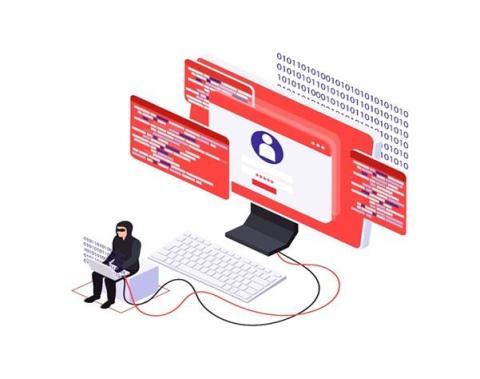
How Browser Hijackers Impact Enterprise Observability and Monitoring Tools

The browser is an essential component for enterprise execution. Given the browser's importance, observability relies on accurate, trustworthy telemetry. Browser hijackers are a dangerous threat because they operate below the radar and introduce operational risks that undermine monitoring reliability, degrade signal quality, and affect decision-making and telemetry across an enterprise's ecosystem.

Powering modern IT with a smarter observability platform

Since its inception, the Site24x7 platform has been the central pillar of monitoring. In 2025, it evolved beyond monitoring to become a comprehensive decision-making layer for modern IT operations. With a strong focus on usability, intelligence, governance, and scalability, this year’s enhancements were designed to help teams see clearly, act decisively, and plan confidently for the future.

2026 Observability Predictions: What Lies Ahead?

What remains of the 2025 AI hype? After a year of “AI will fix everything” promises, engineering teams in 2025 hit a wall of reality: AI is a tool, not a magic bullet. We’re now seeing a more practical approach: identifying broken workflows and tasks where AI can help and leveraging AI strengths like data analysis at speed and scale to derive meaningful, valuable insights. Looking ahead, 2026 will reward organizations that combine AI innovation with a practical approach.

Top 3 Trends Defining Network Observability in 2026

As we enter 2026, the dust has settled on the initial explosion of hybrid work and cloud adoption. The "new normal" is no longer new; it is simply operations as usual. However, the tools we use to manage this ecosystem are undergoing a massive correction. The fragmented, tool-sprawl approach of the early 2020s is proving unsustainable in the face of growing network complexity. Network operations teams are no longer looking for more data; they are looking for better answers.

Looking back at 2025: Innovations that shaped DevOps and observability

The year 2025 has been exciting for Site24x7, packed with innovations designed to make monitoring smarter, faster, and more intuitive. From enhanced APM insights and deeper database observability to a more powerful log management experience and AI-driven plugin enhancements, we’ve focused on giving teams the tools they need to troubleshoot faster, gain clearer insights, and manage complex environments with ease. Let’s rewind and see our 2025 highlights.

The Observability Stack is Collapsing: Why Context-First Data is the Only Path to AI-Powered Root Cause Analysis

By Bill Balnave, VP of Customer Success at Mezmo The core promise of modern observability is simple: cut Mean Time To Resolution (MTTR). Yet, despite a boom in tooling and investment over the last four years, the data tells a sobering story: our industry is actually getting worse at finding and resolving issues. Dashboards, once our trusted guide, have become the starting point for a chaotic "dashboard hunt" that rarely leads to the definitive root cause.

Gartner I&O and Cloud Strategies Conference 2025: From Observability to Outcome-Driven Operations

This year’s Gartner IT Infrastructure, Operations and Cloud Strategies Conference made one thing abundantly clear: the industry is moving beyond reactive monitoring and isolated dashboards toward autonomous, outcome-driven IT operations. While AI and agentic automation dominated keynotes and vendor messaging, conversations on the show floor reflected a more grounded reality.

The 2026 VMUG Report: Why Network Observability is the Heart of the New VCF Era

The cloud landscape is no longer just about "getting to the cloud"—it is about mastering the complexity once you are there. For organizations using VMware Cloud Foundation (VCF), the stakes have never been higher. As infrastructure converges, the margin for error shrinks, and the need for precision grows. To understand how the industry is navigating these changes, we dive into the VMUG Cloud Operations and VCF User Experience Report 2026.

Tech Talk - Splunk Observability for AI

In this Tech Talk, we’ll show you how Splunk’s agentic, AI observability delivers end-to-end visibility of the entire AI stack, from agents and large language models (LLMs) to the underlying infrastructure. You’ll see how AI Infrastructure Monitoring provides teams with data-dense dashboards and detectors for surfacing trends, patterns, and outliers to correlate application health with underlying AI infrastructure performance.

Reporting Exceptions to Honeycomb with Frontend Observability

So you've built a client application and you've started sending telemetry. The information sent back by this client is vital to you, and one of the first things you care about is capturing and reporting errors. There are at least two ways to report error details in OpenTelemetry. Web applications generally place exceptions in trace spans as span events, and mobile applications send exceptions as log messages instead.

Save the logs, save the planet: How to make your observability stack greener

If data centres were a country, they’d rank fifth in electricity consumption by 2026. Over the past few years, the resulting carbon footprint of the technology industry has sparked the fast-growing green software movement, led by the Green Software Foundation. How can we continue to innovate software in a way that also minimises its impact on the environment? This has been a fascinating problem I’ve been exploring for a few years now.

AI Observability in 2026: Why the data layer means everything

If there was ever a year for AI observability, it was 2025. Vendors released assistants to cover a variety of use cases. Coralogix released the first agent (distinct from assistants!), Olly, an autonomous, multi-agent observability platform. The direction of travel is clear, but many vendors and users are about to run into some significant problems with their data layer.

Top OpenTelemetry Backends for Storage & Visualization

OpenTelemetry backends provide storage, analysis, and visualization for telemetry data (traces, metrics, logs). This guide lists available OpenTelemetry-compliant backend options, categorized by use case: APM platforms, storage backends, visualization tools, and distributed tracing systems. For detailed comparison, see OpenTelemetry Backend Comparison.

Agentic AI demands a new data architecture #ai #telemetry

Clint Sharp explains why traditional schema-on-read systems cannot handle the query loads of the future. Agentic telemetry requires a 360-degree view, but structuring data only when you read it is too slow for AI-driven workloads. The solution is using LLMs to drive the cost of building parsers to near zero. Tools like Copilot Editor allow teams to map data to OCSF instantly, effectively building factories of parsers to handle the scale of agentic AI.

How AI Agents automate incident response #ai #cybersecurity #telemetry

Clint Sharp demonstrates how Cribl Search leverages AI to streamline incident investigation. Starting from a Slack channel, the AI builds an interactive notebook, analyzes order processing logs, and identifies suspicious traffic spikes. It connects high CPU usage to a recent Jenkins deployment, hypothesizing a supply chain attack, and ultimately recommends a rollback. This isn't a far off concept. It is the future of operations arriving right now.

Why AI agents need a common data model #ai #telemetry

Clint Sharp explains why a common model like OCSF is critical for the future of AI. Agents need standardized data to analyze information effectively on your behalf. He contrasts the traditional manual workflow of checking Slack, tickets, and wikis while asking colleagues with a future where AI fuses this human context with machine data. Instead of just search results, AI agents will hand you examined hypotheses so you know exactly where to take your investigation.

AI-Powered Observability: From Reactive to Predictive

If there’s one thing clear from our AI-powered observability webinar, it’s that observability has officially graduated from a “nice-to-have” to a business-critical discipline, and AI is helping lead that charge. Our webinar brought together guest speaker Stephen Elliott, Group VP at IDC, and Ranbir Chawla, former SVP of Engineering at RB Global, for an hour of insights that mixed data, experience, and hard-won lessons from the trenches.

Docker Logs Command Reference: tail, follow, since Options

Managing Docker container logs is essential for debugging and monitoring application performance. Tailoring Docker logs allows for real-time insights, quick issue resolution, and optimized performance. This guide focuses on efficient methods for tailing Docker logs, with clear examples and command options to streamline log management.

Observability trends for 2026: Maturity, cost control, and driving business value

The observability landscape has undergone a fundamental transformation over the past several years. In a recent report, The Landscape of Observability in 2026: Balancing Cost and Innovation conducted by Dimensional Research and sponsored by Elastic, over 500 IT decision-makers were surveyed. It revealed that observability has definitively transitioned from an optional capability to a mission-critical business function.

Lightrun 'Runtime Context' Empowers AI Coding Agents to Build Software That Works in the Real World

Safe, Direct Access to Runtime Code Across Staging, Pre-prod and Production via MCP Enables Fundamental Step Forward in Autonomous Software Delivery and Reliability for Enterprises NEW YORK, December 10, 2025 – Lightrun, a leader in software reliability, today launched its new Model Context Protocol (MCP) solution, enabling the industry’s first fully integrated Runtime Context for AI coding agents.

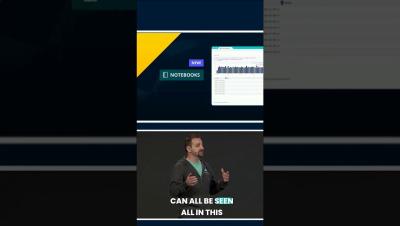
Become a 10x investigator with Cribl Notebooks

Cribl Notebooks aims to streamline the investigation process by bringing everything into a single interactive interface. It functions as a virtual war room where teams can collaborate in real time. You can view AI queries and code alongside charts without switching between scattered tabs or workstations. This persistence makes it easier to document the root cause and share the story behind the data.

Building a Stronger Defense with Network Observability and Real-Time Monitoring

In today's rapidly evolving digital landscape, the importance of network security and performance has never been more pronounced. Businesses are increasingly relying on their network infrastructure to support a wide array of critical applications, services, and user activities. As cyber threats become more sophisticated and network architectures more complex, maintaining visibility into network performance and security is essential. This is where a network observability platform becomes indispensable.

Why FedRAMP In Process Matters for Federal Customers

Chris Ebley from Blackwood explains why FedRAMP In Process is a major milestone. It gives federal teams confidence that the product can handle sensitive data, meets strict security controls, and comes from a company committed to operating at the maturity level the government expects. This opens new go to market opportunities and makes it easier for agencies to move forward with Cribl.

Why Cribl Lake Delivers the Best Price Performance for AI Workloads #ai #telemetry

CMO Abby Strong explains how Cribl Lake is built for the real demands of modern AI. You get fast storage for high performance workloads and efficient architecture that scales without blowing up your budget. A smarter foundation for the AI era.

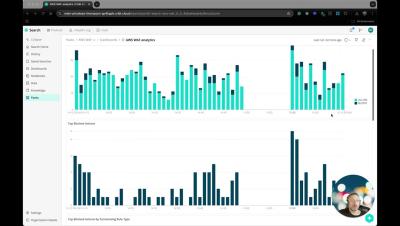
Using Traces, Metrics, and Logs All in One Place, as Demonstrated by Pipeline Builder

When troubleshooting complex software, it’s important to be able to gain insight via its telemetry quickly and precisely. No one wants to waste time switching between tools or worrying about how to interact with different types of data. At Honeycomb, all your data is available in one place, accessible via our fast query engine. But what does that look like in practice?

Which Observability Tool Helps with Visibility Without Overspend

If you’re trying to control observability spend without cutting visibility, the platforms that usually offer the best cost balance at enterprise scale are Last9, Grafana Cloud, Elastic, and Chronosphere — depending on the shape of your telemetry and the level of operational ownership you want.

Making Sense of Complex Data in Observability Tools

Metrics, analytics, measurements, and parameters – can we truly see these abstractions? Data visualization helps us do just that, bridging the gap between raw information and human comprehension. Visualizing data is like rafting down a river – dynamic, unpredictable, and full of discoveries along the way. In this guide, we’ll explore how to craft visualizations that inform, engage, and inspire. So, grab your paddle and hop aboard!

AI Agents Need Structured Telemetry. Are You Preparing? #telemetry #ai

Clint Sharp breaks down the shift from traditional observability to AI ready telemetry. Agents need well formed fields, consistent schemas, and predictable data models. If your environment is full of unstructured logs, agents will give inconsistent answers. The work starts now so your AI future can actually deliver value later.

AI Is Growing Your Data Faster Than Your Budget #telemetry #ai

Clint Sharp explains why data is growing at a 30% CAGR while budgets stay flat. Teams are already running infrastructure at 80 to 90% capacity, and AI agents multiply query volume by ten or fifty. What got you to 2025 will not get you to 2035. You need a new approach to handle AI scale without blowing up cost.

Use Database Monitoring in Splunk Observability Cloud to Identify and Resolve Slow Queries

In this video, I introduce Database Monitoring in Splunk Observability Cloud. I'll demonstrate how to spot and resolve slow queries by leveraging rich metrics and correlating database performance directly with traces in Splunk Observability Cloud APM. TOC.

Cribl and Cloudflare give you full network visibility with real time telemetry

Glenn Block explains how the new Cloudflare source and R2 destination in Cribl Stream lets you ingest WAF, DNS, and Zero Trust logs for full visibility and real time intelligence. Better security, better performance, and lower cost for modern IT and security teams.

kubectl logs Command Reference and Documentation

The kubectl logs command retrieves container logs from Kubernetes pods. It supports real-time log streaming with -f, time-based filtering with --since, viewing previous container instances with --previous, and accessing logs from specific containers in multi-container pods using -c.

Observability in the AI age: Datadog's approach

Ten years ago, Datadog was a single-product company focused on breaking down the silos between dev and ops. As the shift towards the cloud accelerated and organizations transitioned to the new DevOps model, we set out to develop an observability platform that would enable these teams to safely scale faster and answer the essential questions about their services: are they available, secure, compliant, performant, and cost-efficient?

Design as Infrastructure

SaaS products that are built for engineers power critical workflows, yet their designs are often afterthoughts. SaaS products often assume that technical audiences will figure out their way through a complex experience, or just forgive them for the paper cuts on the way. A foundational design system can be perceived as a layer of polish rather than an infrastructure investment, especially in the early stages of a startup.

Why AI Will Push #Telemetry Budgets to the Breaking Point in 2026

Telemetry growth is about to hit a new level in 2026. Nick Heudecker from Cribl walks through our new predictions report and explains why observability costs are set to surge again, with more than a third of enterprises spending at least 15 % of their IT budgets on telemetry alone. He also shares how agentic AI adds new risk to the data pipeline, why most AI workloads will struggle to scale, and how platform shifts and market forces will reshape the data landscape.

#AI Powered Data Protection Inside Cribl Guard

Cribl Guard uses an always running AI agent to spot sensitive data as it moves through your environment and recommend the right protections in real time. In this demo, you will see how the agent samples live events, identifies patterns like credentials and credit cards, and turns them into one click fixes that keep your destinations safe. Faster detection, smarter rule recommendations, and instant mitigation. This is what modern data protection looks like.

Our latest updates across the VictoriaMetrics Observability ecosystem

We’re excited to announce a set of updates across the entire VictoriaMetrics open source products suite — including VictoriaMetrics, VictoriaLogs, VictoriaTraces, the VictoriaMetrics Kubernetes Operator. These improvements bring better performance, stronger security, enhanced metadata visibility, and a smoother experience when running observability at scale.

Honeycomb Frontend Observability - See Everything

Chapters: In this video we take a tour through Honeycomb's Frontend Observability offerings for Web and Mobile. We see how the launchpads can help spot performance errors, how errors that occur in the frontend can be traced all the way to their cause in other backend services easily with the error investigations feature, and how easy it is to find differences between traces across various devices.