Operations | Monitoring | ITSM | DevOps | Cloud

The latest News and Information on DevOps, CI/CD, Automation and related technologies.

Migration feasibility checklist for IT leaders

Feasibility is a prioritization question that comes before strategy. The five-question check produces a "now, later, or fix blockers first", before anyone touches a target architecture. Strategy earns its place once feasibility returns "now." Feasibility comes before strategy. Before anyone designs a target architecture, builds a runbook, or commits to a multicloud operating model, the question is whether the migration is the right move now, and what would make it fail.

12 Top SD-WAN Solutions for Growing Enterprises (2026)

Adding branches, cloud applications, contractors, and connected equipment changes the WAN problem. The network must steer traffic intelligently, preserve application quality during poor link conditions, and apply consistent controls without creating a separate operational stack at every location.

8 Cloud Governance Automation Tools for Multi-Cloud Kubernetes in 2026

Compare cloud governance automation tools for multi-cloud Kubernetes across policy enforcement, SOC 2 and HIPAA automation, multi-cloud coverage, and CI/CD integration. Morgan co-founded Qovery and leads engineering. He writes about Kubernetes architecture, DevOps best practices, and building resilient infrastructure at scale.

Mapping the NCSC cloud security principles to a sovereign deployment

The 14 Cloud Security Principles from the UK's National Cyber Security Centre form the primary framework for UK public sector cloud procurement and, increasingly, for private sector regulated workloads. Any credible cloud security case in the UK context has to address these principles explicitly. For organizations placing workloads on sovereign cloud specifically, the mapping matters more than for general cloud procurement.

Devart Excel Add-ins Extend Connectivity With New API, Security, and Data Support

We are thrilled to announce an update to our Excel Add-ins, bringing expanded support for popular cloud services and databases. The release introduces new objects, fields, API capabilities, and authentication options for BigCommerce, FreshBooks, HubSpot, NetSuite, QuickBooks Online, Zoho CRM, Oracle, MySQL, and PostgreSQL.

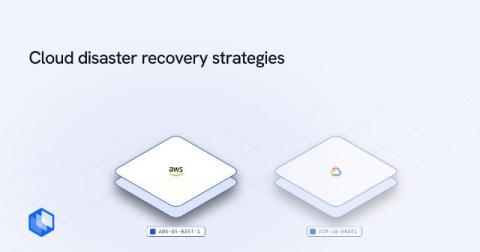
Cloud disaster recovery strategies, RTO/RPO targets, and best practices

Most DR plans have a fatal assumption baked in, namely that the cloud provider stays up. Your runbook says “failover to us-west-2.” That works until the provider’s control-plane services degrade and the credentials, APIs, or DNS management your failover workflow depends on become unreliable. Single-provider DR is disaster deferral.

How Packet Analysis Accelerates Root Cause Analysis for Application Performance Issues

Back when I was a network administrator, one of the most frustrating phrases I would hear was: “The application is slow.” Today, after years of working with customers, not much has changed. The technologies are different, the networks are faster, and the applications are increasingly distributed across data centers, cloud platforms, and SaaS providers, but the troubleshooting challenge is often the same. Users know something is slow. Application teams believe the servers are healthy.

Kepler and Insights: Built From Opposite Directions

Most companies buy AI tools for developers and hope the impact shows up somewhere. A faster sprint. Fewer escaped bugs. Something. What they don’t have is a way to actually see it happening, which means adoption becomes a leap of faith instead of a measured bet. That’s the gap Kepler and GitKraken Insights close together, and it’s worth understanding as one story, not two separate product updates.

KPI cards: build a reliability dashboard that doesn't force tradeoffs

This week's Feature Friday: Principal Product Manager Christine Byun walks through KPI cards, a new way to build custom dashboards in Engineering Intelligence. KPI cards pull key metrics, like change failure rate and rollback frequency, into compact tiles so they stay visible without taking up chart space. That means the metric you're actively working, incidents, in this demo, gets full-size room, without losing sight of the rest of your system.