The latest News and Information on DevOps, CI/CD, Automation and related technologies.
500 customers in 15 countries. 200 Billion push notifications delivered yearly. With over five years of experience in the industry, 500 customers and over 200 billion push notifications delivered each year, Batch.com prides itself as one of the world’s leading Mobile-First Customer Engagement Platform. Their motto “Keep pushing” exemplifies this, since their platform delivers push notifications to some of the world’s most prominent names in any industry.
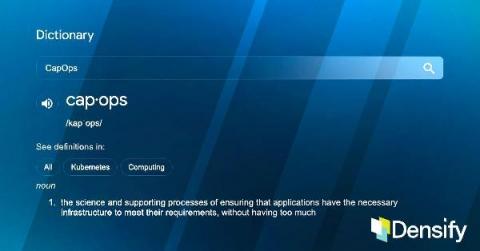
A lot of people think that using the cloud makes you elastic, but cloud really only gives you the potential to be elastic. If your apps aren’t elastic, and your cloud usage doesn’t flex up and down based on activity levels, then it’s really just expensive. The same is true of containers—they don’t magically make all of your hosting problems go away, and while they have the potential to make you more agile and efficient, it isn’t that simple.
Canonical livepatch is the service and the software that enables organizations to quickly patch vulnerabilities on the Ubuntu Linux kernels. Livepatch provides uninterrupted service while reducing fire drills during high and critical severity kernel vulnerabilities. It is a complex technology and the details can be confusing, so in this post we provide a high level introduction to Ubuntu Linux kernel livepatching and the processes around it.
Slack experienced meteoric growth between 2017 and 2020—but that level of growth came with growing pains. In his talk at the 2021 o11ycon+hnycon, Frank Chen (LinkedIn), a Slack Senior Staff Engineer, detailed one of Slack’s biggest pain points in that period: flaky tests. A flaky test returns both a passing and failing result despite no changes in the code. At one point, between 2017 and 2020, Slack’s flaky test rate reached as high as 50%.
In a previous post, we discussed what an Internal Developer Platform (IDP) is and some drivers behind IDP initiatives. If we go through our interactions with different organizations, we see teams embarking on the journey to build their IDPs mainly driven by the following requirements: While building an IDP may seem like an obvious choice and initiative, it is definitely not an easy task to accomplish. Building an IDP involves dealing with many moving components.
It’s possible to have more than one DHCP server on the same network and still have everything work right, with no conflicts and no dropped packets or IP requests. It’s really not that hard to pull together, either, but there are some things to know, and some things to consider before we investigate that situation. For this blog, we’ll put some of the overlooked facets of DHCP in bold text. Let’s take a look.