The latest News and Information on DevOps, CI/CD, Automation and related technologies.
Liesse Jones: Today we're joined by Anna-Marie Gutierrez-Lee, affectionately known as AMG, who's the Director of Talent Acquisition at LogDNA. She's passionate about mentoring recruiting teams and connecting talent to their dream careers, while fostering a genuine and positive candidate experience. Today, we're going to talk about how to recruit for a DevOps culture and why it's so important to bring more underrepresented talent into tech.
Surge Protection helps prevent denial of service (DOS) attacks. Cloud 66 automatically blocks any IP address that makes more than 1,500 requests per minute to your server(s).
With the 1.2.0 release of Rancher Desktop, there are two new features available as a Feature Preview. Rancher, the multi-cluster Kubernetes manager, includes a dashboard which enables you see and interact with resources in a Kubernetes cluster. Rancher Desktop now includes this dashboard. The dashboard will enable you to view and interact with resources in your local cluster provided by Rancher Desktop.
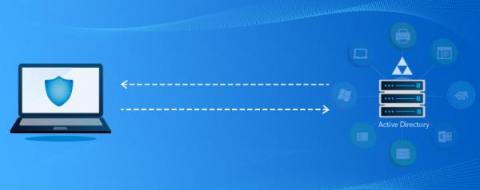
For readers who have returned to this blog after understanding the basics of Active Directory (AD) in part 1 of this series, welcome back! For all new readers: Hello! Get ready to jump into the world of AD. It would be good to take a quick peek at what was covered in part 1 before you continue. Be sure to read through part 1 as it will be your guide to: Part 2 of this series aims to introduce the interrelation of AD with the Domain Name System (DNS).
Rightsizing is about finding the optimal cloud configuration options to ensure that you get the performance you need—within any given constraints you are operating under—at the lowest possible cost. This is a simple proposition, but deceptively so. For one thing, business requirements are constantly changing, meaning that your workloads must adapt to support them, which in turn changes their operating parameters.
As a software engineer and technical content creator, I work with a lot of companies on many different contracts. To get paid for my work, most companies require that I send an invoice. Sometimes they want one daily, at the end of the week, or even when the project has been completed. Sending an invoice to my clients is crucial because it determines when and if I will get paid on time. If this sounds like a repetitive task that can eat deep into my productive hours, you are right.