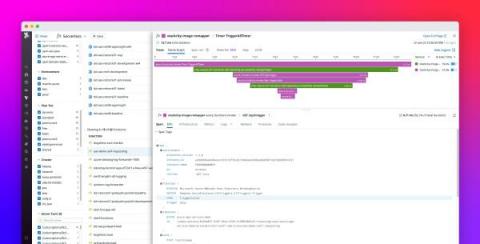
#DevOpsSpeakeasy at #Kubecon EU 2022: Peter McKee with Matthew Vincent of Epic Games
Peter speaks with Matthew about the future of DevOps tooling


The latest News and Information on DevOps, CI/CD, Automation and related technologies.
Azure Functions is an on-demand serverless compute offering built on top of Azure App Service that enables you to deploy event-driven code without the need to provision and manage infrastructure. Because applications rely on Azure Functions to handle business-critical tasks such as processing orders or logging in users, it’s important to ensure that your functions respond quickly when they’re invoked.
Because DevOps practices can bring great speed and reliability to the software delivery lifecycle, release management can seem daunting. But, the improved visibility and collaboration brought about by DevOps can also help with the release management process. DevOps-centric release management is the future of software development and IT operations.
Since the evolution of the IT industry, different concepts have been introduced to enhance and speed application production. Automating processes is gradually becoming the way forward and, so far, the best way to speed the deployment process of projects. Today, though, NoOps has come along. The prevalence of NoOps means manual intervention may not be needed in IT operations, but is this going to mean the extinction of DevOps? Turns out, NoOps might just be a next step in the progression of DevOps.
Imagine you want to build and deploy a Nuxt3 app on Netlify. Because custom scripts are not allowed on Netlify, you will not be able to perform custom tasks like automated testing before deploying the website to your Jamstack hosting platform. That is where continuous integration/continuous deployment comes in. With a CI/CD system, you can run the kind of automated tests that create successful deployments.