The latest News and Information on DevOps, CI/CD, Automation and related technologies.
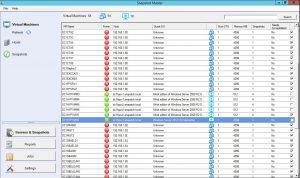
In the ever-evolving landscape of IT, virtualization has established itself as an irreplaceable cornerstone. While various platforms offer virtualization services, Microsoft’s Hyper-V stands out as a robust, scalable, and user-friendly option. If you’re an IT professional, chances are you’ve come across Hyper-V at some point in your career. With its intricate features and multi-faceted architecture, Hyper-V serves as the backbone for many virtualized environments.
Have you ever wondered how to keep your digital assets truly secure in a world where cyber threats seem to evolve quicker than cybersecurity measures? If so, you might want to consider adopting a Zero Trust security model. Far from being a buzzword, Zero Trust has emerged as a holistic approach to cybersecurity that operates on a straightforward principle: “Never Trust, Always Verify”.
Hyper-V has rapidly become an indispensable tool in the system administrator’s toolkit. Not only does it provide a robust, feature-rich platform for virtualization, but it also seamlessly integrates with Windows Server, making it a must-have for any Windows-based enterprise environment. As a system administrator, you’ve probably realized that managing Hyper-V manually through its GUI can be time-consuming.