Operations | Monitoring | ITSM | DevOps | Cloud

The latest News and Information on Service Reliability Engineering and related technologies.

ClickHouse LowCardinality: When It Helps and When It Hurts

ClickHouse LowCardinality cuts storage and speeds up queries on low-cardinality columns, but backfires on trace IDs. How to tell the difference. Prathamesh works as an evangelist at Last9, runs SRE stories - where SRE and DevOps folks share their stories, and maintains o11y.wiki - a glossary of all terms related to observability.

Introducing the Rootly Agent

During an incident, ask the Rootly Agent anything and it'll respond (and act) based on context and your data. Use the Rootly Agent to: The Rootly Agent performs actions on your behalf, so it is bound by the permissions assigned to your user. It will also ask for confirmation before taking significant actions. Rootly admins can turn it on for their workplaces and start running incidents even more efficiently.

Should platform, SRE, and security merge into one function?

Platform, SRE, and security are three distinct functions in modern engineering orgs, each shaped by a different problem. SRE was the operations function's answer to scale: how to keep systems reliable when the systems get big. Platform answered a different problem: how to let developers ship without becoming infrastructure experts. Security drew the line on what could safely reach production.

Running AI at Enterprise Scale w/ Anthropic, Descope, Port, Rootly and Twingate

The debate about whether AI can write production code is over. Companies are handing work to fleets of agents, and for many, they write most of the code that ships to production. The next challenge is everything that happens once an entire engineering organization runs this way, at full speed. Teams that generate code 10x faster still review it at human speed, and that mismatch is now the constraint. Code ownership is also becoming an issue, as developers learn to trust agentic processes a little too much. When an agent breaks production, who is responsible?

Every pilot is ready for engine failure: are your engineers? w/ Hamed Silatani (Uptime Labs)

Every pilot who's never had an engine failure is still ready for one. The same can't be said for most software engineers facing their first major incident. Hamed Silatani, co-founder and CEO of Uptime Labs, and former Head of Reliability Engineering at IG Group, has spent two decades watching engineers learn incident response the hard way: alone, under pressure, with no training.

AI SRE Agent: How Autonomous Incident Investigation Is Eliminating Manual Root Cause Analysis

A critical production alert wakes you up: p99 latency just hit 4 seconds. You drag yourself to a terminal, open five dashboards, start correlating log timestamps with trace IDs, dig through 47,000 log lines across eight services, and 90 minutes later, you finally find the culprit: an N+1 database query introduced in a deployment that shipped four minutes before the spike started. An Atatus AI SRE Agent would have identified that root cause and drafted a remediation plan in 28 seconds. Not approximation.

Error Budget in SRE: The Complete Guide (2026)

An error budget is the acceptable amount of unreliability permitted by your SLO over a defined time window. It is not a target. It is not a stretch goal. It is a hard ceiling that, when breached, should trigger a pre-agreed organizational response — feature freezes, postmortems, or infrastructure investment. The formula is blunt: Error Budget = 1 - SLO Target Error Budget (time) = (1 - SLO Target) × Window Duration For a 30-day window: That last number should make you uncomfortable.

Why SRE agents need orchestration, not just more tools

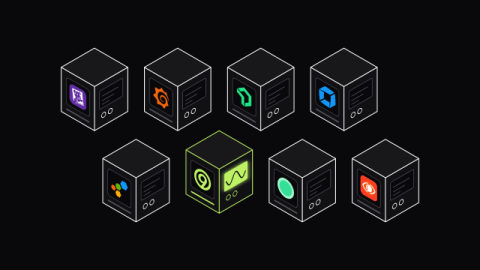
Single agents are a useful starting point for SRE workflows. They are not where the architecture should end. The first version is simple enough: connect an LLM to a few tools, give it a system prompt, and point it at your infrastructure. It can summarize an alert, pull logs, answer questions, and draft a useful next step. Then the workflow gets real. You add GitHub for runbooks, Kubernetes for cluster state, PagerDuty for incident context, Prometheus for metrics, and Mezmo for telemetry.