Operations | Monitoring | ITSM | DevOps | Cloud

The latest News and Information on Service Reliability Engineering and related technologies.

What SREs Can Learn from Revenue Operations (and Vice Versa)

Site reliability engineers and revenue operations teams rarely sit at the same desk. Software engineers look after cloud infrastructure while operations professionals look after data pipelines and sales funnels. Yet both teams spend their days managing complex systems that can't afford to crash. When you look past the different tools they use, the underlying principles of both roles are almost identical. Let's examine how these two technical worlds can share practical insights to build better business systems.

Your AI agents are lost: give them a graph

The biggest limitation facing enterprise AI agents may not be the model. It may be the context surrounding it. Anthony Alcaraz, Senior AI/ML Portfolio Growth Manager at AWS and co-author of O'Reilly's *Agentic GraphRAG*, joins Humans of Reliability to explain why reliable agents need more than a vector database and a large context window. They need structured knowledge they can navigate, memory they can prune, constraints they can follow, and feedback loops that help them improve.

Better Together: Last9 + Altinity

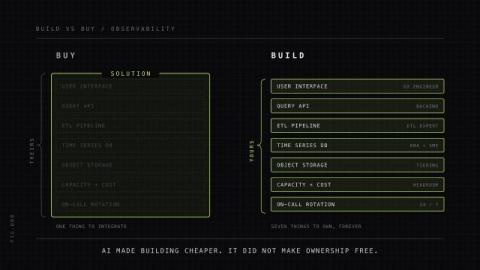
Last9 and Altinity now run observability entirely in your own cloud, metrics, logs, traces, and profiles on an open-source ClickHouse stack, priced on capacity instead of ingestion, with Altinity operating the database so your team doesn't have to. Last9 is an observability platform built for high-cardinality telemetry. It unifies logs, metrics, and traces with native OpenTelemetry and Prometheus support, real-time alerting, and long-term retention.

AI vs. AI: from alert fatigue to agentic cybersecurity

AI is transforming cybersecurity on both sides of the battlefield. Attackers can now launch highly personalized phishing campaigns at scale and build malware capable of making autonomous decisions. At the same time, security teams are using AI agents to investigate alerts, reduce noise, and respond to threats faster. In this episode of Humans of Reliability, we speak with Nir Soudry, Head of R&D at 7AI, about the shift from alert fatigue to agentic cybersecurity.

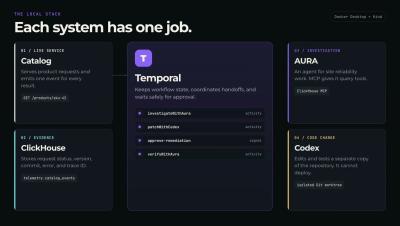
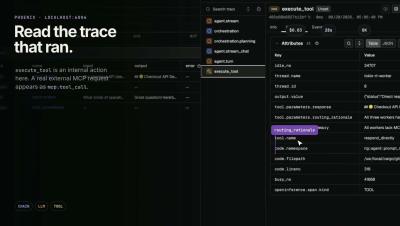
An SRE agent for production

AI has changed how software gets built. It hasn't changed how software gets run. Most of the AI money in software has gone into the IDE: code generation, copilots, developer assistants, faster pull requests. That work matters. But writing software is one slice of the lifecycle. The harder problem, and the more expensive one, is running that software in production. Production is where systems fail in ways nobody predicted. Incidents don't stay inside one service.

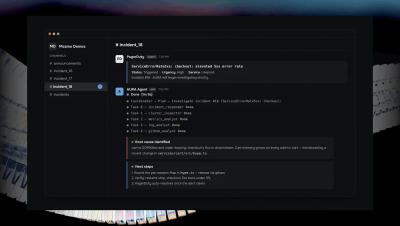
We built an SRE bot on AURA. Here's what we learned.

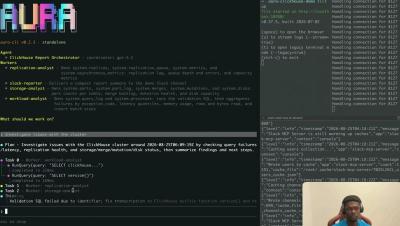
PagerDuty fires. You open the incident. Title, timestamp, nothing else. Whatever context exists is in someone's head, in a Slack thread from two weeks ago, or in a runbook nobody has touched since the last reorg. We got tired of that. So we put an AURA agent behind a Slack bot and pointed it at our own production environment.

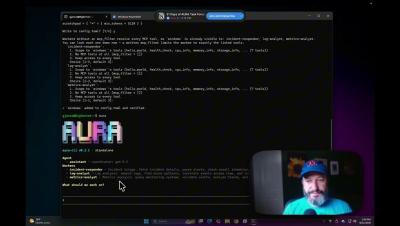
Building AI SRE Agents, Part 1: Start Local, Break Things, Learn Fast

The first stage of AI SRE maturity is a laptop, a throwaway cluster, and zero production access. Here’s how to set it up, and what to watch for. AI SRE (Site Reliability Engineering) agents are AI-powered systems that automate the most time-consuming parts of incident response: triaging alerts, correlating logs and metrics, generating root-cause hypotheses, and proposing remediation steps.