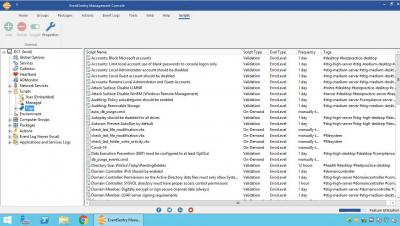
EventSentry v4.2 New Features: Management Console Walk-Through
Explains the new features in v4.2 in the management console.


The latest News and Information on Monitoring for Websites, Applications, APIs, Infrastructure, and other technologies.
With organizations worldwide moving towards digitization and remote working models, there is an increased need for more computing power and server resources. But not everyone can afford to host state-of-the-art, well-maintained servers in their premises. And that is why virtualization technology is so popular today. Virtualization technology enables organizations of all sizes to make use of IT services without the hardware resource constraint. Are you thinking about how virtualization can help you?
The final episode in the MIT Sloan School of Management CIO Symposium series took place on 14th October and ended with a focus on digital transformation, offered by a diverse set of business leaders across a range of industries. The previous two episodes focussed on the shift in workplace and how enterprises are handling the new normal.
Today I will show you a couple of out of field useful functions from the Icinga DSL I use when creating some testing configurations for Icinga 2. Using the Icinga DSL is easy, quick and a good way of testing and validating your Icinga setup.
The use of serverless computing has become a must nowadays, and some of you may already know a thing or two about Amazon Web Services like Lambda Functions, Step Functions, and other services AWS provides. However, if this is the first time you hear about them – fantastic! In this article, we’ll discuss AWS Step Functions, what they are used for, how to use them, and the advantages or disadvantages that they bring.
One thing that all organizations of any size need to realize is that data breaches only occur when there are not sufficient breach detection tools in place. Simply having a data loss prevention system does nothing unless you are actively using it to identify and stop a data breach from occurring. This is not to say that even with the best secure data solutions that your data is not at risk. Hackers are constantly evolving and adapting their methods, so you should never rest on your laurels.
SSO is often accomplished by using Lightweight Directory Access Protocol (LDAP). While LDAP has a variety of use cases, in this post, I’ll focus on authentication — specifically, how to use LDAP authentication for single-sign on (SSO) with Sensu Go. First off, a quick overview of Sensu authentication.
Whether you’re using InfluxDB Cloud or InfluxDB OSS, the InfluxDB API provides a simple way to interact with your InfluxDB instance. The InfluxDB v2 API offers a unified approach to querying, writing data to, and assessing the health of your InfluxDB instances. In today’s Tech Tips post, we’re learning about how to create and list buckets. Buckets are named locations in InfluxDB where time series data is written to.
Whether you’re using InfluxDB Cloud or InfluxDB OSS, the InfluxDB API provides a simple way to interact with your InfluxDB instance. The InfluxDB v2 API, the read and write portions are available with InfluxDB v1.8+, offers a unified approach to querying, writing data to, and assessing the health of your InfluxDB instances. In today’s Tech Tips post, we learn how to create and list authentication tokens. Tokens provide secure data flow between an InfluxDB instance and its users.
A few days ago, I tried ordering lunch from a local restaurant. I went online, spent time looking at their menu, chose a few items, clicked “submit” and… got an error message. This experience is not unique. Earlier this week, when I tried to read the news, I got a message saying they’re experiencing a technical issue. You can see both messages below: We’ve all experienced such situations, and they can be very frustrating.