Operations | Monitoring | ITSM | DevOps | Cloud

The latest News and Information on Monitoring for Websites, Applications, APIs, Infrastructure, and other technologies.

This Month in Datadog: Dynamic Instrumentation, Log Pipeline Scanner, Network Device map, and more

Datadog is constantly elevating the approach to cloud monitoring and security. This Month in Datadog updates you on our newest product features, announcements, resources, and events. This month, we put the Spotlight on Dynamic Instrumentation..

Datadog on Kubernetes Autoscaling

Datadog, the observability platform used by thousands of companies, runs on dozens of self-managed Kubernetes clusters in a multi-cloud environment, adding up to tens of thousands of nodes, or hundreds of thousands of pods. Also, this infrastructure is used by a wide variety of engineering teams at Datadog, with different features and capacity needs that may also change overtime.

Introducing Grafana 10.3

Grafana 10.3 is here! From improving your ability to create and navigate complex canvas panels to monitoring via anonymous access control, this release is all about enhancing efficiency and clarity in your observability journey. In this video, learn more about: Canvas Pan and Zoom Improved Tooltips Metric Analysis Alerting enhancements Multi-stack data sources Anonymous access control Stay with us through this playlist to delve deeper into each addition and maximize your Grafana 10.3 experience.

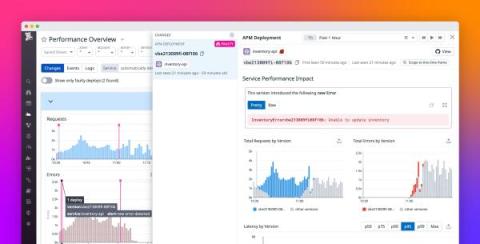
Quickly spot and revert faulty deployments with Change Overlays

Faulty deployments and other types of erroneous changes may account for around 70% of all application outages. With the prevalence of CI/CD workflows, engineering teams make changes to their applications, services, and infrastructure all the time, which can make it difficult to trace issues to specific changes.

Your Practical Guide to Reducing MTTR

Let’s face it. Incidents will always happen. We simply can’t prevent them. But we can strive to mitigate the impact incidents have on our product and customers. Ensuring high reliability depends on quickly and effectively finding and fixing problems. This is where the metric MTTR, standing for “mean time to restore” or “mean time to resolve,” becomes valuable for organizations.

5 Steps to Optimizing Microsoft Teams Performance

In the fast-paced landscape of modern workplaces, efficient communication and collaboration are paramount for success. Microsoft Teams has emerged as a cornerstone tool for many organizations. However, persistent and often unseen performance issues such as poor audio or video quality can stifle productivity and have a negative impact on the customer experience. Optimizing Microsoft Teams will allow you to use the platform to its peak performance for maximum productivity.

Streamlining Cloud Operations by Unifying Security & Observability

Many companies are using cloud technologies to become more agile, scalable, and cost-effective during their digital transformation. However, this change brings new challenges in maintaining the security and performance of applications and infrastructure in the cloud. Security and observability go hand-in-hand.

Building resilience in cloud: Strategies, advantages, and considerations

Cloud resilience When it comes to cloud computing, resilience is an infrastructure's ability to bounce back from setbacks seamlessly, ensuring uninterrupted operations in the face of outages, malfunctions, software bugs, and even natural disasters. We'll explore measures you can take to enhance resilience in your cloud, plus discuss the advantages and limitations of building a resilient cloud system.

Unlocking the Power of IIoT with Time Series Databases

This article was originally published on IIoT World and is reprinted here with permission. In the rapidly evolving world of Industrial Internet of Things (IIoT), organizations face numerous challenges when it comes to managing and analyzing the vast amounts of data generated by their industrial processes. Data generated by instrumented industrial equipment is consistent, predictable, and inherently time-stamped.