Operations | Monitoring | ITSM | DevOps | Cloud

Shipped: Azure cost totals that match your invoice

Azure cost exports sometimes fail with a server error and then succeed on the next try. Some reports cover only part of the month. Large tenants get rate-limited when they request a lot of data at once. Each of these things can leave a gap in your Azure history. You normally find the gap when finance compares the Azure total in CloudZero to the Microsoft invoice.


AI cost per query: how to calculate and optimize it

AI cost per query is your total AI serving spend divided by the number of queries served over the same period. It combines model API charges (input and output tokens), retrieval and orchestration overhead, and shared infrastructure. Most production text queries cost between $0.0005 and $0.02. It's the base unit of AI unit economics, and the number finance needs before any ROI claim holds up.

How a beagle-shaped AI agent ships code to madewithvuejs.com

This is a guest post from Armin Ulrich, a fullstack developer, and founder of placid.app. He also created the MadeWith* network where he shares his projects and allows other developers to share theirs. Two people and one beagle run the project showcase madewithvuejs.com. The beagle is actually an AI agent that we have added to our workflows, but we’re very fond of her by now. Milly is part of the team, scouting for content, building features and sniffing for bugs.

Finding Why Payments Fail with VictoriaLogs Drilldown

Grafana’s Logs Drilldown is a point-and-click way to investigate logs without writing queries. Drilldown lets you break the logs down by service, label, pattern, or any other field, and narrow the selection one click at a time until the problem is in view. It’s a powerful tool, but it only works with Loki. So we built the same experience into the VictoriaLogs data source. We’re happy to announce that the VictoriaLogs data source for Grafana now ships with Drilldown integration.

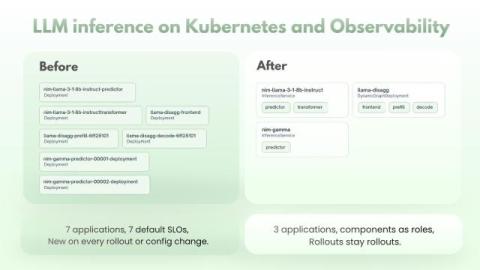
LLM inference on Kubernetes and observability

Running an LLM on Kubernetes is rarely just a Deployment with vLLM in it anymore. A whole layer of frameworks and operators has grown up for it: KServe, NVIDIA Dynamo, Ray Serve, Kthena, llm-d. Each one adds its own custom resource that describes a model deployment, with routing, autoscaling and the split of a model across pods built in, and each one turns that resource into ordinary Kubernetes objects in its own way.

Resque 3.2 Closes a CSRF Gap in resque-web: What Changes When You Upgrade

Resque 3.2.0 shipped on October 16 with a single change, listed under Security: resque-web now rejects state-changing requests that come from another site. Until this release, resque-web had no cross-site request forgery (CSRF) protection at all. A page on any other site could submit a form to your dashboard and clear your failed jobs or delete a queue, as long as the browser it ran in could reach resque-web and was logged in to it. The fix is small and most teams can upgrade without touching anything.

Beyond Drag-and-Drop: What Sets AI Workflow Tools Apart

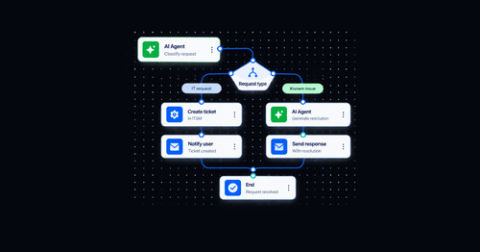
“AI workflow tool” now describes products with very different build models. One may generate an executable workflow from a plain-language request. Another may add a chat panel or autocomplete to the same drag-and-drop experience it has offered for years. That difference matters to buyers because teams choose workflow tools to reduce automation backlogs, eliminate repetitive work, and extend orchestration across ITSM, cloud, network, identity, and infrastructure systems.

What are decision models? Uses, examples, and tradeoffs

A decision model is a specialized AI model that evaluates inputs against predefined outcomes, returning a structured choice, classification, or score. Unlike large language models (LLMs), which handle a broad range of generative and reasoning tasks, decision models are optimized for tasks like routing requests, selecting agent actions, and evaluating AI outputs.