Operations | Monitoring | ITSM | DevOps | Cloud

When Playing It Safe Creates More Risk

When organizations evaluate a software upgrade, the conversation typically centers on risk. Teams consider the maintenance window, the resources required to prepare for the change, the possibility of unexpected issues, and the operational impact of the upgrade itself. These are all legitimate concerns because the people responsible for enterprise platforms are accountable for maintaining service availability while introducing change into complex environments.
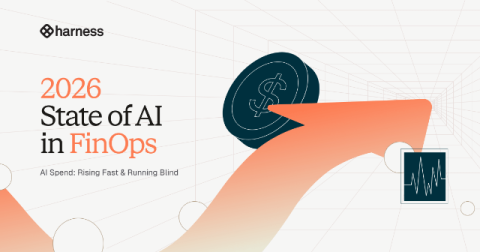
Cloud Asked What It Cost, AI Is Asking What It's Worth | Harness Blog

AI has quickly become one of the largest and fastest-growing enterprise expenses, exposing many of the same governance and visibility challenges organizations previously faced with cloud. Based on findings from the 2026 State of AI in FinOps report, we explore how mature organizations improve AI cost ownership, reduce waste, and build a culture focused on measurable business value.

What It Takes to Scale Enterprise AI: 5 Questions from ServiceNow and iOPEX

Ask most enterprises why their AI program hasn't moved past pilots, and you'll get an answer about the model. It's not accurate enough, not fast enough, not cheap enough yet. Srikanth Akkiraju, who has run transformation at Philips and now at ServiceNow, doesn't buy it. In a recent fireside conversation with iOPEX, he made the case that the model was never the problem. The problem is that most enterprises haven't decided what they actually want AI to change. Five questions came out of that conversation.

Dashboards aren't (quite) dead

Historically, non-technical stakeholders would’ve had most of their data questions answered either through pre-built dashboards or by asking their Data team (or equivalent). Self-serve analytics tools went a step further by offering safe, governed datasets built by Data teams which let non-technical users dig into data without having to worry about how it joins together, how metrics like “revenue” are defined, and so on.

How to standardize app delivery across AWS, Azure, and GCP

Running workloads across AWS, Azure, and GCP is the operational reality for most enterprise engineering teams. The challenge isn't the providers themselves, it's what happens when each one accumulates its own delivery pipeline, its own security configuration, and its own environment management tooling. What starts as provider flexibility quietly becomes provider-specific complexity, multiplied across every team that ships.

Redgate Flyway's Product Updates - July 2026

This month is a big one! We announced the latest major release of Redgate Flyway Enterprise, built to help teams move fast with AI without losing control of the database. Three key new capabilities also landed in preview: Flyway’s MCP server, advanced support for Databricks, and Oracle schema existence checks. And we're closing with a short, honest read on failure and what it takes to make deployments less stressful. Here's the round-up.

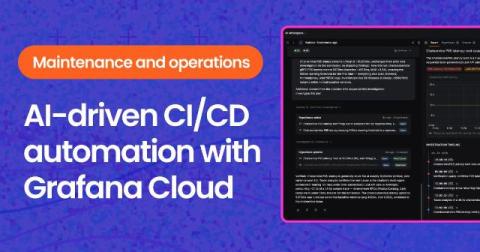
Automate all the things: How to use Grafana Cloud's AI to relieve the operational burden

Continuous integration and continuous delivery (CI/CD) have dramatically changed how we ship software. But once code reaches production, the operational work is still surprisingly manual. Engineers continually monitor systems, investigate unexpected behavior, and decide which issues require action. And that is where the next opportunity for AI-driven automation lies. For example, in today's CI/CD workflows, someone refreshes the pipeline page to see whether the queue has moved.

A default is not a decision: cut AI model costs with CloudZero's free, open-source Model Rightsizer

Only 22% of finance leaders can tie their AI spend to a business outcome, according to CloudZero’s 2026 finance survey. When AI ROI falls short, it usually isn’t because a company is doing too much AI. It’s that no one is watching which model runs which task, and that one choice accounts for a large part of the cost. Here’s why it happens.

Model Rightsizer: the agent that stops your other agents from defaulting to Fable

Model Rightsizer is an open-source Claude Code sub-agent from CloudZero that scores each task on capability need versus cost pressure, then routes it to the smallest model that can handle it. In its first week, it cut Opus spend 75% while shifting 234x more work to Sonnet. Every Claude Code agent you run has to answer a question it usually never gets asked: does this task need the smartest model available, or are you paying Fable prices to rename a variable across three files?