Operations | Monitoring | ITSM | DevOps | Cloud

LLM cost optimization: 7 strategies to cut inference spend

LLM cost optimization is the practice of cutting what you spend on large language models, mostly inference, without losing the quality that makes the AI worth running. The biggest levers are routing requests to cheaper models, caching repeated tokens, batching anything that can wait, trimming prompts, right-sizing models, cutting calls you do not need, and putting one gateway and cost view in front of all of it.
What is FP&A? Financial planning and analysis in the AI spend era

FP&A stands for financial planning and analysis. It is the corporate finance function responsible for budgeting, forecasting, variance analysis, and decision support. If you're asking what is FP&A in practice: FP&A teams build the annual operating plan, project revenue and expenses, explain gaps between plan and actuals, and give leadership the numbers behind strategic decisions. Accounting reports what happened. FP&A models what happens next.

Azure cost calculator: how to estimate Azure spend before the bill does it for you

An Azure cost calculator is a tool that estimates your monthly Microsoft Azure bill before you deploy anything. Microsoft's official Azure pricing calculator covers 600+ services and produces free, exportable estimates. It is excellent at telling you what Azure charges and terrible at telling you what your teams will consume. This guide covers how to use it, what real workloads cost in 2026, and why estimates and invoices keep breaking up.

Software is a team sport. Most AI tools forgot that.

Every AI coding tool ships the same promise: your developers, faster. Autocomplete in the IDE, agents in the terminal, a working prototype before lunch. And it delivers, at least for the person holding the keyboard. The problem is that most of what it takes to ship software was never a solo activity, and that is the part the market keeps skipping.

Megaport Signs Open Weights and American AI Leadership Letter

Megaport has signed the Open Weights and American AI Leadership letter, supporting open-weight AI, customer choice, and the infrastructure that powers AI innovation. Artificial intelligence is reshaping how organizations build, deploy, and scale digital infrastructure. As AI adoption accelerates, the conversation is evolving beyond model performance alone to the broader ecosystem needed to support long-term innovation.

Unified Endpoint Management: Capabilities, Rollout, and Metrics

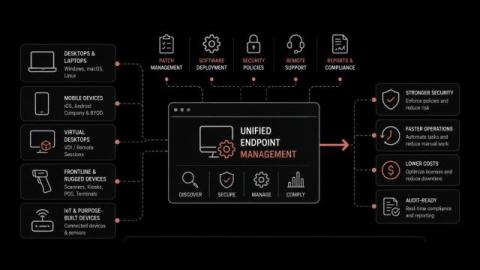
How much of your device inventory could you verify today without opening more than one console? Most IT teams can report what they purchased. Far fewer can say which of those machines are patched, encrypted, running approved software, and still checking in, because that answer spans several systems. Unified endpoint management consolidates those systems into one. Most IT teams inherit that split one platform at a time.

How SD-WAN Works and What to Monitor at Every Branch

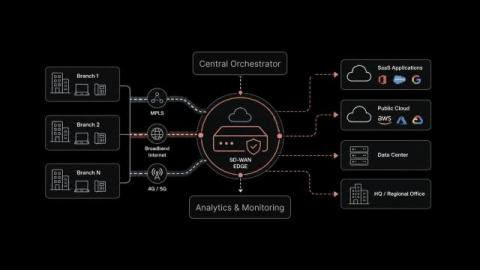
Why does one branch report unusable voice and video every afternoon while the WAN dashboard at head office shows every site green? Most network teams have fielded that escalation. The device responds, the tunnel status reads up, and application performance is still unacceptable. SD-WAN was built for the distance between a connection that responds and an application that performs.

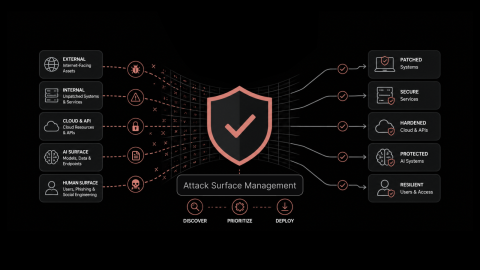
What Is Attack Surface Management and How Does Patching Reduce It?

Your exposure list grows faster than your team can clear it. Security adds new findings every week, and your IT team gets to a fraction of them. Everything left over is a backlog an attacker can walk straight through, and buying another scanner will not shrink it. Most attack surface management programs live inside that gap. Finding exposures got easy. Closing them did not, and a queue nobody has time to work is where the risk quietly builds.

Microsoft Sentinel Pricing in 2026: Full Cost Breakdown (and How to Cut It)

Microsoft Sentinel’s cost is driven almost entirely by one variable: how much data you send it. That is also why so many teams underestimate their bill. A few noisy log sources or one new integration can push daily ingestion up for weeks before anyone notices. And the first signal is usually the invoice. This guide breaks down every component of a 2026 Sentinel bill.

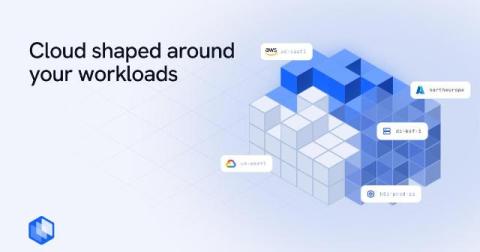
Build a Cloud Shaped Around Your Workloads

a few years ago, nobody was asking where their inference layer should run. Now it’s on the roadmap, or already in production and costing more than anyone budgeted. Or perhaps you’ve built an agent infrastructure that spins up on a request and vanishes by midnight. Or you need GPUs that are priced like a luxury good on the hyperscalers, so you go source them from a neocloud like Lambda.