Operations | Monitoring | ITSM | DevOps | Cloud

The latest News and Information on DevOps, CI/CD, Automation and related technologies.

JFrog Artifactory Supports LuaRocks Hosting for NGINX, OpenResty and Kong

If your NGINX/OpenResty servers or Kong gateways pull Lua modules straight from public luarocks.org, one upstream outage can stall every build and deploy that depends on a “rock”. With LuaRocks support in JFrog Artifactory, you host and proxy those modules from a private LuaRocks registry you control, using the native experience you expect, not a bolted-on workaround.
6 Best Pull Request Review Tools for Enterprise Teams in 2026

Finding the right pull request review tool can mean the difference between a team that ships confidently and one that drowns in open PRs. When review workflows are scattered across tabs, comment threads, and standalone dashboards, code quality and velocity both take a hit. GitKraken gives you a unified code review experience that connects your IDE, desktop client, and browser so reviews happen where you already work.

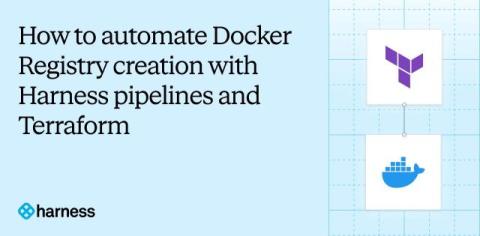
How to automate Docker Registry creation with Harness Pipelines and Terraform

Provision a fresh Docker Registry with Terraform, build your container image into it, and deploy to Kubernetes in one One pipeline. One click. It provisions a fresh Docker Registry with Terraform, builds your container image into it, and deploys that image to Kubernetes. Every run creates a uniquely named registry, so you never hit naming conflicts. Creating Docker registries by hand every time you spin up a new service or environment gets tedious fast.

Announcing the Flyway Docker provisioner, now in Preview in Flyway Enterprise

"Why do I need to give Flyway this extra database?" That's one of the most common blockers we hear from users setting up a Flyway project. Flyway has long had a concept of a build database or shadow database that is a dedicated sandbox database for Flyway to do background work in. It's required for Flyway to be able to simulate what running a set of migrations will do to a database.

Day 2 Operations for AI-Generated Code: What Changes When You Didn't Write It

We have all watched AI speed up the way we write software. With tools like Copilot and ChatGPT, developers can spin up boilerplate, write complex functions, or draft entire micro services in minutes instead of days. It feels like magic. But there is a silent catch that we do not talk about enough: writing the code is only Day 1. The real challenge is Day 2 operations, which is everything that happens after that code is deployed.

Why India Belongs on Your Network Roadmap

India is the world's fourth-largest economy and accelerating fast. Here's why it should be on your network roadmap. Few markets combine scale, speed, and government intent the way India does right now. With a digital economy on track to reach USD $1 trillion by 2030, hyperscalers committing tens of billions in fresh investment, and connectivity infrastructure undergoing a generational upgrade, India has become one of the most consequential expansion decisions a technology business can make.

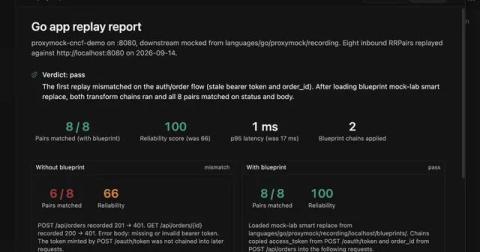
Use AI and traffic replay to test AI-generated code

When I ask an AI agent to change code, I also want it to run the application and test what it changed. Asking it to write some tests is a start. But if it invents the expected responses from the same assumptions it used to write the code, those tests can miss the same mistake. Traffic replay gives the agent something concrete to test against: requests and responses captured from a working application.

Compare & Sync PostgreSQL Data + AI Assistant | dbForge Studio #Shorts

Compare and synchronize PostgreSQL table data with dbForge Studio for PostgreSQL. This video shows the entire data comparison and synchronization workflow: how to select source and target databases, configure comparison options, review data differences, generate a synchronization script, and verify that both databases are identical afterwards. You will also see how dbForge AI Assistant can generate, explain, optimize, and troubleshoot SQL queries directly in the Studio.