Operations | Monitoring | ITSM | DevOps | Cloud

The latest News and Information on DevOps, CI/CD, Automation and related technologies.

Testing in Production: How Did We Get Here?

Testing in production simply means testing new code changes in production, with live traffic, in order to test the system’s reliability, resiliency, and stability. It helps teams solve bugs and other issues faster, as well as effectively analyze the performance of newly released changes. Its overall purpose is to expose problems that can’t be identified in non-production environments for reasons that may include not being able to mimic the concurrency, load, or user behavior.

ICYMI: How Honeycomb Can Help You Achieve the Deployment Part of CI/CD

In case you missed it, this webinar includes code walkthroughs that help you to add observability to your pipelines (using a free Honeycomb account!) so that you and your team can speed up your deployments to prod. This is also a risk-free way to get started with observability if your team isn’t quite yet ready to change your production apps.

Automatically create and manage Kubernetes alerts with Datadog

Kubernetes enables teams to deploy and manage their own services, but this can lead to gaps in visibility as different teams create systems with varying configurations and resources. Without an established method for provisioning infrastructure, keeping track of these services becomes more challenging. Implementing infrastructure as code solves this problem by optimizing the process for provisioning and updating production-ready resources.

Kubernetes monitoring and troubleshooting made simple

Infrastructure monitoring was difficult enough when entire businesses ran off a few bare metal servers in a dusty, forgotten closet. Other IT infrastructure monitoring tools fell short, unable to provide complete and granular-enough metrics in real time, even when we were only dealing with a handful of systems responsible for running every part of the application stack.

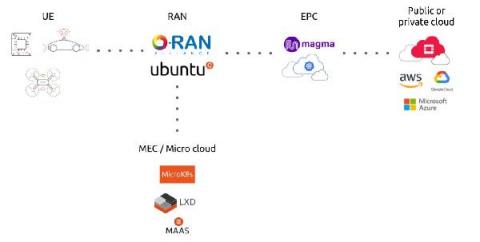
Highly available Kubernetes in IoT: MicroK8s on RaspberryPi

Learn how to set up a Pi-Hole instance with a single command and a cluster of Raspberry Pis on MicroK8s. High availability, load balancing and Kubernetes configuration included. The Raspberry Pi 4 brings the graphics, RAM and connectivity needed for a Linux workstation, so why not use a cluster to set up your own Pi-Hole, the open source network-level ad blocker that acts as a DNS sinkhole or DHCP server.

The fastest SQL Change Automation, Azure DevOps and AzureSQL DB pipeline

Is it possible to set up an end-to-end deployment pipeline from Dev through to Production in Azure DevOps, with SQL Change Automation and Azure SQL DB in just 10 minutes? Join Chris Unwin, a Redgate Solution Engineer, as they try to break the record for setting up a migrations-first pipeline with SQL Change Automation from Dev to Continuous Integration and finally, deployment.

Out with GraphQL, in with gRPC

At Speedscale, we’re always trying to find ways to iterate faster and reduce developer toil. In line with that mission, we slant our engineering decisions towards using cutting edge tech because we usually move faster and it also allows us to help our customers later on when they upgrade their own tech stack. Recently, we had the opportunity to upgrade the communication channel between our api-gateway and react front end. This journey provided some unexpected benefits.

Managing Users and Groups with SCIM in the JFrog Platform

When your organization becomes bigger, managing the users and groups lifecycle becomes a significant challenge. Your company grows rapidly, hiring new employees, and giving them access to more and more applications that your organization uses. This means that there are many employee-related actions that need to be taken when an employee changes their team, role, leaves temporarily or permanently (otherwise you may end up with operational, security or compliance issues).