Operations | Monitoring | ITSM | DevOps | Cloud

The latest News and Information on Databases and related technologies.

AI can write database code fast. Here's how to keep it safe before production.

AI can write database schema changes in seconds, but nothing should reach production until it's validated, tested, and approved. In this discussion, Ken Muse (GitHub), Steve Jones (Redgate), and Huxley Kendall (Redgate) show how a governed pipeline keeps AI-generated database changes safe without slowing teams down.

How Bits Database Optimization proves a query rewrite is faster

A frequently encountered issue when exploring database optimizations is proving that a proposed query rewrite is actually faster than the existing query. Often, proving this isn’t just as simple as running both queries and comparing their execution times. When your hot queries are measured in milliseconds, factors such as cache states, concurrent queries competing for CPU and I/O, and noisy neighbors can mask the true performance difference between query versions.

Database monitoring: what to track, which tools to use, and what it all costs

Database monitoring is the continuous tracking of a database's health, performance, and resource consumption, covering metrics like query latency, throughput, connections, and replication lag. In the AI era, it has expanded to include a fifth dimension: spend. Modern teams monitor not just whether the database is fast, but whether the workload it serves is worth what it costs to run. In May 2025, an engineer named Bohan Zhang stood up at PGConf.dev in Montreal and broke every scaling rule in the book.

Will AI agents replace database IDEs? The future of database development

AI is already good at writing SQL, which is why people keep asking whether AI agents will replace database IDEs. But letting an agent work on a production database is still a much bigger leap. In tests reported by BIRD, a text-to-SQL benchmark built from 95 real databases across 37 professional domains, human experts reached 92.96% execution accuracy. The best single-model entry reached 80.04% in June 2026. The model failed roughly one task in five; the humans, about one in fourteen.

Best Redis Monitoring Tools in 2026 [32 Analyzed]

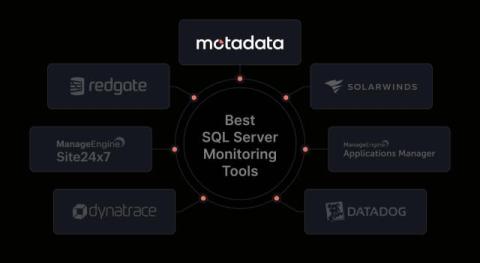
Summarize with ChatGPT Summarize with Claude The best Redis monitoring setup usually combines more than one tool. Use Prometheus with redis_exporter and Grafana for open-source metrics and alerts, Redis Insight when you need to inspect keys and slow commands, Datadog when Redis failures need to connect to application traces and logs, and Hyperping for the outside-in availability and incident-response layer. I analyzed 32 products and shortlisted seven.

Open Source Is Good Marketing

Summary: Jean-Jérôme Schmidt-Soisson, marketing lead at VictoriaMetrics, shows that open source and marketing are not opposites. Open source itself can be a powerful growth engine through trust, community, content, documentation, and discoverability. The article explains VictoriaMetrics’ pull-based marketing strategy, anchored in open-source values, to support adoption and business growth. This is our second article on the relationship between open source and marketing.

AI speeds up delivery. Here's how IT leaders manage the risk when AI-generated code hits production.

AI can accelerate speed to market, but for IT leaders it also raises a harder question: can you prove how an AI-generated change reached production? Chris Yates (SVP, Managing Director of Data & Architecture, Republic Bank) explains how his team builds a full evidence trail for every change, using version-controlled deployment tooling like Redgate Flyway Enterprise, so governance becomes a guardrail rather than a brake on speed.

13 best practices for database development in Visual Studio 2026

Database development rarely breaks all at once. It happens through small changes that seem harmless at the time. Someone adds a column directly to the shared database. A stored procedure gets fixed in production but not in the project. An index is created in staging and never added anywhere else. Everything looks fine until the next release. Then the differences start showing up, and nobody is quite sure which version of the schema is correct.