Operations | Monitoring | ITSM | DevOps | Cloud

How Linux readahead works, and the two ways to change it

Most of the time, when we read a file, we do not think much about what happens underneath. You ask for some bytes, you get some bytes. But when getting data off the disk efficiently is at the core of what your application does, what happens underneath starts to matter a great deal, and two identical read() calls can differ enormously in what they cost. So in this post we are going to look at one of the Linux kernel’s optimizations for reading files: readahead.

Oracle database DevOps: automating schema changes for Oracle

Learn how to safely automate Oracle schema changes. Discover what makes Oracle database DevOps unique. Automating Oracle schema changes safely means considering what makes Oracle different. A real Oracle database DevOps practice pairs version-controlled changelogs and pipeline integration with policy-as-code protection, pre-flight checks, and tested rollback scripts, so schema changes deploy with the same speed and safety as application code.

Database governance in the AI era: Framework, risks and best practices

AI database governance can get overlooked when teams rush to connect AI tools to production data. IBM’s 2025 research found that 97% of organizations that reported a breach involving an AI model or application lacked proper AI access controls. The risk is easy to see. Give an AI agent too much access and it can expose or alter data in seconds. Feed it poor-quality data and it may produce a confident but incorrect answer.

Announcing Redgate Flyway Enterprise's advanced capabilities for Snowflake now in Preview

Snowflake has become a core part of how many teams store, model, and analyze their data. As more of the business comes to depend on Snowflake, the schema needs the same governance and control as any other production system. Too often, schema change in Snowflake happens through ad hoc scripts, tribal knowledge, or direct access in Snowsight.

Test PostgreSQL With the Queries Your App Actually Runs

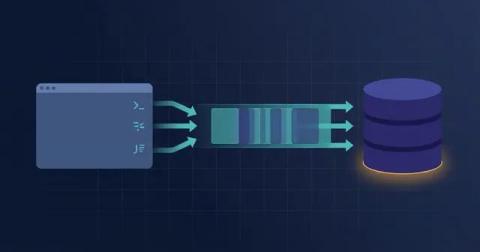
The first number from my local PostgreSQL 16 test was roughly 1,600 statements per second. It looked impressive. It was also the least useful result in the run. The useful part was the workload. It came from queries the demo app had actually sent: the same prepared statements, parameters, reads and writes. A synthetic benchmark tells you how PostgreSQL handles a synthetic workload. It does not tell you whether your migration just broke the UPDATE your app depends on.

What's new in dbForge 2026.2: New PostgreSQL Debugger, visual editors, broader context for AI Assistant, and much more

Here comes dbForge 2026.2, a new release of our ever-evolving ecosystem of AI-powered database lifecycle management solutions—and it’s packed with useful updates you definitely shouldn’t miss! These include a brand-new embedded PostgreSQL Debugger in dbForge Studio, handy visual object editors for PostgreSQL, broader context awareness in dbForge AI Assistant, enhanced SQL development and schema comparison capabilities, and a new, simplified product activation flow.

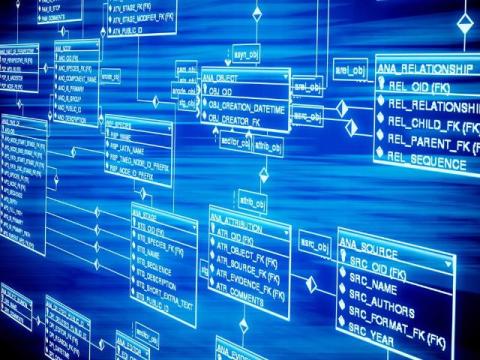
How to Use an ER Diagram Tool to Design Relational Databases

Database documentation often goes stale the same way. Someone draws a diagram during initial design and exports it to a wiki. The schema keeps changing, but the picture does not. Months later, a new engineer compares the diagram to the live database and has to work out which details are still accurate. The fix is to update documentation whenever the schema changes. An entity-relationship diagram (ERD), a visual map of tables and how they connect, can serve as both a design aid and a shared reference. It stays useful only if the team maintains it.

What is PostgreSQL? Features, uses, and benefits

The PostgreSQL database went from a platform developers respected to the one they reach for first. Today, it’s used by over 55.6% of all developers and 58.2% of professionals, powering everything from SaaS startups to AI platforms. For many new projects it’s now the default choice. But what pushed PostgreSQL ahead of so many alternatives? This guide answers that question by explaining what PostgreSQL is, how it works, and what makes it different from other databases. Table of contents.

Announcing the Flyway Docker provisioner, now in Preview in Flyway Enterprise

"Why do I need to give Flyway this extra database?" That's one of the most common blockers we hear from users setting up a Flyway project. Flyway has long had a concept of a build database or shadow database that is a dedicated sandbox database for Flyway to do background work in. It's required for Flyway to be able to simulate what running a set of migrations will do to a database.

The most expensive half-hour of an incident.

It’s not the outage, it’s the stretch before you know what actually broke In short: VictoriaMetrics Enterprise support is expertise, not a ticket queue. It’s reactive by design (you reach engineers who know the stack when something breaks), with one proactive service, Monitoring of Monitoring, that watches the health of your VictoriaMetrics observability stack (metrics, logs, and traces).

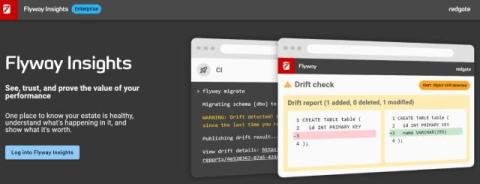
Introducing Flyway Insights: see the change, know the impact

How much of your database delivery can you actually see? For most teams, the picture is scattered. Deployment status lives in CI logs and scripts. Drift appears outside the process. And with AI multiplying the volume and speed of changes moving through pipelines, the risk that comes with low visibility rises with every release.

Monitor Query Costs & Verify Database Changes Automatically

See how Harness Database DevOps and DBmarlin work together to give you full visibility into query performance, automated deployment verification, and AI-assisted database change authoring - all inside your CI/CD pipeline. Most teams deploy database changes blind - they push a schema migration and hope nothing breaks. This demo shows a better way: DBmarlin surfaces the cost and performance of every query before and after a change, while Harness CV uses AI/ML to automatically detect regressions and block bad deployments from reaching production.

Two cats, two dogs, four vendors, and the model the AI couldn't find (Tech Talk Companion)

Tech Talks went dark for a few months, and on episode 13 I finally got to ask why. Mathias Palmersheim’s answer, delivered completely straight, was that his users were unhappy with the availability and usability of their feeders and their litter box, and he wasn’t allowed back on stream until that got fixed. The users are two dogs and two cats, and they have titles. Maisie, a Shiba Inu who came to him through a rescue, is the recently promoted chief executive pawofficer.

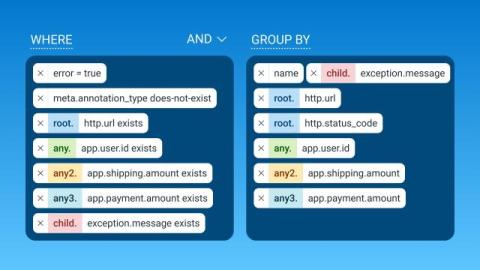
Relational Query Superpowers

I'm investigating repeated errors in my e-commerce application, and I need to get enough context in a single Honeycomb query to piece the entire picture together. Each query returns events based on the event's WHERE clauses, but I want to know several things from outside of the event that recorded an error. Things like: Those attributes are all over the trace. That's going to make a single query tough, right? Wrong!

Database Branching Explained: How It Works and When to Use It

Database branching solves a strange mismatch in modern development: code gets its own branch, but the database often doesn’t. Developers can work independently in Git, then end up sharing the same development database, waiting for a fresh copy, or trying not to break each other’s schema changes. The result is a lot of database sprawl.

More Power for .NET Developers: New Releases Across dotConnect and Entity Developer

We are excited to announce a new wave of updates across our.NET data connectivity and ORM product portfolio, delivering enhanced security, broader platform support, modern SQL Server compatibility, AI-ready capabilities, and productivity improvements for.NET developers.

PostgreSQL IDE + AI Assistant | dbForge Studio for PostgreSQL

Manage the full PostgreSQL database lifecycle from one AI-powered IDE. dbForge Studio for PostgreSQL brings together database design, development, and administration, as well as data management, analysis, reporting, and extensive automation. Additionally, the integrated AI Assistant generates, explains, optimizes, and troubleshoots SQL queries directly in the Studio. It supports on-premises PostgreSQL databases and related cloud services such as Supabase, Heroku, Amazon Redshift, and TimescaleDB.

Building India's PostgreSQL scene (with Hari Kiran) | The Simple Talk Podcast

Pat Wright sits down with PostgreSQL veteran Hari Kiran – founder of OpenSource DB and co-organizer of PG Day Hyderabad, where this episode was recorded. They talk community building, mentoring the next generation of PostgreSQL contributors, and how a coffee chat with a friend turned into one of India’s biggest PostgreSQL events.

SQL Server development workflow: from design to deployment

This session walks SQL Server developers through a complete database development workflow, from designing schema changes to testing and deploying them safely, using SQL Toolbelt Essentials. Most database teams don't struggle with SQL itself. The friction comes from process: schema changes made without a clear picture of what's already there, inconsistent code quality across a team, databases left outside version control, and deployments that feel riskier than they should. This session covers all four, with a live demo in SSMS for each one.

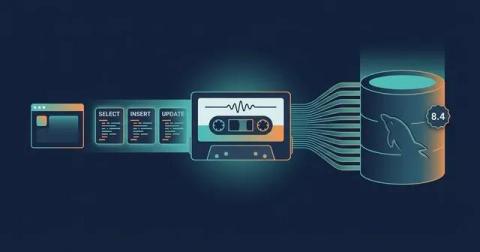
MCP Servers 1.1.0 Add Flexible HTTP Routing and CLI Connection Management

We are pleased to announce the release of MCP Servers 1.1.0, bringing new configuration options for HTTP-based deployments and expanded command-line capabilities for managing database connections. The new version makes it easier to control how MCP Servers are exposed over HTTP, host multiple MCP Servers under a single hostname, and configure connections directly from the command line.

dbForge Studio for PostgreSQL + AI Assistant: Features and Use Cases

PostgreSQL database development involves much more than writing and executing queries. Developers build applications, DBAs maintain database performance and reliability, analysts turn raw data into insights, and DevOps teams automate database delivery through CI/CD pipelines. In this video, you will see how dbForge Studio for PostgreSQL brings database development, management, data analysis, reporting, and automation into a single AI-powered PostgreSQL IDE.

AI can write database code fast. Here's how to keep it safe before production.

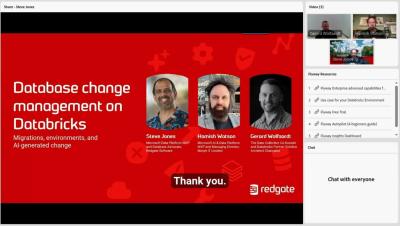
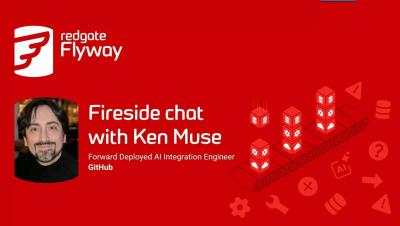
AI can write database schema changes in seconds, but nothing should reach production until it's validated, tested, and approved. In this discussion, Ken Muse (GitHub), Steve Jones (Redgate), and Huxley Kendall (Redgate) show how a governed pipeline keeps AI-generated database changes safe without slowing teams down.