What are the most important database performance metrics, and how do you monitor them? This is a question many IT professionals would like the answer to. We can collect and use a wide range of database metrics to analyze database and server resource consumption, not to mention overall usage. You are probably wondering why this is essential for business, so let’s explore this next.

Databases are everywhere these days, every application uses databases to store, organize and retrieve data. It has become more efficient than paper storage since it does not require more space and can also be easily accessed by multiple users at a time. There is an increase in demand for processing vast collections of data and this has become the most important reason for several companies to use databases.
Assuring the security of PostgreSQL and all open source database systems is critical as many learned with the PgMiner botnet attacks in December 2020. Having an understanding of, and visibility into, how these attacks happen and following standard best practices is the best way to make sure that your data is not at risk. This blog details the latest security issue with PostgreSQL, how to fix/prevent these attacks and how to ensure security of your PostgreSQL database instances.
A large amount of data requires special tools. Apache Cassandra is one of those databases that can handle a large amount of data spread among many commodity servers, providing high availability and fault tolerance without a single point of failure. Developed under the umbrella of Apache Software Foundation, it ensures full visibility into the code base and being free of charge.
Choosing whether to go with PostgreSQL or MySQL depends on your needs as they are both great databases to use under different circumstances. In this article we will run through a few of the top reasons and use cases to help you choose between these choices for database creation. Note: As a matter of fact, MySQL is so popular it became part of the LAMP stack (Linux, Apache, MySQL, PHP) used for building many web servers.
Do you know what files your employees access to? Do you know when they create new files? How about when they copy, move, or delete files? How confident are you that your databases are safe and secure from potential intrusions? These are the types of questions any business owner should ask themselves, especially now. With more people working from home and telecommuting, you need to know exactly what databases and files your employees access, use, update, change, alter, move, and delete.
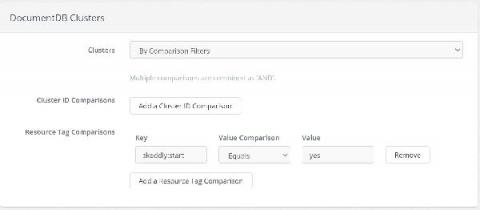
Amazon DocumentDB is a managed MongoDB-compatible database service provided by AWS. It provides the database in clusters, with multiple instances, for high-availablity. To help with cost-reduction strategies, AWS allows DocumentDB clusters to be stopped and restarted. While the cluster is stopped, you’re not charged. So it’s a great candidate to shut off overnight and on weekends if it’s not needed.