The latest News and Information on Containers, Kubernetes, Docker and related technologies.
Kubernetes, a graduated project of the Cloud Native Computing Foundation (CNCF) ecosystem, is the most prominent and widely used container orchestration systems. It’s used to manage and deploy containers in a wide range of environments, from IoT devices based on Raspberry Pis to enterprise environments consisting of millions of services.
When people hear ‘containers,’ they don’t immediately think about an IT solution that helps businesses create and distribute applications seamlessly. However, the container concept has been around for a long time, helping companies in various industries globally. Containers continue to change the landscape of app development and deployment. This guide below will help you understand containerization and the best orchestration tools to manage containers.
Baking a delicious pizza in a wood-fired oven requires a combination of skill, experience and the right tools. The same is true for achieving optimal observability in a Kubernetes environment. In this post, we'll explore some of the lessons learned from baking pizza in a wood-fired oven and apply them to the world of Kubernetes observability.
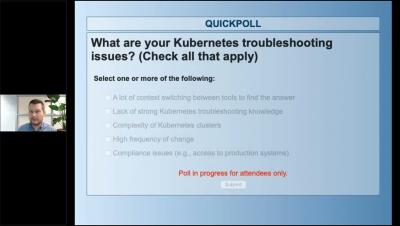
This blog post is a how-to guide for Kubernetes troubleshooting. Our vision is that any engineer can keep Kubernetes-based applications up and running smoothly, regardless of their level of Kubernetes expertise and their knowledge of the services in the environment. Right out of the box, StackState aims to monitor, alert and then guide an engineer directly to the problem, helping them remediate the issue quickly.
Kubernetes has become the preferred tool for DevOps engineers to deploy and manage containerized applications on one or multiple servers. These compute nodes are also known as clusters, and their performance is crucial to the success of an application. If a Kubernetes cluster isn’t performing optimally, the application’s availability and performance will suffer, leading to unhappy users and even revenue loss.
Over the last couple of decades, a lot has changed in terms of how companies are running their infrastructure. The days of dedicated physical servers are long gone, and there are a variety of options for making the most out of your hosts, regardless of whether you’re running them on-prem or in the cloud. Virtualization paved the way for scalability, standardization and cost optimisation. Containerization brought new efficiencies.