Operations | Monitoring | ITSM | DevOps | Cloud

Save the Address, Save the Cloud: A Hands-on KubeVirt Live Migration Workshop

In the previous post in this series, we covered why Virtual Machine (VM) Live Migration in Kubernetes is difficult: a VM’s IP is its identity, and the “new” VM on the destination node has to come up with the same IP, this something that Kubernetes is not known for, and on top of that, traffic has to switch over only after network security policies are in place.
Building AI SRE Agents, Part 1: Start Local, Break Things, Learn Fast

The first stage of AI SRE maturity is a laptop, a throwaway cluster, and zero production access. Here’s how to set it up, and what to watch for. AI SRE (Site Reliability Engineering) agents are AI-powered systems that automate the most time-consuming parts of incident response: triaging alerts, correlating logs and metrics, generating root-cause hypotheses, and proposing remediation steps.

Why cloud repatriation is happening now

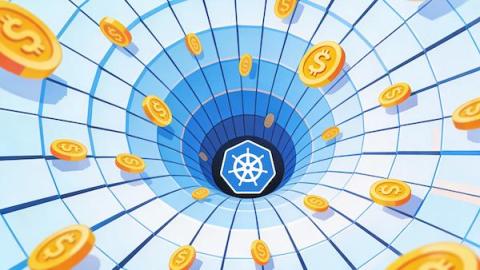
Cloud first was gospel for a decade. But the calculus has changed, and organisations are asking harder questions about where their workloads actually belong. In this clip, Civo Product Director Russ Smith breaks down the four forces that have converged to shift the default: spiralling bills that are no longer defensible at scale, the Broadcom acquisition that detonated VMware pricing overnight, sovereignty becoming a boardroom procurement requirement, and AI making new hardware brutally expensive.

Save the Address, Save the Cloud (KubeVirt VM Migration Story)

Kubernetes is built for containers, and it’s been doing that since it used to run docker as an engine for its containers. But what if you want to add VMs to the mix? After all, containers are ephemeral and don’t require fixed IPs as they shift the identity toward labels, but VMs on the other hand are tied to IP addresses and in some cases MAC addresses. This brings us to this blog about VM migration and IP preservation.

Apple Container Machine: A Persistent Linux VM Inside macOS

A year ago, at WWDC 2025, Apple open-sourced container — a Swift-based CLI for running Linux containers on macOS, built on the Containerization framework and Apple's Virtualization.framework. The Apple container model is genuinely different from Docker Desktop's single shared Linux VM: every container gets its own lightweight VM. It matured out of preview and shipped its first stable 1.0.0 release on June 9, 2026.

Is your data truly yours? Why data sovereignty in India matters more than ever

As businesses in India embrace the cloud, a critical question looms: Where does your data really live, and who controls it? India's cloud market is estimated at USD 26.43 billion in 2026, growing at 21% annually with projections reaching USD 68.82 billion by 2031. This rapid expansion underscores the strategic importance of cloud infrastructure in the country, but with growth comes growing urgency.

How do you run AI when your data can't leave the network?

Highly classified environment. Strict compliance requirements. Data that can't leave the network. But still a real need for the competitive advantage AI delivers. Civo Director of Enterprise Cloud Solutions John Dietz addresses exactly that challenge and how Konstruct makes it possible to run Kubernetes, deploy your own models, and point Claude Code at your own internal private servers instead of public APIs.

DevOps with Kubernetes: How to Reduce Cluster Toil and Complexity

Has Kubernetes made your DevOps team faster, or just busier? Most teams adopt it for speed and portability, and they get both. What arrives with it is a quieter cost: the operational weight of running the cluster day to day. That weight shows up in the manual work the platform was supposed to eliminate. A resource limit set incorrectly can waste infrastructure for months.

Six AI agent SDKs for enterprise Kubernetes, compared

There’s a question we hear constantly from platform and engineering leaders right now, “which agent SDK should we standardize on for our Kubernetes clusters?” The honest answer is that the question is slightly wrong, and the rest of this post explains why. But it’s a fair question, so let’s compare the contenders first.

Cloud repatriation strategies: From public dependency to hybrid flexibility

The phrase "cloud first" dominated IT strategy for the better part of a decade. It was gospel, practically unchallengeable, and for a lot of organizations, it was the right call. But something shifted between 2024 and 2026, and it shifted fast. Bills stopped being defensible. Vendor pricing imploded. Sovereignty stopped being a compliance checkbox and became a procurement requirement.

Designing the New Workloads Dashboard for Rancher

To meet community demand, we have restored the global workload overview in Rancher Manager. After previously removing the feature due to performance constraints, we prioritized user feedback and rebuilt it from the ground up. Powered by a new, optimized API, the updated UI is both highly scalable and resilient.

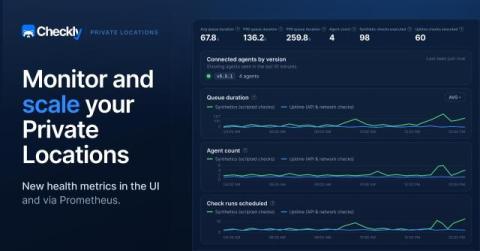
Autoscaling Checkly Private Location Agents in Kubernetes with KEDA

Monitoring load is not always steady. A team might add a new batch of checks or run several ad hoc tests during a rollout. When that happens, your Private Location agents need to pick up more work at once. If there aren’t enough agents available during a burst, checks start piling up in the queue, which can delay or disrupt check execution. But solving this by running a high number of agents around the clock has the opposite problem: most of that capacity sits idle until the next busy period.

Cloud repatriation strategies: From public dependency to hybrid flexibility

For years, "move everything to the cloud" was the default. But the economics have shifted. Join Russell Smith to explore why enterprises are reconsidering their cloud strategies, and how modern private cloud platforms are changing the game. We'll cover the real costs of public cloud lock-in, achieving feature parity without the price premium, and how to navigate today's hardware constraints, especially if you've got existing infrastructure assets that can still deliver value.

Sovereign cloud for financial services: Meeting FCA and PRA requirements with UK infrastructure

Financial services in the UK operates under one of the most demanding regulatory frameworks in the world. The FCA and PRA between them set expectations for operational resilience, outsourcing, data governance, and concentration risk that shape every infrastructure decision a regulated firm makes. Cloud adoption in the sector has happened, but it's happened under regulatory scrutiny that's grown steadily more pointed over the last several years.