Operations | Monitoring | ITSM | DevOps | Cloud


The latest News and Information on Containers, Kubernetes, Docker and related technologies.

Bridging ClickOps and GitOps

Kubernetes Monitoring Best Practices
Kubernetes can be installed using different tools, whether open-source, third-party vendor, or in a public cloud. In most cases, default installations have limited monitoring capabilities. Therefore, once a Kubernetes cluster is running, administrators must implement monitoring solutions to meet their requirements. Typical use cases for Kubernetes monitoring include: Effective Kubernetes monitoring requires a mix of tools, strategy, and technical expertise. To help you get it right, this article will explore seven essential Kubernetes monitoring best practices in detail.

Best Practices for Monitoring Kubernetes with Grafana
There are tons of tools to choose from when it comes to visualizing data, but Grafana has become one of the best ways for organizations to visualize information and get notified about events happening within their infrastructure or data. According to Kubernetes: In this article, we will take a look at the best practices for monitoring Kubernetes using Grafana.

Kubernetes Gateway API (Everything You Should Know)
The Kubernetes networking landscape is shifting. The traditional Kubernetes Ingress approach is being complemented and, in some cases, replaced by a more powerful, flexible, and extensible standard: the Kubernetes Gateway API. Kubernetes has become the go-to platform for orchestrating and managing containerized applications. A key aspect of Kubernetes that's crucial for the functionality of these applications? Networking.

Introduction to Azure Kubernetes Service
In the constantly evolving world of technology, managing containerized applications at a scale that can match growing business demands is a challenging task. Microsoft, however, has emerged as a leader in this field, offering the Azure Kubernetes Service (AKS). AKS is a managed container orchestration service that provides a rich and robust platform for developers to deploy, scale, and manage their applications.

The 3 ways of K3s - Civo Navigate NA 2023

Komodor Announces the Availability of Amazon Elastic Kubernetes Service [Amazon EKS] Blueprints as an Add-On
We’re pleased to announce that the Komodor platform has published an Amazon Elastic Kubernetes Service (Amazon EKS) Blueprints CDK Add-On. Amazon EKS is a managed Kubernetes service that streamlines the deployment and scaling of cloud-based or on-prem K8s clusters.
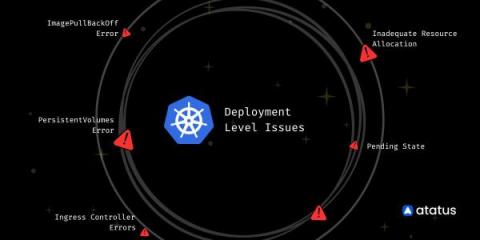
Troubleshooting Kubernetes Deployment at Every Level!
Kubernetes has emerged as the de facto standard for container orchestration, with its ability to automate deployment, scaling, and management of containerized applications. However, even with the best practices and expertise, Kubernetes deployment can sometimes be a complex and challenging process. It involves multiple layers of infrastructure, including the application, Kubernetes cluster, nodes, network, and storage, and each layer can have its own set of issues and challenges.
