
Operations | Monitoring | ITSM | DevOps | Cloud

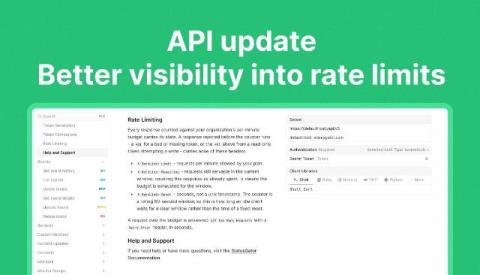
API update: Better visibility into rate limits

We’ve updated the StatusGator API v3 to help you see how many requests your integration can make and handle rate limits more smoothly. Responses that count toward your organization’s per-minute limit now include three headers: If a request exceeds your limit, the API returns 429 Too Many Requests and a Retry-After header telling your integration how many seconds to wait before trying again.

Starlette 1.7.0 Brings Native Tracing and Smarter Route Naming

If you’re running FastAPI, you’re running Starlette underneath it, whether you think about it or not. At Scout, we spend a lot of time thinking about what happens at that ASGI layer, since that’s exactly where our Python agent hooks in to give you request-level visibility. Starlette 1.7.0 just landed, and it’s a release worth reading closely if you care about tracing, routing, or just keeping your app running on a supported dependency chain.

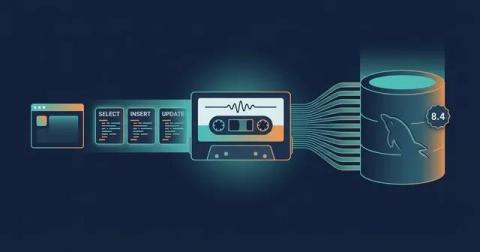
Test Your MySQL 8.4 Upgrade With Real App Queries

Before you start, paste this into Claude Code, Cursor, Codex, Gemini CLI, Kiro, or any assistant that can read a URL and run commands: The install-speedscale skill installs proxymock for your operating system and walks you through proxymock init. It stops when you need to complete browser sign-in, keeps your recordings on your machine, and connects the proxymock MCP server so your assistant can run the prompts later in this article.

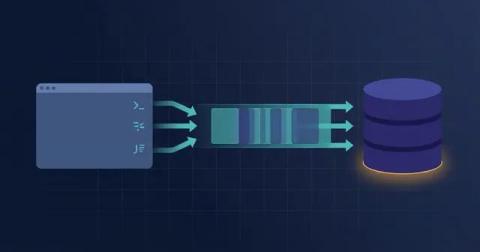
Test PostgreSQL With the Queries Your App Actually Runs

The first number from my local PostgreSQL 16 test was roughly 1,600 statements per second. It looked impressive. It was also the least useful result in the run. The useful part was the workload. It came from queries the demo app had actually sent: the same prepared statements, parameters, reads and writes. A synthetic benchmark tells you how PostgreSQL handles a synthetic workload. It does not tell you whether your migration just broke the UPDATE your app depends on.

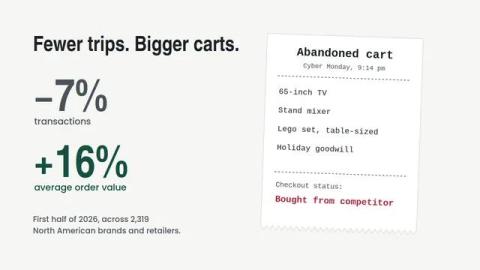
$4.48 a Gallon: Your Holiday Checkout Is the New Mall

Remember when “going shopping” meant getting in the car? This fall, filling the tank feels like applying for a small loan. U.S. regular gasoline averaged about $4.48 a gallon for the week of September 21, 2026. A round trip to the store starts competing with free shipping. And free shipping never needs a parking spot. That doesn’t tell us how many shoppers will move online this holiday season.

Free Space APIs: Useful Data for Building Smarter Applications

Space data is no longer limited to government agencies, research institutions, and specialist aerospace companies. Developers can now use APIs to bring satellite imagery, orbital information, astronomy data and other space-related datasets directly into their applications. Free space APIs are particularly useful when testing an idea or building a prototype without committing to expensive infrastructure from the outset. The right option, however, depends heavily on the type of data you actually need.

How Will Software Engineers Interface with AI in the Future? aicoding #devops #techdebate #aiagents

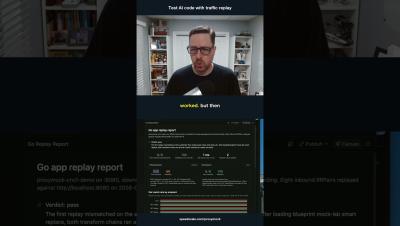
A breakdown of the three potential ways software engineers will interact with AI coding assistants, ranging from local desktop setups to fully automated software delivery factories. Learn more: speedscale.com.
Sponsored Post

Synthetic Monitoring Is Broken. Your Production Traffic Can Fix It.

Synthetic monitoring has been a critical part of application reliability for years. It gives engineering and operations teams a way to proactively test applications, APIs, and critical customer journeys before users encounter problems. But there is a fundamental limitation with the traditional approach: Someone has to create the tests. As applications become more distributed and customer journeys become more complex, organizations can end up maintaining hundreds or even thousands of synthetic scripts. Every new feature, API, dependency, or change to a customer journey can require another update.