Mailchimp
Not subscribed to OpsMatters Newsletter


This week is the latest Open Infrastructure Summit, in a week where the OpenStack Foundation became the Open Infrastructure Foundation to reflect the expansion of the organisation’s mission, scope and community to advance open source over the next decade to support open infrastructure. It is also ten years since OpenStack launched and a lot has changed during that time.
Telco cloud or a network function virtualisation infrastructure (NFVI) is a cloud environment optimised for telco workloads. It is usually based on well-known technologies like OpenStack. Thus, in many ways, it resembles ordinary clouds. On the other hand, however, it differs from them. This is because telco workloads have very specific requirements. Those include performance acceleration, high level of security and orchestration capabilities.
As part of our expanding relationship with Amazon, we are excited to announce that Stackery is now recognized as Amazon Linux 2 Ready Partner, part of the Amazon Web Services (AWS) Service Ready Program. This designation recognizes that we are certified to run on Amazon Linux 2, the next generation of Amazon Linux, a Linux server operating system from AWS.
Today is an exciting day for Splunk! In just 12 months since the acquisition of SignalFx and Omnition, our vision of a fully integrated Observability Suite is now a reality! As IT and DevOps teams strive to keep up with ever changing business requirements and deliver flawless customer experiences, we’re seeing the pace of digital and cloud initiatives accelerate.
When it comes to DevOps, Splunk has a lot to say at .conf20. There’s a lot to digest from new product names to introducing new products to create a complete observability experience. We announced the Splunk Observability Suite, which creates a seamless workflow across monitoring, investigation and troubleshooting tasks. We also extended our portfolio with Splunk Real User Monitoring, which provides front end engineers better insights into performance.
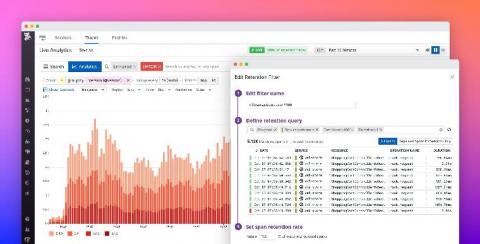
Tracing is a critical part of monitoring application performance, especially as organizations shift to deploying services using distributed systems, serverless computing, and containerized environments. Teams need real-time, end-to-end visibility into all of the traces relevant to performance issues such as an application outage or an unresponsive service, but managing tracing costs often results in gaps in valuable tracing data.
It was a dark and stormy night. Not really, of course; it was warm and pleasantly mild (the weather never seems to co-operate on these occasions), but indulge me by imagining appropriate meteorological conditions for the spine-tingling story I’m about to relate. It was Morgan’s very first night on call, and they were a mite nervous, as you can imagine.