Operations | Monitoring | ITSM | DevOps | Cloud

The latest News and Information on Distributed Tracing and related technologies.

Distributed Tracing for Microservices: 10 Essential Best Practices for 2026

Distributed tracing tracks how a single request moves across multiple microservices, helping teams see the entire execution path end to end. In modern architectures where dozens of services interact, it becomes difficult to understand where latency starts, why bottlenecks appear, and which component breaks under load. Traditional monitoring only shows isolated metrics. Distributed tracing connects those dots.

Uptrends x OpenTelemetry: Stream browser-level synthetic data into your observability stack

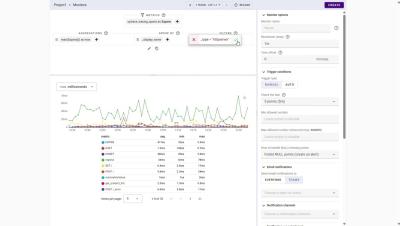
Dashboards and alerts can tell you something’s wrong, but they don’t immediately tell you why. A red indicator or synthetic test failure prompts detective work. You flip between dashboards, timestamps, and logs, trying to line up what the check saw with what the system did. Now imagine your monitoring could explain itself by sending traces directly into your OpenTelemetry (OTel) backend.

OpenTelemetry Java Agent for Spring Boot: Complete Setup Guide

The OpenTelemetry Java Agent provides zero-code instrumentation for Spring Boot applications through bytecode manipulation. This guide covers setup, configuration, auto-instrumentation capabilities, and production deployment strategies for implementing distributed tracing and observability.

How OpenTelemetry can enhance observability in distributed systems: Practical examples

Observability has become one of the fundamental elements of performance and reliability as modern applications move toward cloud-native architectures, microservices, and multi-cloud. Traditional monitoring techniques often fall short in such dynamic, distributed environments. That’s where OpenTelemetry (OTel) , an open-source observability framework comes into picture.

OTel Updates: OpenTelemetry eBPF Instrumentation (OBI) Hits Alpha

Some parts of a system don’t lend themselves to quick instrumentation changes. You might have a production binary that hasn’t been rebuilt in years, or a stack made of several languages where each team manages telemetry differently. In those situations, getting consistent signals often means touching code you’d rather leave alone or coordinating updates across many services. OpenTelemetry eBPF Instrumentation (OBI) approaches this from the kernel side.

OpenTelemetry Metrics in Quarkus Explained

When you run services on Quarkus, you need a steady stream of signals to understand how the application behaves—CPU trends, request timings, memory patterns, and how each endpoint responds under load. Metrics give you that visibility. They help answer questions like: OpenTelemetry fits well here because it gives Quarkus a common way to generate and export metrics without locking you into a specific monitoring tool.

Splunk Advances the OpenTelemetry Project with Its Latest Donation, the OpenTelemetry Injector

Splunk is very excited to be sponsoring Kubecon North America once again, kicking off this week in Atlanta, GA. As many know, Splunk is one of the top contributors to the OpenTelemetry project. We’re happy to have sent many of the Splunkers who serve as project maintainers and contributors to lead SIG meetings and engage with the greater community in the OpenTelemetry Observatory, sponsored by Splunk.

AI Agents Observability with OpenTelemetry and the VictoriaMetrics Stack

Nowadays, AI agents are becoming more and more popular and often deployed as part of production systems. However, this rapid adoption brings unique observability challenges that require flexible solutions. On the one hand, AI agents are fundamentally just like any other software services that produce the same classic observability signals we’re familiar with: metrics, logs, and traces.

How Prometheus Exporters Work With OpenTelemetry

Running distributed systems means you need clear visibility into how your services behave. Prometheus has been the standard for metrics for a long time, and OpenTelemetry is now giving teams a more consistent way to collect telemetry across their stack. In many setups, you'll have both: existing Prometheus instrumentation that's already in place, and new components instrumented with OpenTelemetry.