Operations | Monitoring | ITSM | DevOps | Cloud

What is APM Tracing?

APM tracing records the complete execution path of a request as it travels through your system, including database queries, external API calls, cache lookups, message queue events, and inter-service requests. Each step is captured with precise start and end timestamps, duration, and context such as service name, operation name, and relevant attributes. This lets you pinpoint where latency or errors originate without piecing together metrics and logs manually.

The Ransomware Attack That Made MDR Essential - with dotnet Technologies

When one of dotnet Technologies’ clients was hit with ransomware - just weeks after onboarding MDR - the experience became a turning point in how they deliver security. In this real-world case study, dotnet leaders share how an unpatched firewall opened the door, why EDR alone wasn’t enough, and how MDR gave them the visibility and SOC expertise needed to stop the attack before it spread further. Watch this session to learn.

Beyond the Horizon: Cove Up Your Stack - One Platform to Rule MSP Backup

In this episode, Head Nerd Stefanie Hammond sits down with N-able Growth Strategist David Tapiero to unpack the real-world challenges MSPs face today—from tool sprawl and outdated backup strategies to rising costs and low margins. You’ll discover how adopting a cloud-first solution like Cove can help MSPs streamline operations, boost profitability, and build cyber resilience. For even more, register for the upcoming webinar: Rethink Backup or Get Left Behind (live on 10 September).

CloudZero Is The First Cloud Cost Platform To Integrate With Anthropic

The most challenging question in AI today isn’t how to build with it. It’s whether you can prove it’s worth what you’re spending on it. Every week, I hear the same thing from engineering and finance leaders: “We know the AI bills are big.

OpenAI Pricing: The Models, Features, And Costs To Know

If your SaaS organization is experimenting with OpenAI, your cloud bill just got a new line item. And unless you know exactly what drives it, that line item can go from manageable to margin-killer, fast. It’s also worth clarifying that OpenAI is not the same as ChatGPT. ChatGPT is the familiar end-user app with a flat monthly subscription. OpenAI, meanwhile, is the platform behind it — a mix of models, features, and usage-based pricing that shifts depending on what you build.

The Fourth Pillar of Observability

Your application is only as reliable as the infrastructure it runs on. Most commonly, that means Kubernetes is doing the job by managing fleets of containers, scaling services on demand, and keeping workloads distributed across nodes. Traditional dashboards weren’t built to scale with this reality. They give you snapshots of raw metrics. They don’t scale to multi-cluster environments. They don’t map relationships between resources.

How to Reduce Serverless Costs with Smart Monitoring

Serverless architecture has changed how applications are built and run. It removes the need to manage servers, letting developers focus on writing code while automatically scaling with demand. But even with its pay-as-you-go model, serverless apps can get expensive if not monitored and optimized. In this blog, lets see how smart serverless monitoring helps developers and DevOps engineers lower serverless costs, boost performance, and keep operations running smoothly.

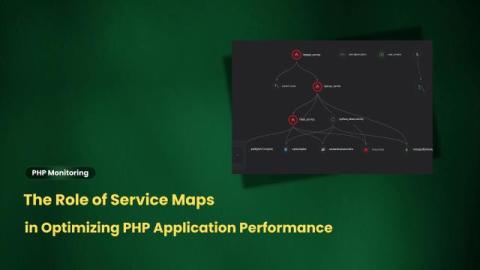
The Role of Service Maps in Optimizing PHP Application Performance

Modern PHP applications rarely exist in isolation. They run across distributed environments, connect to MySQL or PostgreSQL databases, interact with Redis or Memcached, rely on APIs, and communicate with microservices. This interconnected web brings power but also enormous complexity. When performance issues arise, finding the root cause can feel like searching for a needle in a haystack. Is it the database? A caching layer? A failing third-party API?