
Operations | Monitoring | ITSM | DevOps | Cloud

Why AI agents need a common data model #ai #telemetry

Clint Sharp explains why a common model like OCSF is critical for the future of AI. Agents need standardized data to analyze information effectively on your behalf. He contrasts the traditional manual workflow of checking Slack, tickets, and wikis while asking colleagues with a future where AI fuses this human context with machine data. Instead of just search results, AI agents will hand you examined hypotheses so you know exactly where to take your investigation.
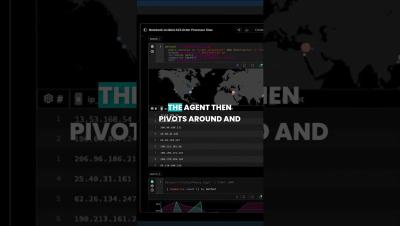
How AI Agents automate incident response #ai #cybersecurity #telemetry

Clint Sharp demonstrates how Cribl Search leverages AI to streamline incident investigation. Starting from a Slack channel, the AI builds an interactive notebook, analyzes order processing logs, and identifies suspicious traffic spikes. It connects high CPU usage to a recent Jenkins deployment, hypothesizing a supply chain attack, and ultimately recommends a rollback. This isn't a far off concept. It is the future of operations arriving right now.

Let's Encrypt 45-Day Certificate Expiration: Monitoring & More

The move by Let’s Encrypt from 90-day certificates to 45-day certificates is more than a policy shift. It changes how teams must manage renewals, detect failures, and validate that certificates are deployed consistently across distributed systems. A shorter lifecycle compresses the margin of error. Automation that previously limped along unnoticed now breaks on a far tighter schedule. And every misconfiguration hits users faster.

How to Handle Cloud Monitoring Overload?

Reduce alert noise by 70% through intelligent aggregation, clear ownership boundaries, and filtering metrics that don't map to user-facing issues. Monitoring starts with a straightforward goal: understand your system's health and identify issues before users notice them. You set up metrics, create dashboards, and configure some alerts. At first, it works well. Over time, your stack gets bigger and more complicated. New services get added.

Obkio 2025 Year in Review

2025 was big! This year, we stopped talking about what Obkio could be and started showing what it is: a full network observability platform built for the networks you actually run. We released features that solve real problems. We showed up where network pros gather. And we proved that a Canadian-built tool can compete with anyone. Here's what happened.

Change Management Software: 7 Tools For IT Change Enablement in 2026

Change Management software sits at the center of any effort to control updates and improvements across your technology environment. When you use IT Change Management software as part of a broader ITSM practice, you give your teams a structured way to plan and carry out changes that affect infrastructure, services, and applications.

SaaS Architecture Fundamentals: Design Principles, Best Practices, And Examples

As an engineer, engineering leader, or CTO, your architectural choices shape how fast your team builds products and how efficiently you manage technology costs. Your architecture determines how much control you have over data, infrastructure, and customization. The Software-as-a-Service (SaaS) model is one of the most common ways to deliver software reliably to users anywhere.

How Puzzles Make Technical Learning Stick On The Job

A short, well designed puzzle turns abstract terms into concrete actions during practice. People read, match, and verify concepts while talking through choices. The friction is low, and the feedback loop is quick. For teams handling tickets, alerts, and change requests, puzzles create safe reps between real incidents. A free word search generator lets leads build quick exercises around tool names and procedures. The format is familiar, so attention stays on the terms, not the instructions.

SEO for Personal Injury Lawyers: Strategies to Increase Visibility, Build Authority, and Generate More Cases

When someone suffers an injury and begins searching for legal help, the first place they usually turn is Google. This is why search engine optimization is one of the most powerful marketing tools available to personal injury lawyers today. A strong SEO strategy can increase online visibility, attract high intent leads, and build long term authority. In a practice area known for intense competition, personal injury firms that invest in SEO gain a significant advantage over those who rely only on traditional advertising or paid search campaigns.