Operations | Monitoring | ITSM | DevOps | Cloud

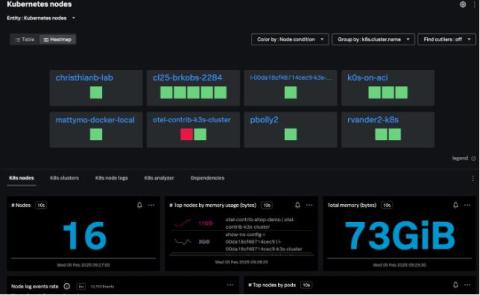
How To Monitor Kubernetes with Splunk Infrastructure Monitoring

Kubernetes is the standard for orchestrating containerized microservices — but it can present some monitoring challenges. Luckily, we’ve already covered why monitoring Kubernetes is a must-do, the basics of how to do it, and the options you have for collecting monitoring data from a K8s environment.
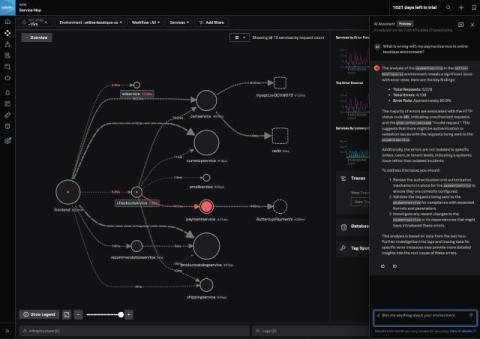

Solve Problems Faster with New, Smarter AI and Integrations in Splunk Observability

As businesses scale across hybrid and multi-cloud environments and integrate AI-powered technologies, complexity grows — and with it, the risk of performance degradation and cost of downtime. To avoid facing customer-impacting IT issues, organizations need better ways to correlate data across environments, detect anomalies before they escalate, and resolve incidents more efficiently. That’s where Splunk and Cisco come in.

Guide to unit testing

Unit testing is a software testing methodology that tests the behavior of individual functional units of code. Through unit testing, developers can verify that their code performs as intended. Providing an opportunity to catch bugs, validate the implementation of logic, and assess the quality of the code, unit testing enhances the quality of applications and preemptively identifies problems before they become major issues.

How to visualize user journeys with Site24x7 to spot opportunities to improve the UX

Before judging anyone, walk a mile in their shoes. This is a great idiom that emphasizes the importance of experiencing what your customers experience when you offer a service. With empathy, IT product owners can ensure that their operations take into account user journeys to be responsive and responsible.

Ensuring Optimal Kubernetes Cluster Health with Calico Observability

Have you ever wondered how to navigate the complexities of managing Kubernetes clusters effectively? Observability is the key, and Elasticsearch plays a pivotal role in storing and analyzing the critical data that keeps your systems running smoothly.

The AI Model Showdown - LLaMA 3.3-70B vs. Claude 3.5 Sonnet v2 vs. DeepSeek-R1/V3

Following all the hype and bluster with DeepSeek’s arrival in the AI landscape––and its ability to crash the poster child of AI’s share value overnight (Nvidia), we wanted to conduct a rigorous evaluation at Komodor. We tested DeepSeek’s models head-to-head against industry leaders in solving real-world Kubernetes challenges.

Automated incident response: Why it matters and where it's headed

Incidents happen. Whether it’s a service outage, degraded performance, or an unexpected spike in errors, things will go wrong. The question isn’t if incidents will occur—it’s how quickly and effectively you can respond when they do. For years, incident response has been a mostly manual process: someone gets paged, scrambles to investigate, loops in the right people, and after some firefighting, hopefully resolves the issue before too many customers notice.