Operations | Monitoring | ITSM | DevOps | Cloud

Local Variables and Function Arguments for Native Crash Reports

BugSplat now includes local variables and function arguments for our Windows Native, Unity, and Unreal C++ integrations. By including local variables and function arguments, we can provide another level of contextual information about the cause of your crash. This new feature may help reduce or eliminate the need to debug a crash report on your local development machine.

Tricks with the ServiceNow Filter Navigator

The filter navigator sites in the top left modestly heading up the table of options. Until recently I’ve been using it to just filter the list below, then, someone introduced me to a couple of other cool commands you can run. The below six functions are all run against a table, for my examples I’ve uses sys_user, but any table can be used. I was able to find the New York documentation for this functionality here if you’d like more details.

The Secret Lives of Failed Amazon SQS Messages

A common pattern in serverless architecture is to have a queue before a function. This is great because you can create a second queue for all of the messages that failed in the function execution (or, if we want to put it in terms that don’t sound like we’re aggressively shaming them, we can classify them as having “encountered an error at some point”). This second queue is known as a “dead letter queue” or DLQ for short.

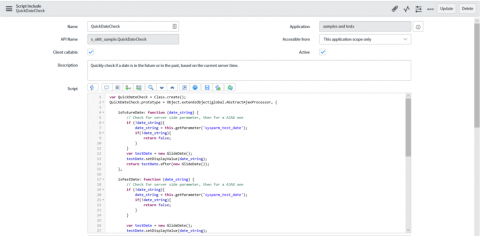
Simple DateTime checks with ServiceNow Script Includes

I can’t remember the exact reason I created this script include, but after finding it figured I’d draft up a couple quick examples as the logic could be expanded to other checks, plus, I might need it again one day so its good to have on hand. The script include detailed below creates a new class type in ServiceNow that can be used both from the client-side with Ajax, and from the server-side as a simple object call.

Five worthy reads: Infrastructure as Code, the single source of truth

From server setup and hardware configuration to application deployment, traditional end-to-end IT infrastructure management has high overhead and takes a lot of time and effort. With the advent of cloud computing, IT infrastructure has evolved to address the availability, scalability, and agility problems organizations face. Yet the issue of inconsistent configurations remains, because the manual setup of cloud infrastructure can still lead to discrepancies.

Understanding page faults and memory swap-in/outs: when should you worry?

Imagine this: your library is trying to step up its game and compete in the Internet age. Rather than you browsing the shelfs, trying to remember how the Dewey Decimal works, you'll enter your book selections from your phone. A librarian will then bring your books to the front desk. You place your book order on a busy weekend morning. Rather than getting all of your books, the librarian just brings one back.

Getting Related Record Data on ServiceNow Forms

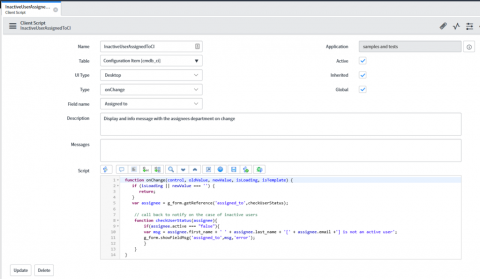
Sometimes a case comes up where you need to lookup further information on the active record, via is referenced records. ServiceNow makes it pretty painless with the g_form.getReference method, which uses a callback to keep from blocking the rest of your script. The example I have below, and on our GitHub repo, uses getReference in a Client Script as a way to notify uses if they are setting the owner of a CI as an inactive user.