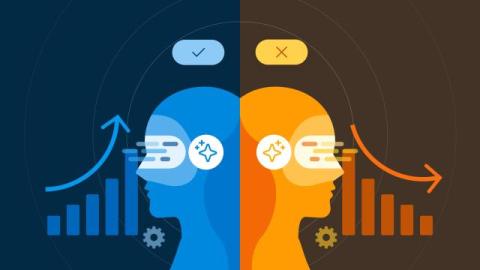
Single Sign-On is now generally available in Oh Dear, on every plan. Your team signs in with the credentials they already have, and you manage access from one place: your identity provider.
Application security testing tools promise coverage and accuracy, but teams often struggle just to get started. One of the biggest friction points in dynamic application security testing is configuring authentication correctly so a scanner can even access a target application, let alone API endpoints that power the functionality. Whether it’s API keys, bearer tokens, or custom auth flows, setting up authentication for scans frequently requires trial-and-error and engineering support.
Kubernetes is an open-source container orchestration engine that is used to automate containerized application deployment, scaling, and administration. It is an open-source management platform that can be used to manage containerized workloads and services, as well as declarative configuration and automation. Kubernetes is a framework for running distributed systems in a resilient manner. It handles scaling and failover for your application and provides deployment patterns and other features.
Since COVID hit in 2020, video conferencing has become a booming industry, allowing individuals, businesxses, and enterprises to host video calls, webinars, classes, and more. In a similar manner to cloud storage and local storage options, there are many video calling platforms available with different features available depending on personal or business needs. For this reason, we will cover the best video conferencing tools and apps available by covering.
Argo Rollouts exposes Prometheus metrics on port 8090 — but the docs lie about which labels exist. Here's how to scrape them into Last9, build a canary dashboard, and use Last9 as an automated AnalysisTemplate gate, including the auth and base64 gotchas. Prathamesh works as an evangelist at Last9, runs SRE stories - where SRE and DevOps folks share their stories, and maintains o11y.wiki - a glossary of all terms related to observability.
Enterprise conversations today are dominated by one phrase: Agentic AI. Across boardrooms and innovation labs, organizations are experimenting with copilots, autonomous agents, and AI bots capable of resolving tickets, recommending actions, and orchestrating complex processes. The promise is real — AI that doesn't just generate insights, but takes meaningful action. Here's the uncomfortable truth: most enterprises are architecturally unprepared for the agentic future they're trying to build.
Part of what makes Cloud Provider Observability in Grafana Cloud really useful is that it gives you prebuilt dashboards and drill-downs for AWS, Azure, and Google Cloud. Out of the box you get service overviews, instance-level views, and quick links to explore your data. However, you might already have dashboards you trust, want a view tailored to your team’s workflow, or need to change which panels show up when you drill into a single instance.
One early spring morning in 1535, the residents of Stockholm awoke to a most curious sight. Six suns lit up the sky, connected by bright halos, as immortalized in Vädersolstavlan, seen here. Today, we recognize these atmospheric effects as a parhelion (also referred to as ‘sun dogs’)—an illusion caused by light refracting off crystalline formations in the atmosphere.
As far back as 2020, Barclays found that 43% of enterprise CIOs were already planning to bring workloads back from the public cloud to on-premises or private cloud infrastructure1. Since then, IDC, Gartner and a host of vendor surveys have tracked an increase in this intention.
Every team running Apache ActiveMQ in production eventually hits the same conversation: throughput is lower than expected, latency is inconsistent, or producers are getting blocked without an obvious reason. The broker logs show flow control events. Queue depth is climbing.