Operations | Monitoring | ITSM | DevOps | Cloud

No more manual invoicing: How ManageEngine MSP Central automates usage-based billing

ManageEngine MSP Central's billing capability, powered by Zoho Billing, is officially live—and the headline feature is automated usage-based billing. No more pulling usage numbers manually, matching them to invoices, and updating everything by hand every month. Here's what changes: Customer data syncs automatically from MSP Central to Zoho Billing—no duplicate client records. Every service you deliver, including endpoint management, ITSM, and infrastructure monitoring, becomes billable in Zoho Billing without manual setup. Set up subscriptions per client, per service—one client can run multiple subscriptions at once.

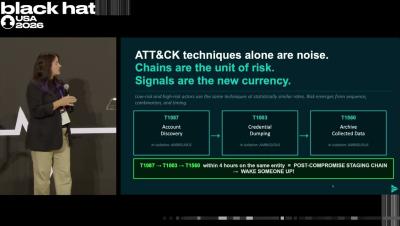
Introducing APEX: Adversarial Pattern Extraction and Correlation

In this Black Hat talk, Nicole Beckwith introduces APEX (Adversarial Pattern Extraction and Correlation), a detection framework—not a Cribl product—that clusters TTP-based signals around entities to support behavioral detection. It is intended for security practitioners, SOC and detection teams, and threat hunters who want to learn how to use raw telemetry or OCSF data, TTP chaining, time windows, criticality, and cross-correlation to detect behavior beyond static indicators and rule-count coverage.

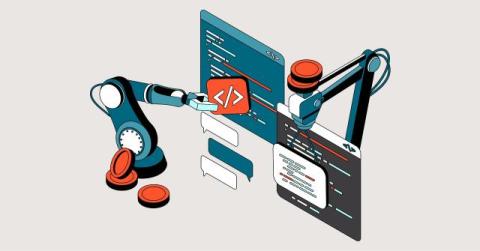
Loop Engineering Guardrails for iGaming with Claude Code and CX CLI

Tuning guardrails can take time. To accelerate this, we combined the power of Claude Code, Coralogix Telemetry and the CX CLI, to build a loop that iterates on guardrails. To test our loop, we built a fictional chat interface for an iGaming operator, that took bets, gave odds on markets and more, but with a catch: this agent was not permitted to make predictions about where the market was going. With our goal in place, we got to work designing our loop.

Shipped: Allocate AI spend by the tags on your IAM roles

The tags you put on the IAM users and roles that call your models now come through as dimensions you can group and filter on. Tag a role with costCenter, department, email, or name, group by that key, and the model spend those callers drove shows up underneath. That gives you the human-readable half of caller identity. A caller ARN like assumed-role/inference-gateway/session-8842 names a role.

Database monitoring: what to track, which tools to use, and what it all costs

Database monitoring is the continuous tracking of a database's health, performance, and resource consumption, covering metrics like query latency, throughput, connections, and replication lag. In the AI era, it has expanded to include a fifth dimension: spend. Modern teams monitor not just whether the database is fast, but whether the workload it serves is worth what it costs to run. In May 2025, an engineer named Bohan Zhang stood up at PGConf.dev in Montreal and broke every scaling rule in the book.

AI coding tools cost compared: Copilot, Cursor, Claude Code & Codex

AI coding tools cost between $0, on GitHub Copilot's free tier, and $200 per developer per month at list price. GitHub Copilot is cheapest to start at $10. Codex is cheapest per task for ChatGPT subscribers. Claude Code has the most predictable ceiling. Cursor is the most variable. Once agents run all day, vendor-reported usage lands at $100 to $250 per developer monthly, no matter which one you pick.

Codex vs. Claude Code in 2026: cost, capability, and which one your team should pick

Codex is OpenAI's terminal-based autonomous coding agent, bundled into ChatGPT plans and billed through token-based credits. Claude Code is Anthropic's terminal-based coding agent, sold through Claude subscriptions or the API. Codex is cheaper to enter; Claude Code is stronger on complex work. Both run $100 to $250 per developer monthly at active use.

From Code to Runtime: Hands-On Zephyr RTOS Debugging at Microchip MASTERs 2026

Johan Kraft introduces Percepio Tracealyzer during the hands-on Zephyr RTOS debugging class at Microchip MASTERs 2026 in Phoenix. Microchip MASTERs 2026 brought embedded developers together in Phoenix for several days of technical training, hands-on learning and conversations around the challenges engineers are solving every day. Percepio was there, with Founder and CTO Johan Kraft and Product Lead Andreas Klintemyr joining the Microchip community to meet developers, customers and industry partners.