Operations | Monitoring | ITSM | DevOps | Cloud

Five things you can do with Sentry's Agent Tracing

AI-powered apps are hard to debug without observability. From one run to another, AI produces different results, goes down different paths, and you’re none the wiser as to why it’s happening. Agent Tracing bridges the gap between prompt, tool calls and final output, all within the context of your app. If things break (it always does at some point, we know from experience), you get everything in one complete trace.
A fresh look for Bitbucket Pipelines

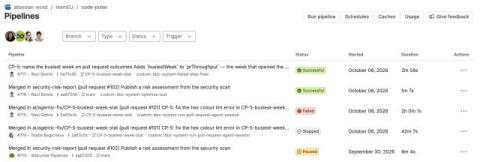
We’re refreshing the Bitbucket Pipelines experience to make it easier to read logs, find the steps you need, and navigate a pipeline run. The update focuses on the Pipelines list and Pipeline result pages. This is a visual refresh only. Your pipeline configurations, builds, data, runners, variables, deployments, and integrations stay as they are. It’s the same Bitbucket Pipelines underneath, with a cleaner, more focused view.

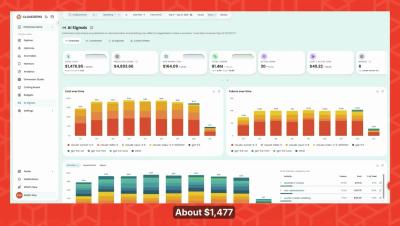
AI Signals Demo: See Exactly What Your AI Spend Is Buying | CloudZero

See who’s spending on AI, on which models, for what work, and what you got for it. Most companies can tell you what they spent on AI last month. Very few can tell you what it bought. In this demo, we show how AI Signals captures AI usage as it happens and ties every dollar to the person, team, and work behind it, across every model and provider.

CA distrust wargame: moving every certificate in 10 minutes

Last week, dozens of schools found out their certificate authority was being distrusted and they needed to replace all of their certificates in a few days. We wanted to know how we’d handle it if our own CA went away, and how long it would take. So we tried it with one of our other products. It has 6 certificates from Let’s Encrypt, deploying to 18 targets across Windows IIS, Linux nginx, Elasticsearch, and a mail server. Then we wargamed it: “Let’s Encrypt is being distrusted.

The Hard Part of Incident Remediation Is Knowing When to Act

A critical application slows overnight. Monitoring identifies an unhealthy component, and an engineer finds a familiar remedy: restart a service. The command takes seconds. Determining whether the restart will restore the application or disrupt another dependency takes far longer. That is the real challenge in enterprise incident remediation. Most IT teams already know how to automate a task.

Elastic is a Strong Performer in The Forrester Wave for AIOps Platforms, Q4 2026

Open architecture, explainable AI, and full context Elastic was named a Strong Performer in The Forrester Wave: AIOps Platforms, Q4 2026, which evaluated 10 providers across 24 criteria. Forrester gave Elastic the highest possible scores in five criteria: algorithmic trust and explainability, observability as code (OaC) and GitOps alignment, AI stack and semantic observability, sovereign deployment and data isolation, and pricing flexibility and transparency.

What is a Sovereign Cloud?

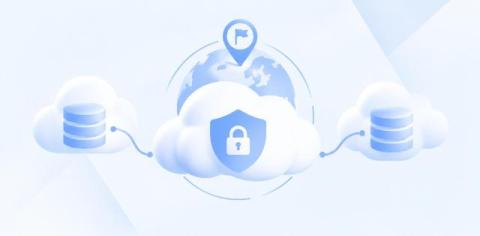
A sovereign cloud is a cloud computing environment designed to keep data, infrastructure, and operations under the control of a specific country or jurisdiction. It helps organizations maintain control over who can access their data and how it is managed. Depending on the provider and service, this may include storing data within national borders, using locally governed infrastructure, and ensuring that operations comply with regional regulations.

Match monitoring depth to workload needs with Infrastructure Basic

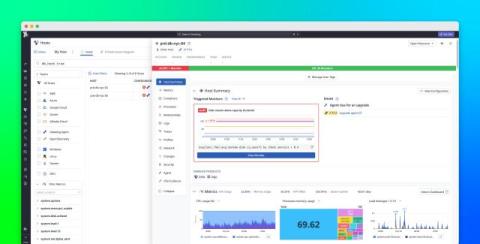
A back-office server that runs out of disk space can interrupt an important internal workflow. A process that stops on a staging host can delay development. Although workloads like these might not require application-level instrumentation, teams still need to know when the hosts that support them require attention. Without a monitoring solution tailored to these requirements, teams have to apply more monitoring than the workload needs, maintain a separate tool, or accept a gap in visibility.