Operations | Monitoring | ITSM | DevOps | Cloud

How to Troubleshoot Intermittent Network Connectivity Issues

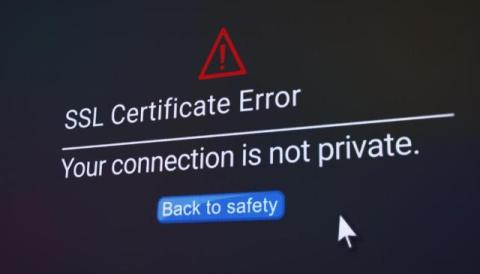
A full outage is the easy version of this job. Something goes down, someone notices immediately, you fix it, and you move on. Everyone understands that problem, including the users complaining about it. Intermittent network connectivity issues are a different animal. Your network connection works, then it doesn't, then it does again, all on its own, usually before you've had a chance to open a single tool. By the time you sit down to look, the network is behaving perfectly.

Announcing the Harness CLI: Built for Humans and Agents | Harness Blog

---‍Key Takeaway: Today, we're launching the public beta of the Harness CLI: the single, officially supported command-line tool for the entire Harness platform. It replaces the older per-module CLIs with one binary, one grammar, and one auth flow across pipelines, CD, code, artifacts, IaCM, feature flags, governance, and audit. Designed for secure DevSecOps and enables terminal workflows for developers and deterministic execution for AI agents. ---

Asset Tagging: Types, Best Practices, And How Tag Assets With InvGate Asset Management

Asset tagging is the process of assigning a unique identifier (a physical or digital label) to each asset so it can be tracked, managed, and audited throughout its lifecycle. Without it, tracking assets across distributed environments becomes error-prone, loss-prone, and nearly impossible to audit. The practice applies to virtually any type of organizational asset: office furniture, vehicles, medical equipment, industrial machinery.

5 Zero Day Attack Myths That Could Leave You Exposed

Zero day vulnerabilities remain one of the most misunderstood threats in cybersecurity. The term gets thrown around in headlines, vendor reports, and boardroom conversations, often accompanied by more confusion than clarity. Security researchers at firms including Mimecast have repeatedly noted that misconceptions about zero day attacks can be just as dangerous as the exploits themselves, because they lead organizations to underinvest in the right defenses while overspending on the wrong ones.

Account Takeover Prevention: Assume Compromise, Limit the Blast Radius

Account takeover has quietly become one of the most consequential threats facing organizations of every size. Unlike a smash-and-grab breach that trips alarms immediately, a compromised account often looks like normal activity. The attacker logs in with valid credentials, moves through systems a legitimate user would touch, and causes material damage long before anyone notices something is wrong. This is why security teams are shifting away from prevention-only strategies and toward a posture that assumes compromise will happen and focuses instead on containing its impact.

Certificate Authority Explained: How Short-Lived Certs Are Replacing Passwords and Keys

For decades, digital security has leaned on two familiar tools: passwords that people memorize and long-lived keys that sit quietly on servers until someone remembers to rotate them. Both approaches share the same flaw. They are static. Once a password or key is stolen, it often stays valid until someone notices the breach, which research from IBM's Cost of a Data Breach reports shows takes an average of over 200 days. That gap between compromise and detection is where a lot of damage happens.

Active Directory Disaster Recovery: A Fault-Tolerant Approach to the Worst-Case Scenario

Active Directory (AD) serves as the central nervous system for the vast majority of enterprise IT environments. It manages identities, secures access to resources, and acts as the gatekeeper for authentication across thousands of endpoints. Because of its foundational role, the failure of AD, whether due to ransomware, logical corruption, or accidental deletion, often results in a total organizational standstill. When the directory goes dark, file shares, email systems, and cloud-integrated applications all become inaccessible.

Automated Digital Risk Protection: Reducing Time to Takedown from Days to Minutes

The modern digital landscape has transformed how organizations conduct business, but this expansion into the public internet has also introduced an exponential increase in external attack surfaces. Today, threat actors do not just target internal networks; they actively exploit the trust users place in brands by deploying sophisticated phishing campaigns, impersonating executives, and hosting malicious infrastructure on the open, deep, and dark web. In this environment, the traditional manual approach to identifying and mitigating these threats, which often takes days or even weeks, has become a significant security bottleneck.

How ITSM (IT Service Management) Improves IT Efficiency and Employee Experience

In today's hyper-connected corporate environment, Information Technology is no longer merely a support function operating behind the scenes. Instead, IT serves as the backbone of everyday enterprise operations. When an organization's IT infrastructure stumbles, overall productivity grinds to a halt. The modern workplace requires a structured, strategic approach to managing technology infrastructure, a discipline known as IT Service Management (ITSM).