Operations | Monitoring | ITSM | DevOps | Cloud

Choosing the Right Application Performance Monitoring Tool for Modern IT

It is 2 a.m. The pager goes off. Checkout is down, customers are dropping, and you have five dashboards open across four tools that do not agree. One says the application is fine. Another says latency is climbing. None tells you why. This is the moment that decides whether you have the right application performance monitoring tool. Modern applications run across containers, cloud services, APIs, and infrastructure spanning on-premises and multiple clouds.

Infrastructure as Code Isn't Enough: Why Database Delivery Must Evolve | Harness Blog

‍ For more than a decade, Infrastructure as Code (IaC) has transformed how engineering organizations build and operate systems. Infrastructure became programmable, provisioning became repeatable, and configuration became version-controlled. Teams gained the ability to automate environment creation, enforce policy consistently, and scale infrastructure operations far beyond what manual processes could support.

The July 2026 AWS CloudFront Outage: VPC Origins, Cascade Impact, and What Broke

On July 16, 2026, AWS experienced a disruption in its CloudFront service, which affected a large number of websites and applications. The outage was caused by a configuration loading failure in CloudFront's VPC Origins feature. This was AWS's most widely-felt outage after last year's outage on October 20th, which caused widespread damage.

What Is Alert Fatigue, and Why Do IT Teams Miss Critical Alerts?

Alert fatigue is one of the biggest reasons critical incidents get missed. In this video, learn what alert fatigue is, why it happens, and how reducing noisy, repetitive notifications helps IT teams respond faster to the alerts that actually matter. Whether you're an IT operations professional, SRE, DevOps engineer, NOC analyst, or IT manager, this video explains alert fatigue in simple terms and shares practical ways to reduce alert noise, prioritize critical issues, and improve incident response.

What Is CIS Compliance? A Complete Guide

Most security breaches begin with something small and avoidable. Think of a password still set to its default, a server port left open to the internet, or configuration drift that slowly undoes last year's careful setup. Gaps like these go unnoticed because nobody is assigned to look for them, and they can be very costly. According to IBM's 2025 Cost of a Data Breach report, the average data breach incident costs companies 4.44 million dollars.

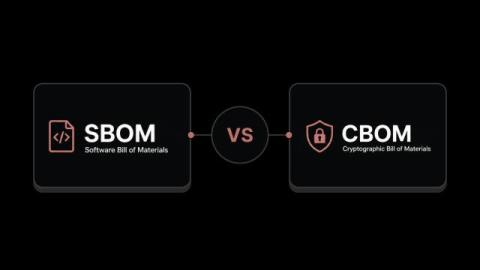
SBOM vs CBOM: Software and Cryptographic Bills of Materials Explained

How confident are you that you know every component inside your software, and every algorithm guarding it? In practice, the answer is usually scattered across build tools, ticketing systems, and spreadsheets that stopped being accurate months ago. A modern application draws on hundreds of open-source parts, and the encryption underneath them is harder still to trace. That visibility gap is what keeps the "SBOM vs CBOM" question alive in security and compliance reviews.

Bridging the AI context gap: Why your IDE needs a platform contract

Hosting an MCP (Model Context Protocol) server on Upsun lets AI IDEs like Cursor, Codex, Claude Code and Windsurf reach real infrastructure context (database schemas, service logs, environment variables), closing the gap between local coding assistants and your cloud environment.

Shipped: Your Snowflake Data Share queries just got faster and cheaper

If you pull cost data from a CloudZero Snowflake Data Share, a request for just a few days of data could be surprisingly slow and expensive. Because of how the data was stored, Snowflake had to read far more than the days you asked for. You paid for that in query time and credits.

Langflow Observability with OpenTelemetry and SigNoz

Learn how to implement end to end monitoring and observability for Langflow using OpenTelemetry and SigNoz. In this video, we walk through instrumenting Langflow workflows, collecting traces, metrics, and logs, and visualizing everything in SigNoz to gain real time visibility into flow execution, LLM requests, tool calls, token usage, latency, failures, and performance bottlenecks. Langflow ships with built in OpenTelemetry support, making it easy to export telemetry to SigNoz with minimal configuration.

5 Best Video Caption Generation APIs for Developers

Adding captions to video at scale is a lot harder than it looks. The best video caption generation APIs have to handle accent diversity, timestamp drift, multilingual rendering, and real-time processing all at once, and most developers don't realize how challenging that gets until something breaks in production. After reviewing the leading platforms in this space, one thing became clear: the gap between a generic transcription tool and a purpose-built captioning API is huge. This guide covers five of the strongest options available right now, comparing their technical depth, pricing, and real-world fit.