Operations | Monitoring | ITSM | DevOps | Cloud

What is Data Encryption and Why It's Recommended for Really Safe Online Security

Encryption has come a long, long way over the last few years. Something once reserved only for militaries and governments, encryption has been made super accessible and has become standard practice in the tech industry. Whether it’s texts, photos, or word docs - it can, and should, be encrypted. Put simply, encryption scrambles any file sent or stored online into unreadable nonsense that can only be translated (or decrypted) by a user with a key.

How FinTechs can ramp up data security in 2022

We now have ever-expanding digital identities to live our daily lives and, whether it’s crossing international borders or more innocuously buying basic products and services, our digital footprint is growing. With the increasing requirement to have a digital identity to do just about anything, our data is constantly being shared online. That said, the demands on FinTech companies to keep personally identifiable information (PII) safe are more pressing than ever.

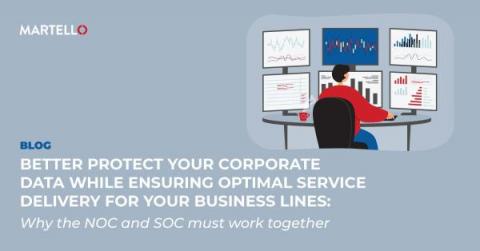
Better Protect your Corporate Data While Ensuring Optimal Service Delivery for your Business Lines

Within an organization, the Network Operations Center (NOC) and Security Operations Center (SOC) teams need to work together to maintain optimal network performance in addition to ensuring both overall security and the availability of IT services for business lines. In the past, these two teams were focused on two separate objectives, using different tools to do so and often running specific processes.

Sensitive Data Management - Working With Sensitive Data in Regulated Industries

Let’s face it—the harsh reality, seen often in news stories today, is that security breaches are going to happen. In today’s world of cybercriminals and nation-state attackers, it’s not a question of “if” but “when” your organization is attacked. If you don’t take appropriate steps to ensure sensitive data is protected properly, it could devastate the organization financially.
Featured Post

Maintaining Internet Privacy for Your Business

Every time you use the internet, online service providers collect some data about you and your business. Internet privacy isn't just a concern of large corporations. According to statistics, up to 43% of cyber-attacks target small businesses. Furthermore, only 14% of these vulnerable organizations have effective mitigation measures in place. As digital data grows, cybersecurity should become your highest priority.

Healthcare cybersecurity: Our 6-step plan to secure healthcare data

The HIPAA Journal reported that “2020 was the worst ever year for healthcare industry data breaches.” In the US alone, there were 642 reported data breaches in which the number of records stolen exceeded 500, and in total, nearly 29.3 million healthcare records were exposed.

Importance of Data Security For Mobile Healthcare Apps

Telemedicine or mobile healthcare apps are unquestionably important in our daily lives, as the world is increasingly shifting to an all-digital landscape. And when you think of the current pandemic scenario when social distancing and wearing masks are the new normal, nothing seems to be safer than using mobile health apps. But are we really safe while using these apps? Well, that brings us to the concern of being safe on the internet while using mobile healthcare apps.

Five worthy reads: Make data security your New Year's resolution

Five worthy reads is a regular column on five noteworthy items we’ve discovered while researching trending and timeless topics. More than ever, now is the time for organizations to prioritize data security. This week we look at some data security trends that are shaping the industry today. Illustration by Balaji KR A recent study conducted by RiskBased Security has labeled 2020 the worst year for data security with a shocking 36 billion records compromised, twice the number from 2019.

Dealing with data glut: Why ROT data is an issue, and how to manage it

As file storage grows rapidly year after year, new challenges arise around keeping data safe and maintaining control over data storage systems. Who owns which files? Whose files take up what volume of enterprise storage? Which files have become obsolete? How many copies of a file exist, and where? Are there any stale files that contain sensitive data? These questions require up-to-date answers to ensure that business, compliance, and data security needs are easily and effectively met.