Operations | Monitoring | ITSM | DevOps | Cloud

iCloud vs Google One: Which Cloud Should You Choose?

iCloud and Google One represent two of the most popular cloud storage options available, and may be at the top of your list of choices when considering which cloud storage is best for you. For Apple users, iCloud is the most popular option, as you receive 5GB of free storage straight away when you sign up with Apple, and it integrates well with iPhones, iPads, MacBooks, etc.

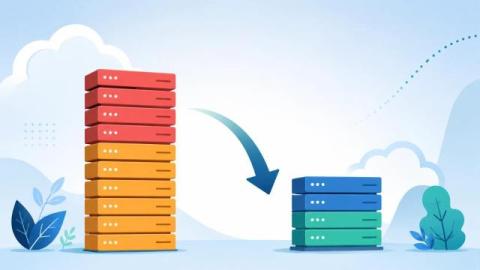
Top Signs Your Data Center Is Ready for a Server Upgrade: Why Refurbished Hardware Makes Sense

There comes a point when your servers start making everyday tasks feel slower than they should. Maybe you notice apps taking a little longer to load or routine jobs dragging more than usual. In a busy data center, this kind of shift pops up when the hardware starts falling behind.

Xiaomi Cloud Pricing Guide: Mi Cloud Plans, Security & Alternatives

You bought a Xiaomi device because you're smart with your money. Why overpay for Samsung or Apple when you can get flagship specs at half the price? Now you're facing the same question with cloud storage: stick with Mi Cloud at $0.99/month, or is there something better? Here's the thing nobody tells you. Mi Cloud's pricing looks competitive, but the real question isn't "how much does it cost?", it's "who can access my files, and do I care?".

How Trenches Can Protect Your Business Storage From Water Damage

When preserving your business assets and infrastructure, protecting your storage from water damage is paramount. Businesses are not just places of commerce. They house vital products, documents, and equipment that represent years of hard work and investment. Water damage can arise from various sources, be it natural flooding from heavy rain, issues stemming from the roof or plumbing, or even condensation during seasonal changes. With the potential for substantial devastation, understanding the protective measures available is crucial for business owners.

Ways to get more storage on your Mac?

Finding better ways to acquire storage on your Mac is a great idea, and at first it might sound rather difficult to achieve. But realistically, getting more storage on your Mac is actually not extremely difficult. It definitely has its issues, but generally, you will find plenty of methods to supplement your storage. Here are some tips.

How to Reduce Redundant Data to Save on Cloud Storage Costs

With more and more business organizations adopting cloud storage to handle their data, the problem of redundancy or duplication of files has become of great concern. Duplicated information does not only eat up the precious storage space but also increases expenditure and lowers productivity. The reason why companies end up paying to store files that they do not require is because duplication of files over time occurs particularly when more than one team or department is doing a common project. Learning to detect and remove duplicate data is a key to the cost control and ability to manage data in general.

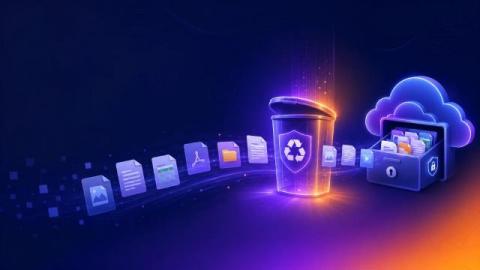
The Life Cycle of Data, From Creation to Erasure

Data doesn't just exist - it moves through a predictable, high-stakes life cycle that shapes how securely and efficiently businesses operate. Understanding each phase, from initial creation to final erasure, enables organizations to strengthen governance, mitigate risk and support informed decision-making. Leaders should break down the full life cycle of data to better protect their assets and optimize the flow of information throughout the enterprise.

Why Your Phone Keeps Showing 'System Storage Full' Even With Few Photos

It's the most frustrating notification in modern life. You're about to take the perfect photo, download a new app, or save a file, and your phone hits you with the dreaded: "Storage Almost Full." Your first reaction is confusion. You're a smart user. You don't hoard apps. You deleted all your blurry photos and long videos. You check your camera roll, and it's practically empty. "How can it be full?" you wonder. "I have nothing on here!".

The Hidden Bottlenecks in AI Infrastructure (and How to Fix Them)

Artificial intelligence has entered an era where infrastructure is the real moat. Teams spend millions on GPUs, yet models still stall, latency spikes unpredictably, and throughput flatlines at 20% of what spec sheets promise. These hidden bottlenecks lurk far beneath the surface - in power grids, network fabrics, memory bandwidth, orchestration layers, and even governance policies. In this guide, we uncover where AI infrastructure actually breaks, what the emerging data and research reveal, and how Clarifai's reasoning and orchestration stack helps eliminate these unseen friction points.