The latest News and Information on Observabilty for complex systems and related technologies.
Today, I’d like to tell you about a new community-contributed integration that connects Honeycomb to your ServiceNow workflows. My new integration reimagines what’s possible when connecting observability tools with ITSM systems. This post explains how it works and how to get started with it.
Observability is a methodology that you incorporate into your enterprise architecture to provide greater visibility into what is happening. It helps us determine the states of the system from their external outputs and allows technicians to identify bottlenecks, predict issues and mitigate them. As the architectures of IT systems are becoming more complex and distributed we use observability to meet the need to measure their internal states.
Observability is a hot topic in the IT world these days. It is oftentimes discussed through the lens of the “three pillars of observability”: Logs, Metrics and Traces. Indeed these telemetry signal types help us understand what happened, where it happened and why it happened in our system.
We all know that observability is a must-have for operating systems in production. But we often neglect our own backyard — our software release process. We noticed we made that mistake here at Logz.io. We were wasting time and energy in handling failures in the CI/CD pipeline, and made our Developer-on-Duty (DoD) shifts tedious. That’s why it’s critical to incorporate your observability practices into your CI/CD pipeline.
Building modern, cloud-native applications introduces new challenges to teams and organizations. As these systems grow and scale, struggles abound: inconsistent performance monitoring experiences across siloed tools, wasteful performance management practices with duplicated efforts, and mounting frustration from colleagues and customers. Surmounting these challenges requires multiple sources of data and truly unified observability.
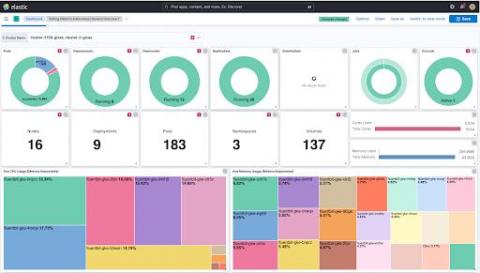
From its inception as a powerhouse for logging, Elastic Observability has grown into a comprehensive solution for full-stack multi and hybrid-cloud observability. Given the increasing complexity of the cloud-native world, the major challenge for observability is twofold: getting deeper and more frictionless visibility at all levels of applications, services, and infrastructure, and making sense of the overwhelming amount of data that is available.