Operations | Monitoring | ITSM | DevOps | Cloud

The latest News and Information on Observabilty for complex systems and related technologies.

Instrumenting Rust TLS with eBPF

Coroot is an open source observability tool that uses eBPF to collect telemetry directly from applications and infrastructure. One of the things it does is capture L7 traffic from TLS connections without any code changes, by hooking into TLS libraries and syscalls. Works great for OpenSSL. Works for Go. Then rustls enters the picture and everything stops being obvious. With OpenSSL, everything is nicely wrapped: From eBPF’s point of view this is perfect: Everything happens inside one call.

Observability for distributed IoT systems: reducing alert fatigue through modular architecture

Many distributed IoT teams hit the same wall at roughly the same stage. The fleet grows, telemetry coverage improves, dashboards multiply, and on paper the system becomes more visible. In practice, the operating picture often gets harder to read. There are more alerts to review, more exceptions that do not fit existing runbooks, more cases where someone has to cross-check device state against backend logs and integration behavior by hand. What starts to slip is not only response speed, but confidence. The team sees more signals, yet feels less sure which ones matter and which ones can wait.

Golang memory arenas [101 guide]

Go 1.20 introduced an experimental arena package that lets you allocate many objects from a contiguous region of memory and free them all at once — bypassing the garbage collector entirely. The package remains experimental and its future is uncertain, but arenas are a valuable concept for understanding Go memory management and writing high-performance code. The arena package is experimental and on hold indefinitely. The Go team has made no guarantees about compatibility or its continued existence.

Observability vs Monitoring: Why the Difference Still Matters in Complex Systems

In modern infrastructure, the words observability and monitoring are often used as if they mean the same thing. That shortcut sounds harmless, but it creates real confusion inside technical teams and business discussions. The two ideas are connected, yet they solve different problems. In simple systems, the gap may feel small. In complex systems, the gap becomes impossible to ignore because the cost of misunderstanding it usually appears during failure, not during routine operation.

Evaluating Observability Tools for the AI Era

Every observability vendor has an AI story right now. Most have an MCP. Many have a chatbot. All have a demo where the AI finds the root cause of an incident in thirty seconds and everyone in the room nods. In the context of a public demo, these tools look almost identical. Ask the AI a question, the tool returns an answer, and the engineer fixes the bug. Impressive. But if you buy based on the demo, you may end up with an AI layer that looks great on a call and disappoints in production.

How to Reduce MTTR with AI-Powered Runtime Diagnosis

Reducing Mean Time to Resolution (MTTR) in production systems requires understanding failure behavior in real time. While AI code agents significantly accelerated software development and deployment, incident resolution has remained constrained by incomplete pre-captured telemetry. AI SRE tools improve signal correlation, but MTTR reduction requires runtime-verified diagnosis that confirms execution behavior directly in production systems.

How to Solve "Cannot Reproduce" Bugs That Cost Support Teams Hours

Support teams frequently face vague customer reports and incomplete data but need to offer fast resolutions autonomously without escalating to developers. In this article, learn how to equip support engineers with tools to diagnose root causes in minutes, increasing self-sufficient issue resolution. We explore eliminating the ‘Reproduction Tax’ for ‘cannot reproduce’ bugs using runtime context to achieve technical certainty at scale.

Honeycomb Metrics Is Now Generally Available

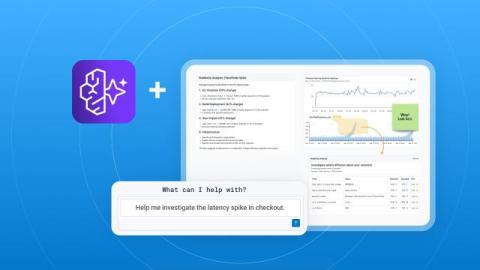
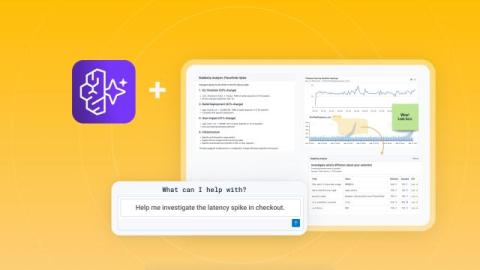
It’s Black Friday. Checkout latency is spiking. Your on-call engineer pulls up the dashboard and starts working through the list. Is it a regional issue? No, all regions look fine. A payment provider? Stripe, PayPal, Apple Pay all nominal. A bad deployment? Nothing shipped in the last six hours. All your infrastructure dashboards are showing green. But customers are complaining. Checkout is slow, carts are being abandoned and revenue is draining away.

Observability Where You Work: Introducing the Honeycomb Slackbot in Beta

Engineers are constantly context switching between tools, adding cognitive overhead on top of already complex work. You're deep in an investigation, you need to analyze some data, pull up a runbook somewhere else, and share findings back in Slack. Context gets lost in the shuffle, correlating across data sources becomes painful, and everything just takes longer. In high-pressure situations like incidents, that friction has a real cost to the business.

The best observability platforms for developers

At some point, logs stop being enough. As applications grow more distributed, understanding what's actually happening in production becomes harder. That's what observability platforms are built for. The hard part is figuring out which one is actually right for your application — and your budget. This guide covers some popular options: what they do well, where they fall short, and who they're for.