Operations | Monitoring | ITSM | DevOps | Cloud

The latest News and Information on Log Management, Log Analytics and related technologies.

What Is eBPF? A Guide To Improved Observability & Telemetry

Extended Berkeley Packet Filter (eBPF) is an exciting technology that provides secure, high-performance kernel programmability directly from the operating system. It can expose a wide range of applications and kernel telemetry that is otherwise unavailable. But with operating systems frequently processing very large volumes of network data, even with an efficient framework and cheap eBPF program runs, costs can add up quickly.


An Introduction to Kubernetes Observability

If your organization is embracing cloud-native practices, then breaking systems into smaller components or services and moving those services to containers is an essential step in that journey. Containers allow you to take advantage of cloud-hosted distributed infrastructure, move and replicate services as required to ensure your application can meet demand, and take instances offline when they’re no longer needed to save costs.

The Leading Tools Compatible With OpenTelemetry

OpenTelemetry (also known as OTel) is a popular open-source framework used to generate telemetry data for traces, metrics, events and logs. In this guide, we are going to cover the best observability and application performance management tools that can be used alongside OpenTelemetry to transform telemetry data into responsive reporting dashboards.

How to Monitor Varnish with Google Cloud Platform

We’re excited to announce that we’ve recently added Varnish monitoring support for Google Cloud Platform. You can check it out here! Below are steps to get up and running quickly with observIQ’s Google Cloud Platform integrations, and monitor metrics and logs from Varnish in your Google Cloud Platform.

Machine Learning at Splunk in Just a Few Clicks

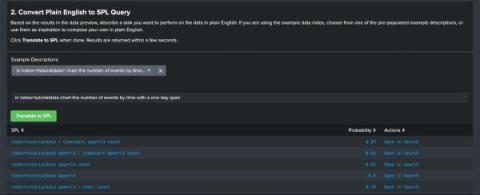
The Machine Learning team at Splunk has been hard at work over the last several months preparing for a few exciting launches at.conf22, held just a few weeks ago. Splunk customers want to leverage machine learning (ML) in their environments, but many aren’t sure how to use it, or even how to get started.

Cribl Search Unlocks The Value of ALL Data

We announced Cribl Search in May, and customer reaction has been incredibly positive. We’ve heard for some time that organizations have data everywhere. They have data in their observability lakes, analytics tools, object stores, and at the edge. The big challenge facing enterprises is that existing search models require you to take all of this data that you don’t know is valuable or not, move it into one place, and then make decisions about whether this is valuable?

Mezmo Named a Top Vendor for Managing IT Performance by DEJ

We are thrilled to announce that Mezmo has been recognized as one of the Top 20 Vendors for Managing IT Performance in 2022 by Digital Enterprise Journal (DEJ). This list was created in response to DEJ’s study, 24 Key Areas Shaping IT Performance Markets in 2022. DEJ analysts surveyed more than 3,300 organizations around a variety of topics to craft a comprehensive understanding of the state of these programs today.

Network Performance Monitoring vs. Application Performance Monitoring: What's The Difference?

Network performance monitoring (NPM) and application performance monitoring (APM) are both key pillars of an overall performance and reliability management strategy, especially when dealing with complex, distributed infrastructure across cloud-native environments. NPM and APM also complement each other, in the sense that NPM can serve as an additional source of truth and observability for application performance.

State of Kubernetes 2022: Report Roundup

According to recent surveys and reports on the industry, Kubernetes and containers are more popular than ever. Containers and serverless functions are being mainstream and ubiquitous – with a more than 300% increase in container production usage in the past 5 years. This trend is especially true for large organizations, which are often using managed platforms and services.

Introducing Splunk Attack Range v2.0

The Splunk Threat Research Team (STRT) has continued focusing development on the Splunk Attack Range project and is thrilled to announce its v2.0 release with a host of new features. Since the v1.0 release 6 months ago the team has been focused on developments to make the attack range a more fully-featured development testbed out of the box. This blog post will share these additions as well as some of the project’s future directions.