Operations | Monitoring | ITSM | DevOps | Cloud

The latest News and Information on Log Management, Log Analytics and related technologies.

Sponsored Post

6 Reasons Your Data Lake Isn't Working Out

Since the data lake concept emerged more than a decade ago, data lakes have been pitched as the solution to many of the woes surrounding traditional data management solutions, like databases and data warehouses. Data lakes, we have been told, are more scalable, better able to accommodate widely varying types of data, cheaper to build and so on. Much of that is true, at least theoretically. In reality, the way many organizations go about building data lakes leads to a variety of problems that undercut the value their data lakes are supposed to deliver.

New features: Introducing Metrics Usage and Query Usage analyzers

As teams grow and telemetry scales, it becomes harder to keep track of which metrics matter. Labels pile up, cardinality increases, and costs start rising faster than anyone expected. At the same time, dashboards often stay quiet and alerts go untouched. The truth is, most teams don’t actually know how and how much of their metric data is being used, let alone which metrics are driving cost. This is exactly the problem we set out to solve.

In the age of AI, measurement becomes our superpower

The last few years have felt less like a product roadmap and more like a scene from science fiction. Artificial intelligence didn’t simply arrive, it erupted. In what feels like a blink, we’re building software by prompting instead of programming. Our words now generate code, compose music, translate languages, and create entire digital experiences.

Advantages of Routing Security Data Where it Has the Most Value

Enterprise data volumes are doubling every two years, but security and observability budgets remain mostly flat (or in the worst-case scenario, are declining). As teams struggle to keep up, the challenge isn’t just the amount of data, it’s the inefficiency of how that data is collected, processed, and routed. Most organizations rely on a patchwork of agents, forwarders, and legacy collectors like Syslog to ingest telemetry from across the environment.

Detecting Anomalous Spans at Scale with DataPrime

Tracing is one of the most transformative gifts of observability. It allows engineers to follow a single request through a distributed system and see every span and dependency along the way. However, even with that visibility, some of our most basic questions stay unanswered. Why did a specific span behave differently today than it did yesterday? Why did latency rise even when nothing “broke”?

Introducing Dataspaces & Datasets

Observability data has a habit of outgrowing everything else. As telemetry volume, variety, and velocity increases, staying organized gets harder. Governance becomes messy, and the cost of digging through “everything” keeps rising. Over the past year, Coralogix’s DataPrime engine has been addressing these challenges by laying a new foundation for observability at scale.

Stop Leaking PII in Your #Telemetry with Cribl Guard

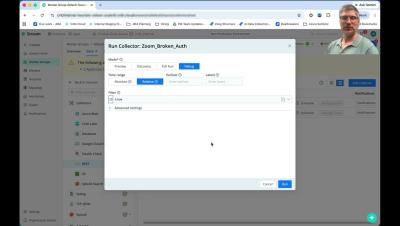
Sensitive data sneaks into destinations more often than teams realize. In this clip, we capture live events, spot emails and login tokens slipping through, and fix it instantly with Cribl Guard. A few clicks, a commit and deploy, and Guard redacts the data in real time. No complex configs. No regex nightmares. Just fast protection that keeps your telemetry clean and your security tight.

Pastries with SREs: Holding onto extra observability data and desserts

In this episode of Pastries with SREs, we dig into why you should keep all of your observability data, even if you don’t need it quite yet. We explore: With enriched logs and flexible, cost-effective storage, you can stop worrying about what you might need later and start answering questions with confidence, no matter when they arise. Additional resources.

How continuous profiling cut our cloud spend

At Coralogix, we’re constantly looking to evolve the measurements we take to better understand the efficiency of our infrastructure. We constantly assess and investigate sources of cost in our cloud infrastructure, to ensure we’re getting the best return on investment. This activity, often referred to as FinOps, is becoming a cornerstone of engineering teams.