Operations | Monitoring | ITSM | DevOps | Cloud

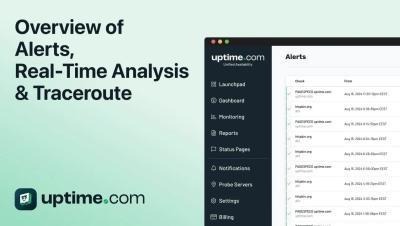
Uptime.com Real User Monitoring Report

Take an in-depth tour of the Uptime.com RUM report. Comprehensively understand your users – and your baselines. Organize RUM data by URL(s) or group URL(s) to track subdomains; segment data by devices, operating systems, browsers, countries, other geographies – to compare metrics within specific time windows to your website or application’s performance monitoring baselines.

Governance Doesn't Stop at Deploy

Most governance models focus on what happens before production. Approvals. Tickets. Change records. But software delivery doesn’t end at deploy. Runtime is where change management is validated. It’s where systems prove whether controls actually work and where risk becomes real. If governance stops at deployment, you’re not managing change. You’re managing intent. In this video, Mike Long (CEO & Co-founder, Kosli) explains why runtime is the true source of control, why approvals alone don’t reduce risk, and how modern teams build governance that reflects reality, not paperwork.

AI Can't Prove Compliance by Itself

AI is moving fast, and it’s tempting to believe it can automate software governance end to end. But compliance and security aren’t probabilistic problems. They don’t accept “close enough.” They don’t accept summaries. They can’t tolerate hallucinations. Governance depends on facts. Irrefutable, provable evidence of how systems actually changed.

Stop wasting time on Postgres migrations. #speedscale #postgresql #postgres #database #programming

If you're spinning up a whole container just for one test, you’re doing it wrong. Old way: Full DB container + pg_restore New way: speedscale + proxymock It records actual DB traffic and mocks it "on the wire." Test smarter, not harder.

How to Build High-Performing ITSM Operations (Best Practices Guide)

Struggling with rising ticket volumes and manual handoffs? ITSM best practices provide structure for incident management, change control, and service requests, so your team can scale without breaking workflows. From defining clear incident workflows to building strong knowledge systems and tracking SLA performance, these practices help IT teams deliver measurable service outcomes. You'll find essential practices for incident, problem, and change management, automation strategies to improve efficiency, key metrics such as MTTR and FCR, and a maturity model to drive continuous improvement.