Operations | Monitoring | ITSM | DevOps | Cloud

Your next internal developer platform is a library of agent skills

What happens when AI agents become direct users of your infrastructure? Michael Kutsch, Staff SRE and Team Lead for Cloud Foundations at PostHog, argues that the next internal developer platform may be a library of agent skills. Instead of forcing every task through a portal, his team is giving agents structured context, reusable workflows, and deterministic scripts they can call when reliability and governance matter.
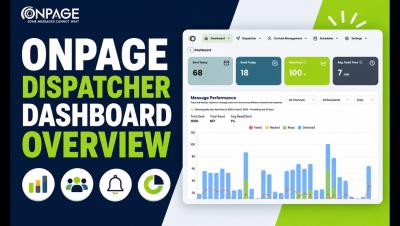
OnPage Enterprise (Dispatcher) Console Dashboard Overview

Welcome to the OnPage Dispatcher Console, your central hub for messaging activity and performance insights. In this video, we’ll walk through the main dashboard and show how it gives dispatchers a consolidated view of messaging activity, performance metrics, on-call status, and upcoming schedules, all in one place. See how the OnPage Dispatcher Dashboard helps teams stay informed and maintain visibility into critical communications.

Tech Talk #14 - Skill issue: A guide to Using AI skills with VictoriaMetrics

An engineer in an incident does not have a metrics problem, a logs problem and a traces problem. They have one question, and answering it today means opening three interfaces and retyping the same timestamp, service name and tenant into each one.

No more manual invoicing: How ManageEngine MSP Central automates usage-based billing

ManageEngine MSP Central's billing capability, powered by Zoho Billing, is officially live—and the headline feature is automated usage-based billing. No more pulling usage numbers manually, matching them to invoices, and updating everything by hand every month. Here's what changes: Customer data syncs automatically from MSP Central to Zoho Billing—no duplicate client records. Every service you deliver, including endpoint management, ITSM, and infrastructure monitoring, becomes billable in Zoho Billing without manual setup. Set up subscriptions per client, per service—one client can run multiple subscriptions at once.

Introducing APEX: Adversarial Pattern Extraction and Correlation

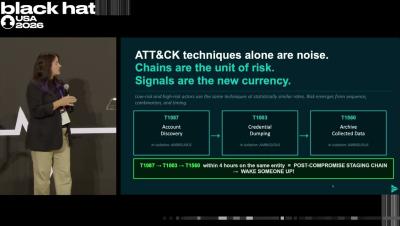
In this Black Hat talk, Nicole Beckwith introduces APEX (Adversarial Pattern Extraction and Correlation), a detection framework—not a Cribl product—that clusters TTP-based signals around entities to support behavioral detection. It is intended for security practitioners, SOC and detection teams, and threat hunters who want to learn how to use raw telemetry or OCSF data, TTP chaining, time windows, criticality, and cross-correlation to detect behavior beyond static indicators and rule-count coverage.