Operations | Monitoring | ITSM | DevOps | Cloud

Source-Side Queueing: You Down With UDP?

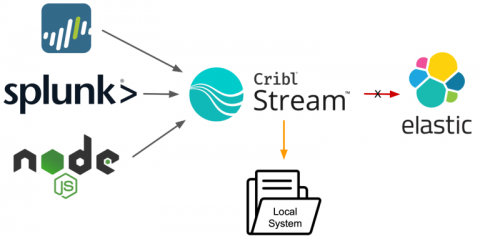
Source-side queueing is a fancy way of saying: You can configure Cribl products to make sure data isn’t lost in the event of downstream backpressure, again. Those familiar with Cribl Stream might be aware of destination queuing or persistent queuing, wherein Stream can write data to the local disk in the event of an issue reaching the destination. Maybe your SIEM is suffering from disk I/O latency. Maybe there is a DNS problem with your load balancer (Hint: It’s always DNS).

The Benefits Of A Data Centre Partnership With Console Connect

We know getting data centre interconnection right is vital whether you’re a global enterprise with operations in multiple markets around the world or a SaaS provider looking to roll out in new geographies. We also know data centres need help attracting and retaining customers. In this blog, our Global Data Centre Partner Manager Adam Gibson explores the benefits that Console Connect can bring to your data centre business.

Why (And How) Software Companies Should Pivot To Cost-Conscious Innovation

Investors have fallen back in love with profitability. This followed an almost two decade love affair with top-line revenue growth. The growth-at-all-costs paradigm enabled what I call cost-agnostic innovation: If it brings in more customers and revenue, build it — no matter how much it costs. When cash is abundant, investors can afford long-term risk, and cost-agnostic innovation works.

Pricing comparison for Managed Prometheus

Observability has become a critical part of many companies and their business. So did requirements for the systems which collect and store business-critical metrics. Monitoring systems need to be reliable, scalable, fast, and preferably cost-effective. Such features of any monitoring system never come for free or out of the box – you need people, a team of professionals who can build and manage it.

[Live Webinar] Achieving Multi-Datacenter High Availability with HAProxy ALOHA and GSLB

HAProxy ALOHA is a load balancer that’s ideal for companies in search of high performance and ease of use. It comes as either a hardware appliance or a virtual appliance and provides load balancing of TCP, UDP and HTTP traffic, DDoS protection, and active-active clustering. One of its newest features is the ability to distribute traffic across multiple datacenters or regions through global server load balancing(GSLB).

Why Application Performance Monitoring (APM) Tool Is Important?

Modern applications must deliver not only value but also round-the-clock availability, quick replies, and real-time problem-solving in today's digital economy. Since all businesses rely on software applications, their performance is one of their primary worries and frustrations, especially if their applications are the business itself. This is where Application Performance Monitoring Tool enters the scene.

3 trends driving mobile app adoption in the workplace

The widespread adoption of mobile apps is driving workforce productivity from almost anywhere across nearly every industry. Workers are relying on mobile technologies more than ever to get their work done every day—from short-staffed nurses who need to update information on the go to field service technicians who need to complete tasks and access critical information in real time to desk workers who need visibility into communications and company resources from anywhere.

Logging Best Practices - MDC, Ingestion and Scale

I don’t care about religious wars over “which logger is the best”. They all have their issues. Having said that, the worst logger is probably the one built “in-house”… So yes, they suck, but re-inventing the wheel is probably far worse. Let’s discuss making these loggers suck less with proper usage guidelines that range from the obvious to subtle. Hopefully, you can use this post as the basis of your company’s standard for logging best practices.

Application observability made easier for Compute Engine

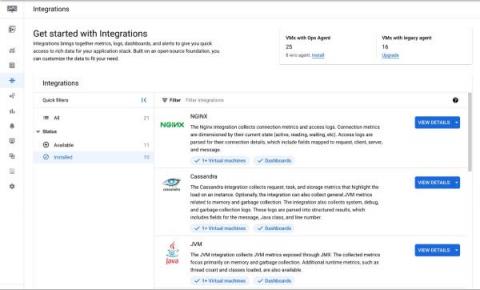
When IT operators and architects begin their journey with Google Cloud, Day 0 observability needs tend to focus on infrastructure and aim to address questions about resource needs, a plan for scaling, and similar considerations. During this phase, developers and DevOps engineers also make a plan for how to get deep observability into the performance of third-party and open-source applications running on their Compute Engine VMs.