Operations | Monitoring | ITSM | DevOps | Cloud

Store and search high-volume logs with ClickHouse and Datadog

As teams scale AI and agentic workloads, log volumes can grow fast. That growth can force teams into a difficult trade-off: Keep logs searchable in their existing workflows, or store them cost-effectively for longer periods. For teams that rely on logs during incident response, compliance reviews, and long-running investigations, losing either affordability or searchability can slow down troubleshooting. Datadog and ClickHouse are partnering to help remove that trade-off.
How Managed Digital Employee Experience (DEX) Supports Smarter Device Refresh Decisions

Let’s face it, refreshing devices used to be a guessing game. IT teams would swap out laptops and desktops on a fixed schedule, hoping to keep everyone happy and productive. But in today’s hybrid, cloud-first world, that old approach just doesn’t work. Employees expect seamless experience, and businesses can’t afford to waste money on unnecessary upgrades or risk productivity dips from outdated tech. That’s where Digital Employee Experience (DEX) comes in.

Graviton5 in Production at Honeycomb: Per-service Results From the m8g to m9g Migration

This is the fourth installment in the Graviton retrospective series we've been writing since 2021. The methodology is the same one I always reach for: hold the workload constant, run both generations on the same Kubernetes namespace concurrently, and let the per-pod numbers speak.

Shipped: Catch the runaway agent while it's still running.

AI spend has no ceiling. An engineer can burn $5,000 in an hour, and a team that spins up an agent on Friday can loop it on a bad prompt all weekend. You find out when the bill lands: the money is already gone, the damage pieced back together from logs. Cloud spend had a natural limit. Tokens don’t. Now you see it as it happens. Connect a source and the calls stream in within seconds. Within minutes they’re broken out by model, provider, agent, and user.

Claude Mythos pricing in 2026: Fable 5 costs, Mythos 5 costs, and what every model actually runs

Claude Mythos is now available to the public through Claude Fable 5, released June 9, 2026. Claude Fable 5 pricing is $10 per million input tokens and $50 per million output tokens, exactly 2x Claude Opus 4.8 ($5/$25). Claude Mythos 5 (the restricted Project Glasswing version) has identical pricing. Prompt caching cuts input spend by 90%. Batch API pricing is $5/$25 (50% off). In April 2026, Anthropic announced a model it said was too dangerous to release.

Five Principles of an Accountable AI Agent Network: How to Evaluate Any Governance Platform

The first post in this series argued that AI agent governance hasn’t kept pace with deployment. The second laid out the five pillars of accountability, and what is required. The third walked through why network policies, API gateways, MCP/A2A protocols, DIY security patterns, and Role-based Access Control (RBAC) each leave critical accountability gaps. So what does good look like? The five pillars define what AI agent accountability requires.

A field guide to the agents in your cluster

You know every service in your cluster by name. You know which team owns each one, what it talks to, how it scales, where its logs go. The agents are a different story. That’s not a criticism, it’s an observation, and it’s one we keep running into. Every company we talk to is shipping agents of some kind, from scales of 10s to 1000s. Customer service bots that field tier-one tickets. Internal copilots that draft emails and summarise meetings and write the boring half of every PR.

Automated Network Documentation 101: What You Need to Know to Get Started

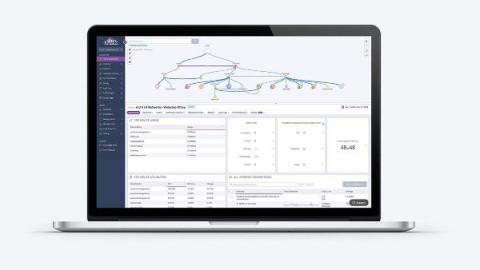
Network documentation has a way of becoming everyone’s problem and nobody’s responsibility. Over time, diagrams become outdated, configuration changes go undocumented, and critical knowledge ends up living in the heads of a few senior technicians instead of somewhere the entire team can access it. That’s why organizations are turning to automated network documentation.

G2 Names Auvik Network Management & Monitoring Leader Across Summer 2026 Reports

G2 reports are built around what customers say about the products they use. In the Summer 2026 Reports, that feedback helped Auvik earn top recognition across Grid Reports and Index Reports for Network Management Tools and Network Monitoring. Try Auvik Network Management Free to try! Setup takes less than 15 minutes and you will see results in an hour. Learn more now.

Balance AI innovation and governance with Sumo Logic AI and ML apps

AI is changing how teams work. Developers are generating code faster, security teams are automating investigations, and employees across the business are using AI tools to accelerate research, content creation, and decision-making. But this adoption comes with a catch. As usage explodes, it introduces a new set of security risks: a rapidly expanding attack surface, faster attack timelines, potential data exposure, and an alarming lack of visibility into how these tools are being used.