Operations | Monitoring | ITSM | DevOps | Cloud

Introducing relationships for Service Monitors

Understanding a service outage is easier when you can see what it’s connected to. That’s why we’re introducing Relationships for Service Monitors, one of the most requested features from StatusGator’s hundreds of enterprise IT teams. You can now explore related services directly from the Service Details page by opening the Relationships dropdown.

June 2026 Early Warning Signals

June 2026 saw major outages across ecommerce, AI, developer tools, and business applications. StatusGator’s Early Warning Signals surfaced many of these incidents before providers updated their official status pages. Of the 1,067 incidents detected by StatusGator in June, only 191 (17.9%) were eventually acknowledged by providers.

Trace without traces

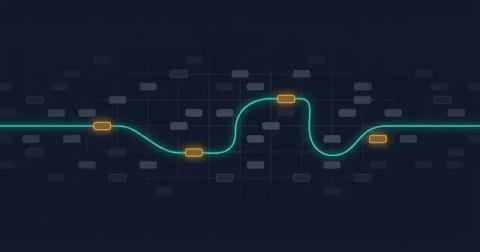
A customer emailed on a Tuesday: checkout hung for ten seconds. I opened our tracing tool, punched in the time window, and got nothing. The trace was sampled out. We keep 1% of traces, like most shops with real traffic do. The one request that actually mattered was in the 99% we threw away. I spent twenty minutes admiring our observability stack before admitting it couldn’t answer a first-grader’s question: what happened to this person? Here’s what I know now.

Why Faster Recovery Beats Faster Shipping in the AI Era

A year ago, AI coding tools worked alongside developers—suggesting the next line, completing a function, accelerating work that a human was already doing. Today, they’re writing entire modules and services independently, producing code that no human has reviewed line by line, built from components that no single person has fully mapped. And adoption is only accelerating: According to our recent AI Resilience Survey, 84% of organizations are now using AI to write, review, or suggest code.

9 Best Azure Monitoring Tools Compared for 2026

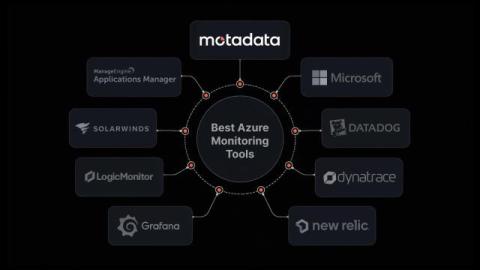
When an Azure service slows down or stops responding, you often hear about it from a user before your monitoring says a word. It only gets harder as you scale: Azure now runs about a fifth of the world's cloud workloads (Statista, 2026), and every new service is one more place a failure can hide. By the end, you will have a shortlist for your stack. You will also know which tools to skip, without sitting through nine sales demos to find out.

What is DPDPA Compliance? A Complete Guide

If your organisation handles the personal data of people in India, the DPDPA applies to you and compliance is a legal requirement. The Digital Personal Data Protection Act, 2023 is now backed by the DPDP Rules 2025, and the Data Protection Board of India can impose fines of up to ₹250 crore for a single contravention. The obligation your IT and security teams own most directly is security safeguards under Section 8, and it is one of the first things a regulator looks at after a breach.

To learn and improve, we cannot be afraid to fail

“Deployment stress doesn’t just come from high-profile public outages. It often starts much earlier, when a fear of failure seeps into team culture.” Rob Richardson, Software Craftsman Rob certainly knows the stress and embarrassment of public deployment failures. "But overall" he reflects, "I’ve had more stress in my career from internal failures.

Cloud repatriation strategies: From public dependency to hybrid flexibility

The phrase "cloud first" dominated IT strategy for the better part of a decade. It was gospel, practically unchallengeable, and for a lot of organizations, it was the right call. But something shifted between 2024 and 2026, and it shifted fast. Bills stopped being defensible. Vendor pricing imploded. Sovereignty stopped being a compliance checkbox and became a procurement requirement.